
Our 2026 Wildflower Survey
By Clare Graham, Chair, Open Spaces Committee
Learn more about the many species of plants we identified during our fourth annual citizen science survey of Christchurch Gardens and Falcon Park with Enable Biodiversity.
Our citizen science survey
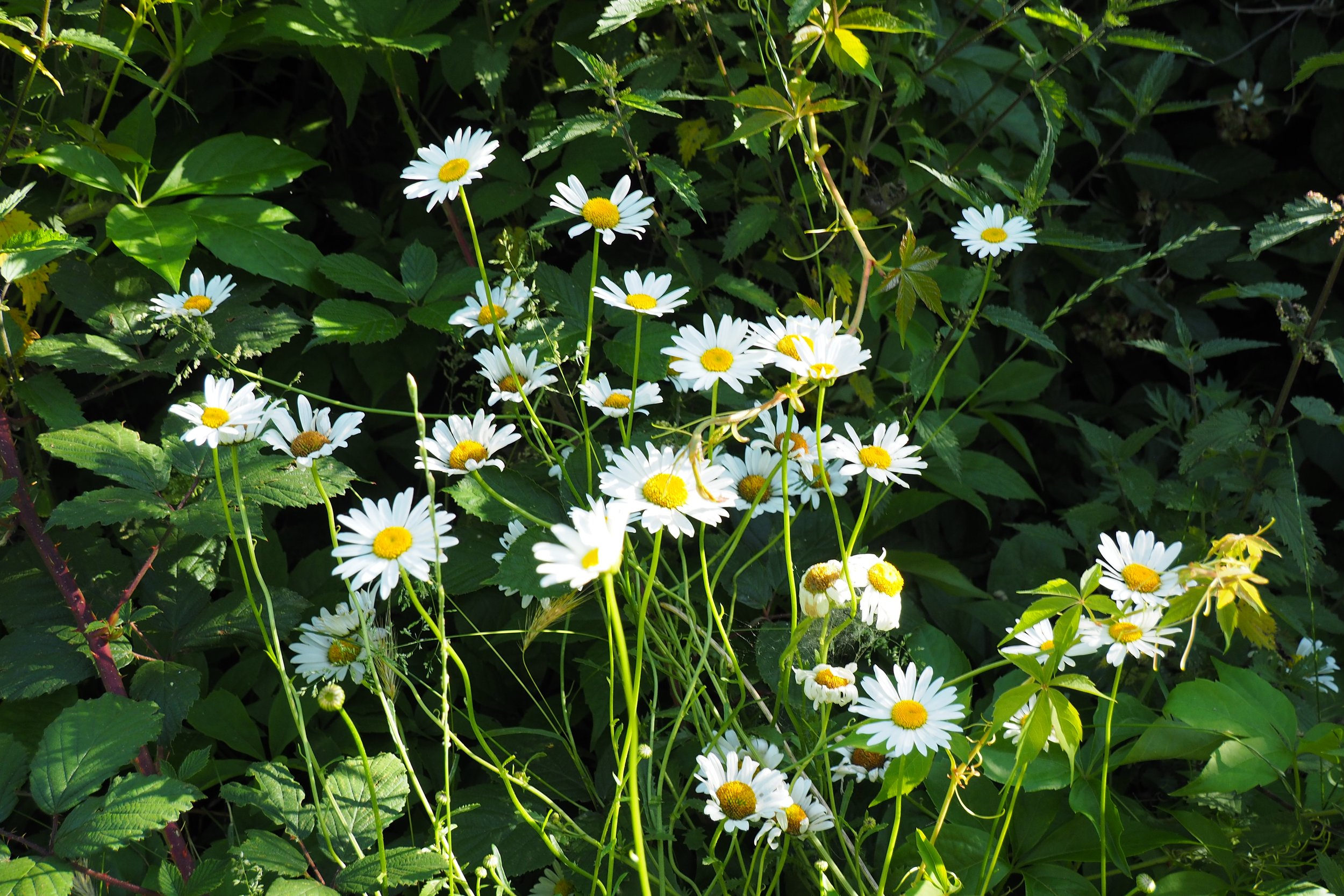
Oxeye daisies (Leucanthemum vulgare) in Falcon Park. Photo © the author.
Every June for four years now Enable Parks, who manage our borough's open spaces on behalf of Wandsworth Council, has invited the Battersea Society to help out with its Biodiversity Team's annual survey of the wildflower areas in Christchurch Gardens and Falcon Park. This is part of a wider citizen science programme, recently written up by my colleague Elaine; in our archives you'll also find accounts of our 2023, 2024 and 2025 surveys. Many thanks this year to Ling and Brieannah from Enable Biodiversity for once again offering us this invaluable opportunity, and to the nine other members of the Battersea Society who turned out on 19 June. Like myself Sumi and Laila were repeat surveyors; Laila's expert botanical knowledge always proves especially handy. Members Bob and Sue, Open Spaces Committee members Pamela and Elaine (who is also a Society trustee), and trustees Mhairi, Carol and Stephen were all joining in for the first, but hopefully not the last, time. Together the two sites take around ninety minutes to check; we had arranged to meet at lunchtime and despite it being a very hot day everyone seemed to find the survey both interesting and enjoyable, including Ling's handsome and very well behaved whippet Pluto.
In Christchurch Gardens
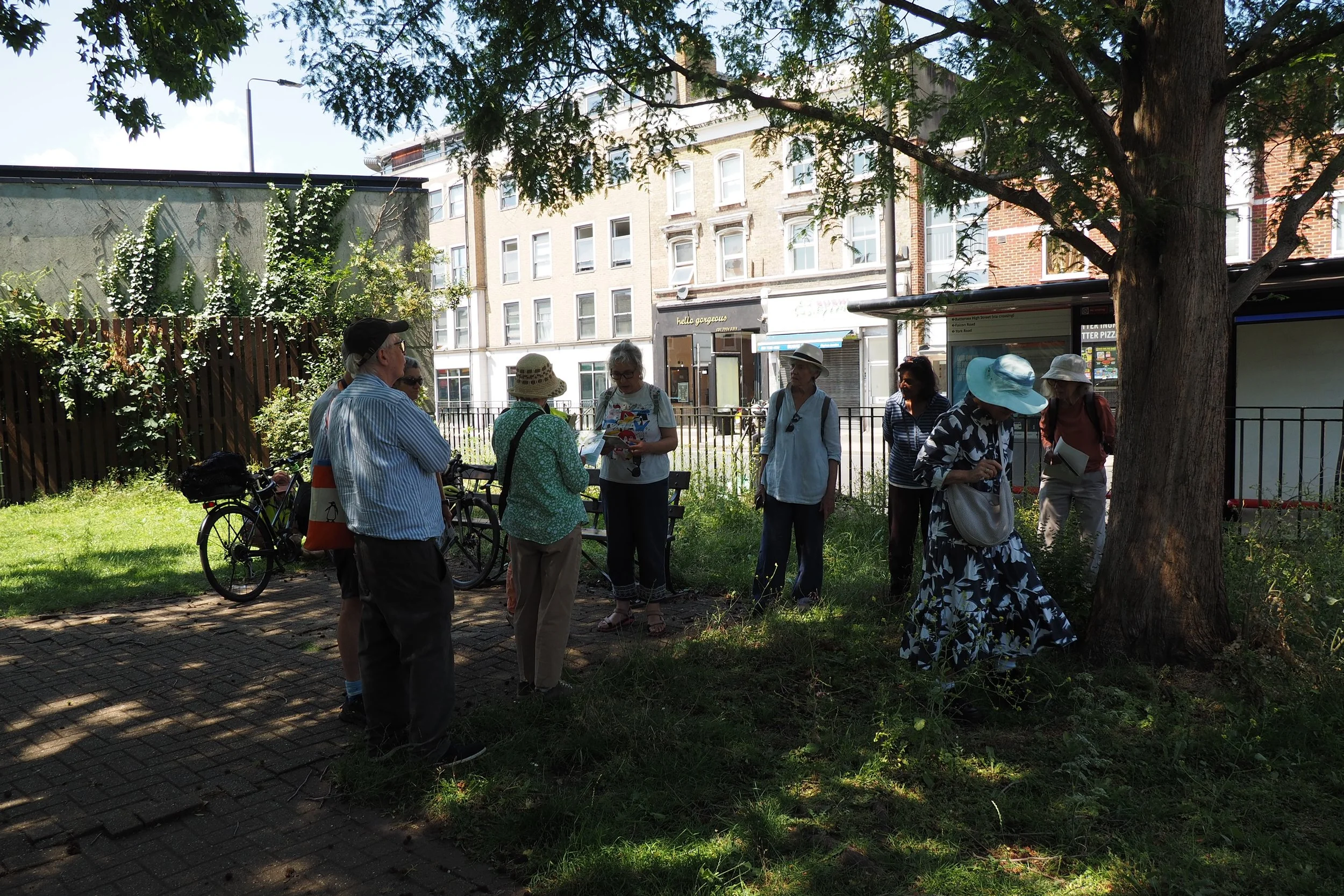
Gathering in the shade in Christchurch Gardens. Photo © the author.
We met up in Christchurch Gardens to examine the wide strip of grass along the railings beside Battersea Park Road. This has been encouraged to develop into a wildflower meadow over the last few years by giving it just one cut a year. This is done in the autumn, after any flowers already there have seeded themselves and in order to prevent those getting smothered by the grasses. Otherwise it is largely left to its own devices, though extra wildflower seeds have been introduced at times to add variety, including some last autumn by Ling, who is also our local parks officer. As the lists indicate there have also in the past been some guerrilla plantings. This year we found 43 separate species, the same total as last year though not quite the same list. Ling was especially pleased to record no. 36 (common wheat), a first within the borough. It should be noted that species missing from this year's survey may not in fact be missing from the site, just not spotted by us because of their state of growth or that of surrounding plants. Note too that these lists record flowers and grasses only, excluding woody shrubs and trees and also non-vascular plants like mosses and liverworts. The entries show their family. followed by species, common name, and any other notes made by Ling:
1. Alliaceae, Allium sp. 1, Allium
2. Apiaceae, Conium maculatum, Hemlock
3. Asparagaceae, Muscari sp., Grape hyacinth, Guerrilla planting remnants
4. Asteraceae, Achillea millefolium, Yarrow
5. Asteraceae,Asteraceae sp. 1, No flower, young
6. Asteraceae, Bellis perennis, Common daisy
7. Asteraceae, Centaurea jacea, Brown Knapweed
8. Asteraceae, Centaurea nigra, Common knapweed
9. Asteraceae, Hypochaeris radicata, Cat's ear
10. Asteraceae, Lapsana communis, Nipplewort
11. Asteraceae, Senecio jacobaea, Common Ragwort
12. Asteraceae, Sonchus oleraceus, Smooth sow-thistle
13. Asteraceae, Taraxacum sp. 1, Dandelion
14. Boraginaceae, Pentaglottis sempervirens, Green alkanet
15. Brassicaceae, Sisymbrium officinale, Hedge mustard
16. Fabaceae, Lotus corniculatus, Common bird's foot trefoil
17. Fabaceae, Trifolium repens, White clover
18. Geraniaceae, Geranium molle, Dove's-foot crane's-bill
19. Lamiaceae, Ballota nigra, Black horehound
20. Lamiaceae, Lamiaceae sp. 1, Red flowers, possibly red dead nettle? Black horehound?
21. Lamiaceae, Melissa officinalis, Lemon balm, Self-seeded from planted beds.
22. Papaveraceae, Papaver somniferum, Opium poppy
23. Plantaginaceae, Plantago lanceolata, Ribwort plantain
24. Plantaginaceae, Veronica sp. 1, Speedwell. Likely V. persica
25. Plantaginaceae, Veronica sp. 2, Speedwell
26. Poaceae, Bromus sterilis, Barren Brome
27. Poaceae, Dactylis glomerata, Cock's foot
28. Poaceae, Holcus lanatus, Yorkshire fog
29. Poaceae, Hordeum murinum, Wall barley
30. Poaceae, Lolium perenne, Perennial rye-grass
31. Poaceae, Phleum pratense, Timothy
32. Poaceae, Poa sp. 1, Meadowgrass
33. Poaceae, Poa trivialis, Rough Meadow-grass
34. Poaceae, Poaceae sp. 1, Grass
35. Poaceae, Poaceae sp. 2, Grass. Appearing diseased - likely smut (seedheads black).
36. Poaceae, Triticum aestivum, Common wheat, bread wheat. First recording in borough. Common 'weed' in streets/gardens/waste places.
37. Polygonaceae, Rumex acetosa, Common sorrel
38. Polygonaceae, Rumex crispus, Curled dock
39. Ranunculaceae, Ranunculus repens, Creeping buttercup
40. Rosaceae, Potentilla reptans, Creeping cinquefoil
41. Urticaceae, Urtica dioica, Common nettle
42. Violaceae, Viola sp., Viola
43. Monocot. sp. 1. Likely iris, guerrilla planted. Stems/leaves very flat.
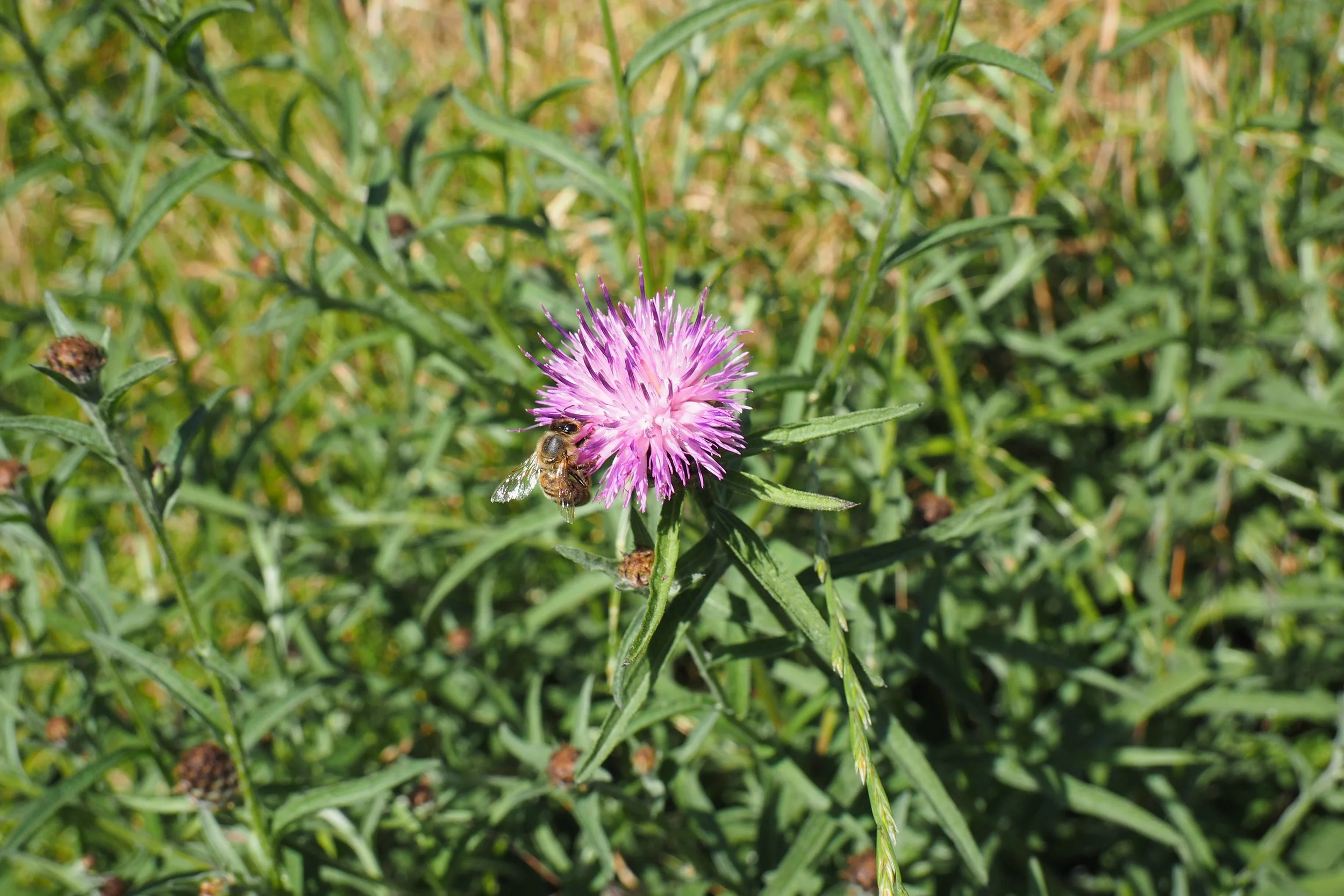
Common knapweed (Centaurea nigra) being visited by a honey bee in Christchurch Gardens. Photo © the author.
In Falcon Park
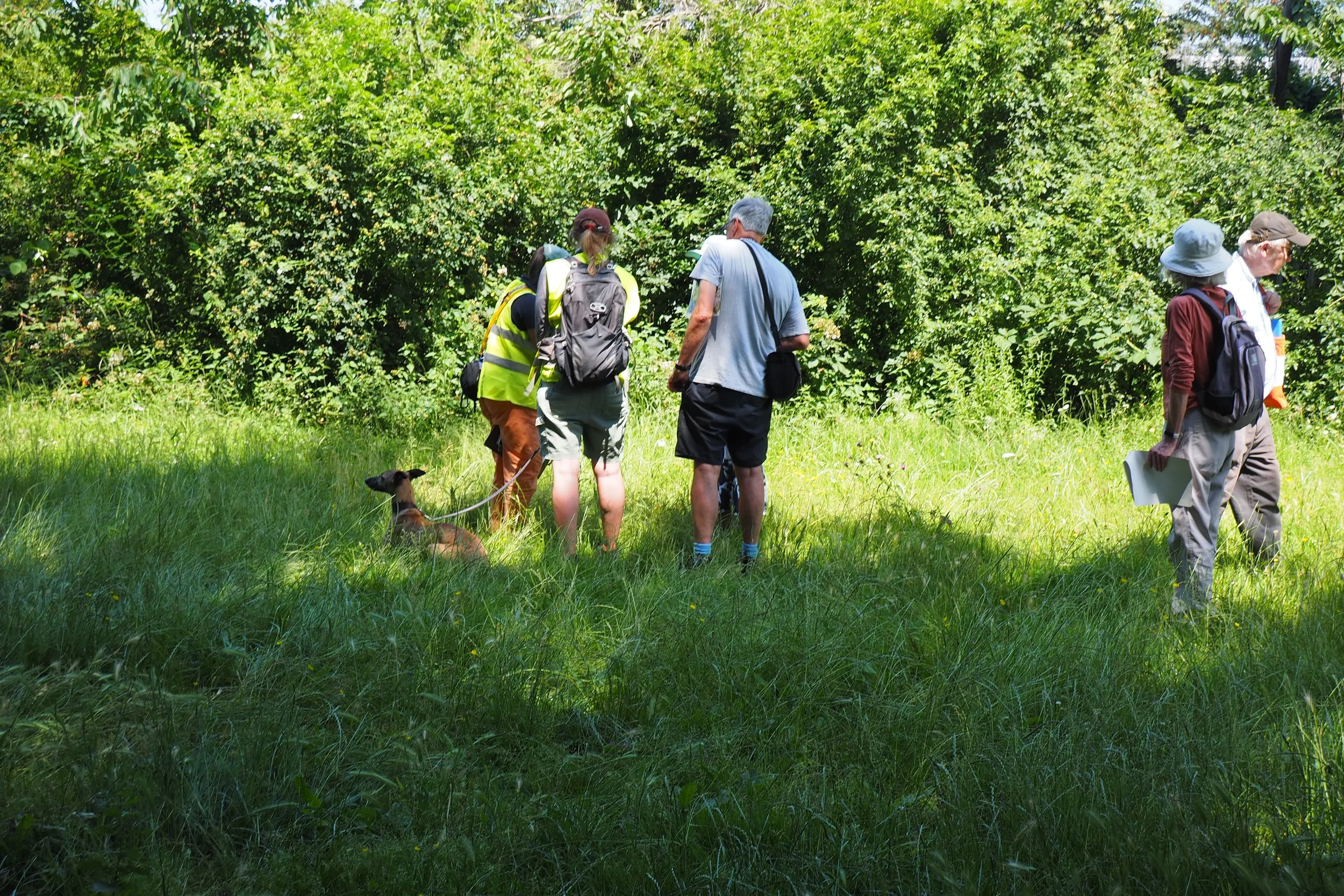
The surveyors at work in Falcon Park. Photo © the author.
Our second site was the triangle of rough land between narrowing railway embankments at the North end of Falcon Park, to the left of a foot and cycle path leading through to Latchmere Passage and out onto Latchmere Road. This once housed sheds used to store municipal gardening equipment; after those came down the site remained closed off behind iron railings, until in 2019 those were removed and it became a wildflower area. Existing trees were left in situ and an additional shelter belt of native shrubs was planted on the East side; otherwise it was left to its own devices apart from an annual autumn cutback. No additional seeds have ever been sown here, but the sheltered location and poor, stony soil has encouraged colonisation by a wide variety of species, many no doubt blown in from the adjacent railway land. Plants have to be tough enough to cope with regular incursions by contractors from Network Rail, accessing a electrical substation at the far end and sometimes parking up on the site too. Sometimes there are other occupiers, too; this year we couldn't survey the far end as a rough sleeper had camped there. So I am not surprised that our species count was 41, down from 50 last year. On the plus side Ling was gratified to add Bladder campion (no. 17) to her list this time, this being rarer locally than its Red and White relatives.
1. Apiaceae, Daucus carota ssp. carota, Wild carrot
2. Asteraceae, Achillea millefolium, Yarrow
3. Asteraceae, Arctium minus, Lesser Burdock
4. Asteraceae, Artemisia vulgaris, Mugwort
5. Asteraceae, Bellis perennis, Common daisy
6. Asteraceae, Centaurea nigra, Common knapweed
7. Asteraceae, Galinsoga quadriradiata, Shaggy soldier
8. Asteraceae, Hypochaeris radicata, Cat's ear
9. Asteraceae, Leucanthemum vulgare, Oxeye daisy
10. Asteraceae, Sonchus oleraceus, Smooth sow-thistle
11. Asteraceae, Taraxacum sp., Dandelion
12. Boraginaceae, Pentaglottis sempervirens, Green alkanet
13. Brassicaceae, Capsella bursa-pastoris, Shepherd's purse
14. Brassicaceae, Sisymbrium officinale, Hedge mustard
15. Caryophyllaceae, Silene dioica, Red campion
16. Caryophyllaceae, Silene latifolia, White campion
17. Caryophyllaceae, Silene vulgaris, Bladder campion
18. Caryophyllaceae, Stellaria media, Common chickweed
19. Euphorbiaceae, Euphorbia peplus, Milkweed
20. Fabaceae, Trifolium sp. 1, Trefoil. Very tiny trefroil
21. Fabaceae, Trifolium dubium, Lesser Trefoil, Lesser hop trefoil
22. Fabaceae, Fabaceae sp. 1, Suspected Medicago sp.
23. Geraniaceae, Geranium molle, Dove's-foot crane's-bill
24. Lamiaceae, Lamium album, White deadnettle
25. Lamiaceae, Prunella vulgaris, Self-heal
26. Poaceae, Agrostis capillaris, Common Bent
27. Poaceae, Dactylis glomerata, Cock's foot
28. Poaceae, Hordeum murinum, Wall barley
29. Poaceae, Lolium perenne, Perennial rye-grass
30. Poaceae, Phleum pratense, Timothy
31. Poaceae, Poa annua, Annual meadowgrass
32. Poaceae, Poaceae sp. 1, Grass, Fescue?
33. Polygonaceae, Polygonum aviculare, Knotgrass
34. Polygonaceae, Rumex acetosa, Common sorrel
35. Polygonaceae, Rumex crispus, Curled dock
36. Ranunculaceae, Ranunculus acris, Meadow buttercup
37. Ranunculaceae, Ranunculus repens, Creeping buttercup
38. Rosaceae, Potentilla reptans, Creeping cinquefoil
39. Rubiaceae, Galium album syn. Galium mollugo, Hedge bedstraw
40. Rubiaceae, Galium aparine, Cleaver, goosegrass
41. Scrophulariaceae, Verbascum sp., Mullein
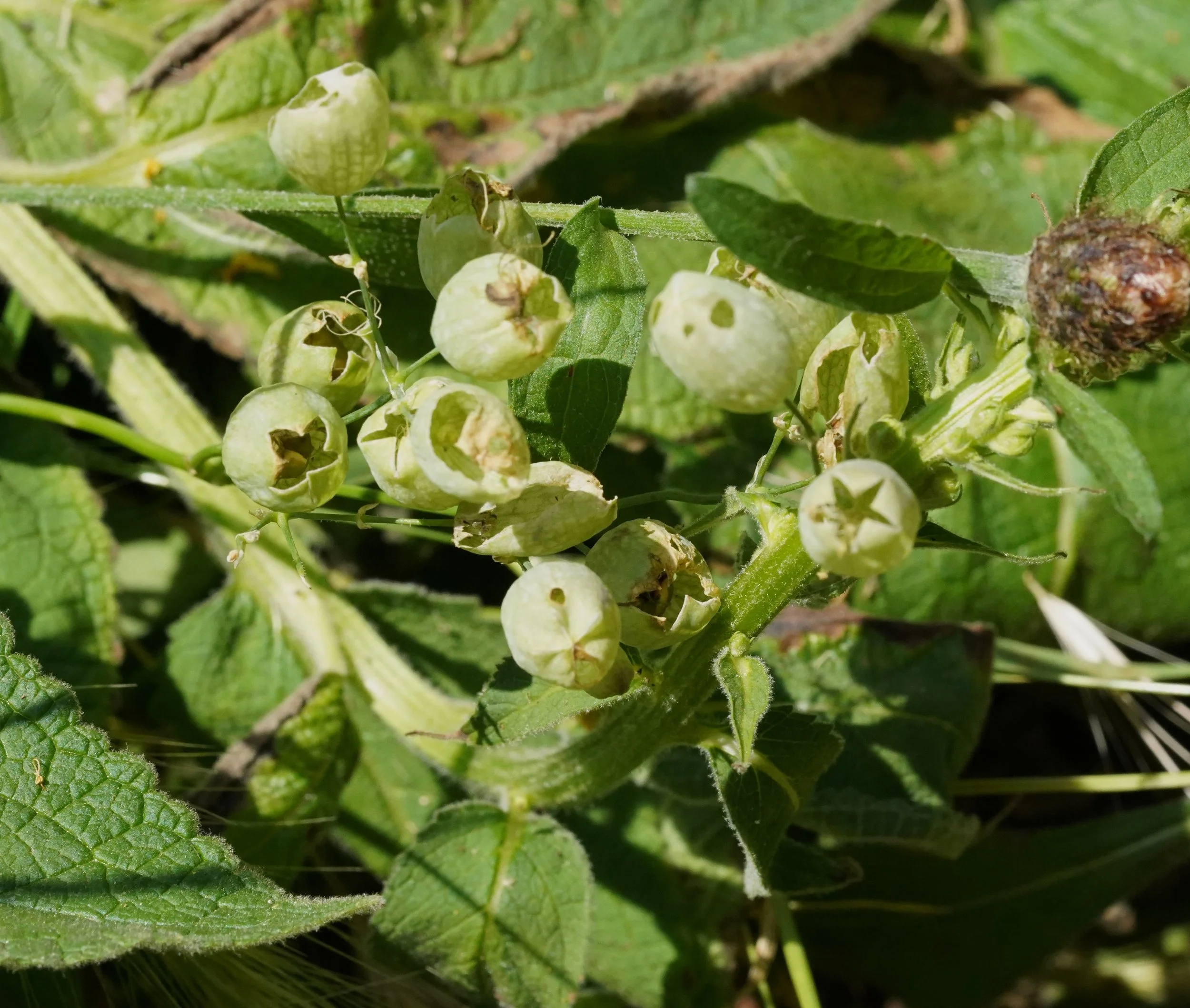
Bladder Campion (Silene vulgaris) in Falcon Park. Photo © Stephen Taylor.