Keeping It Local: Citizen Science
by Elaine Michel, Open Spaces Committee Member and Society Trustee
For our first blog of 2026 we are exploring Citizen Science. What is it, and why does it matter? I interviewed Enable Parks' Community Engagement and Inclusion Officer, Millie Coe, about the value of Citizen Science.
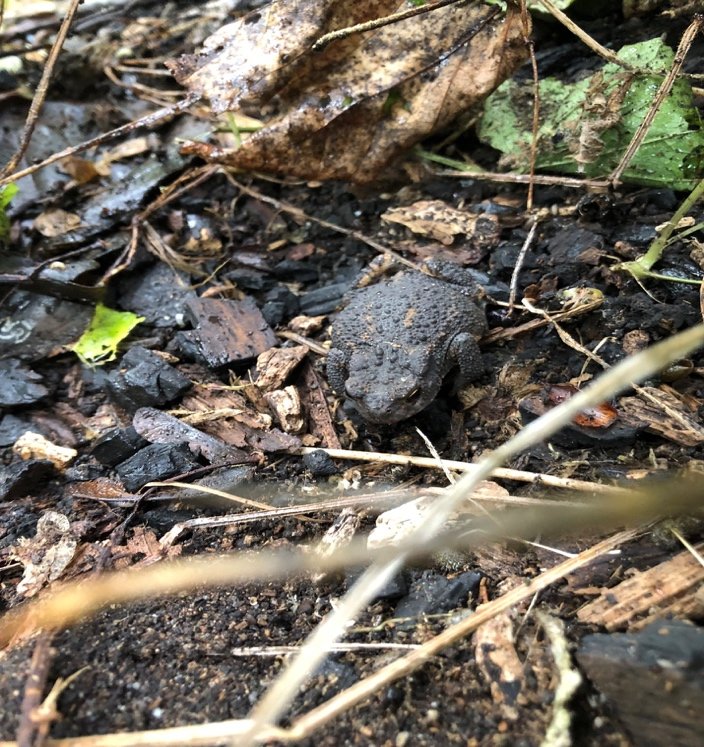
Hiding in plain sight: the Common Toads who live around the boating lake in Battersea Park will feature in citizen science surveys within the Victorian Cascades restoration project. Photo © Brieannah Mollison-Read, Enable.
Q: Please introduce yourself to our readers.
A: My name is Millie Coe and I work in the Parks Team at Enable. I am the Parks Community Engagement and Inclusion Officer, working on the Battersea Park Cascades Restoration Project. With support from the National Lottery Heritage Fund, the project will restore Battersea Park’s historic waterfall, powered sustainably by solar energy. Alongside the restoration, my role focuses on working with the local community, groups, schools, residents and park users to understand how people use the park, how safe and welcome they feel, what events or activities they would like to see going on in the park, and how they want Battersea Park’s heritage to be shared. The feedback helps share future events and activities in the park, volunteering opportunities and interpretation so that the Cascades and Battersea Park reflect what the community want and need. You can find out more about the Cascades restoration project and how to get involved here.
Q: How did you get into Community Engagement and Inclusion?
A: I studied Conservation Biology at university and then became an ecologist, later working as an invasive species consultant for an environmental consultancy. I wanted to work directly with communities, helping connect people with nature and feel empowered to look after it. This role allows me to bring together ecology, heritage and community engagement, and work with people of all ages and backgrounds.
Q: Enable runs Citizen Science projects. It’s something we hear a lot about, for example the latest RSPB’s Big Garden Bird Watch. Why does Citizen Science matter?
A: Citizen Science is important because it gives local people the chance to be involved in understanding and protecting the environment. No prior knowledge or experience is needed, just curiosity! People can learn new skills, contribute valuable biodiversity data and feel part of something bigger, whilst enjoying being outdoors. It also helps build a connection between communities and the green spaces they care about. You never know what you might find hiding in plain sight!
Q: What's your favourite part of the job?
A: Talking to people! I love hearing different perspectives, ideas and experiences and helping turn those ideas into real activities, projects or changes in their local green spaces.
Q: What advice would you give readers who want more ecology in their lives?
A: Get outside and go for a walk, explore your local greenspace/street and observe nature and the wildlife around you. Ask questions about what you see and get curious. Start small with a specific interest and expand from there. If you’re interested in volunteering in Wandsworth’s parks, you can contact biodiversity@enablelc.org for upcoming opportunities.
Q: Are there any local groups or organisations that people could get involved with?
A: There are plenty of local groups involved in parks, biodiversity, heritage, and community activities across Wandsworth. Obviously the Battersea Society, but also local “Friends of” park groups, conservation charities, and youth organisations. Enable works with a wide range of community partners, and we’re always keen to hear from groups or individuals who want to get involved with the Cascades project or other park-based activities. Please email me at batterseaheritage@enablelc.org for more information.
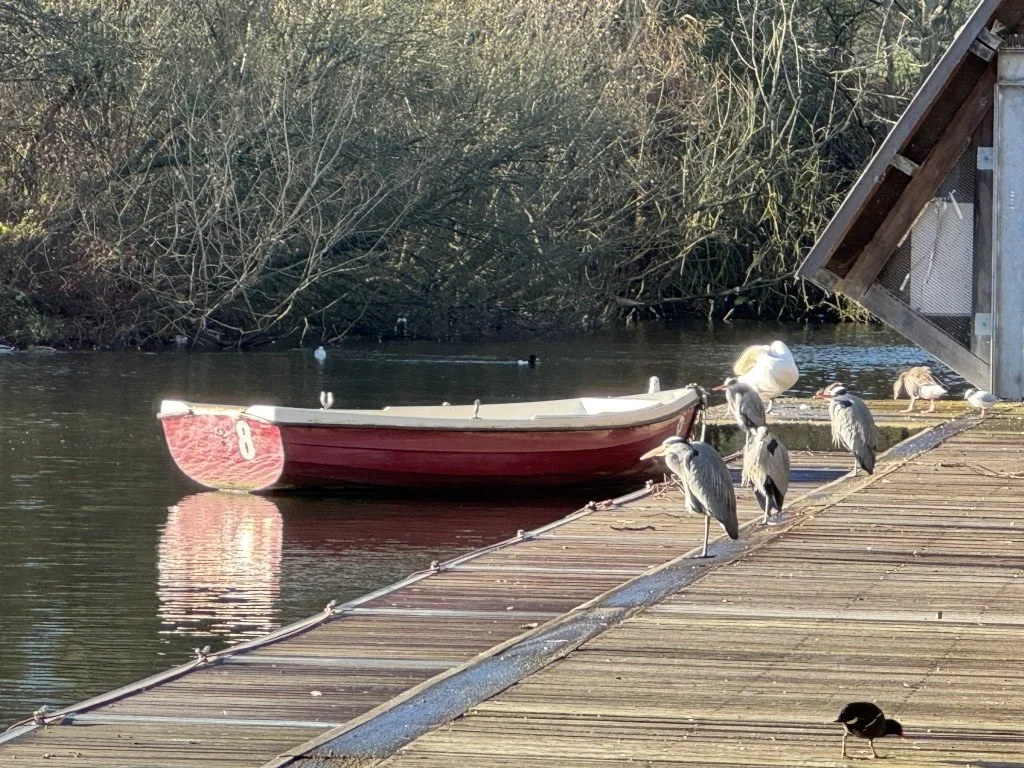
Out in the sunshine: the lake also attracts many different species of birds. Photo © Elaine Michel.