
Trees, rivers and butterflies
by Clare Graham, Chair, Open Spaces Committee
In May the annual survey of Battersea's young street trees starts; it's time as well to check out London Rivers Week 2026 (23-31 May), and help choose Britain's favourite butterfly.
The 2026 Young Street Tree Survey
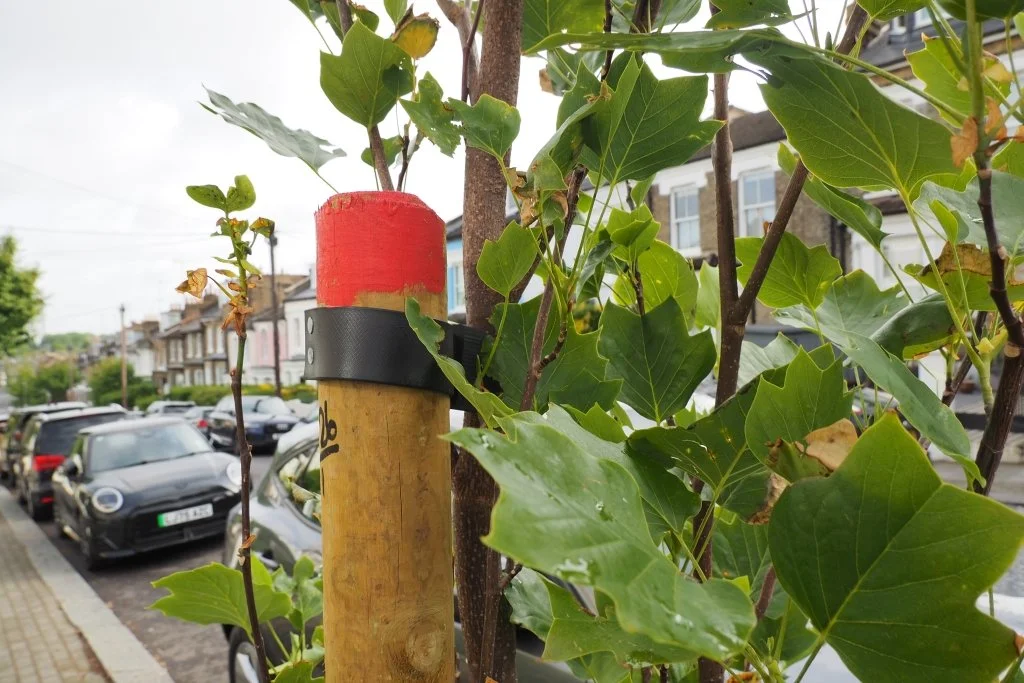
The red paint on the stake of a young tree in Eland Road records that it was planted in 2025-6. Photo © the author.
I'm one of the Wandsworth Tree Wardens, a group of local volunteers who work with Wandsworth Council's Tree Team. One of the ways we help out is by carrying out an annual survey between May and September of young street trees across the borough. I've just started doing this for Battersea's Shaftesbury and Queenstown Ward, where 33 of the 1,000 new trees put in during the November 2025-March 2026 planting season are located. I'll also take a look at the 15 planted in 2024-5 and the 44 from 2023-4 to see how they're establishing. This used to be a rather laborious process, requiring us to use a paper spreadsheet to locate each tree and then mark up little boxes with details of its general health, the state of its stake and ties and so forth, before going home and re-entering all that information into an Excel file to be sent to a WTW co-ordinator. New technology has mercifully streamlined and simplified the task: I still need a paper printout to find the tree, but can then use my smartphone to input its unique identifying number and all those other details into a form which I then upload direct and in real time to the WBC tree database, as I stand beside it. The paint dabbed onto the top of each young tree's stake indicates the year it was planted: red for 2025-6 (and previously for 2018-9), black for 2024-5, a brownish orange for 2023-4, and so on back. Young trees also usually retain their paper nursery labels, and it's interesting this year to see the Tree Team experimenting with some new non-native species on the streets; so far I have encountered several of these columnar Tulip Trees (Liroidendron tulipifera fastigiata) in Eland Road and Amies Street, a Honey Locust (Gleditsia triacanthos Sunburst) in Holden Street, a Swedish Whitebeam (Sorbus intermedia Brouwers) in Birley Street and a Pecan tree (Carya illinoinensis) in Shelwood Road. These are attractive in themselves, shouldn't outgrow their positions, and can hopefully cope better with the rigours of street life and the challenges of climate change than some traditional choices; apparently both hawthorns and birches now often struggle to establish, for instance. I look forward to learning more about last season’s plantings and this year’s survey at our next WTW meeting this week, where the Tree Team will also be telling us more about Wandsworth's Tree Sponsorship Scheme, a new initiative designed to encourage individuals or businesses to sponsor a tree in a new location on a street, or in a park.
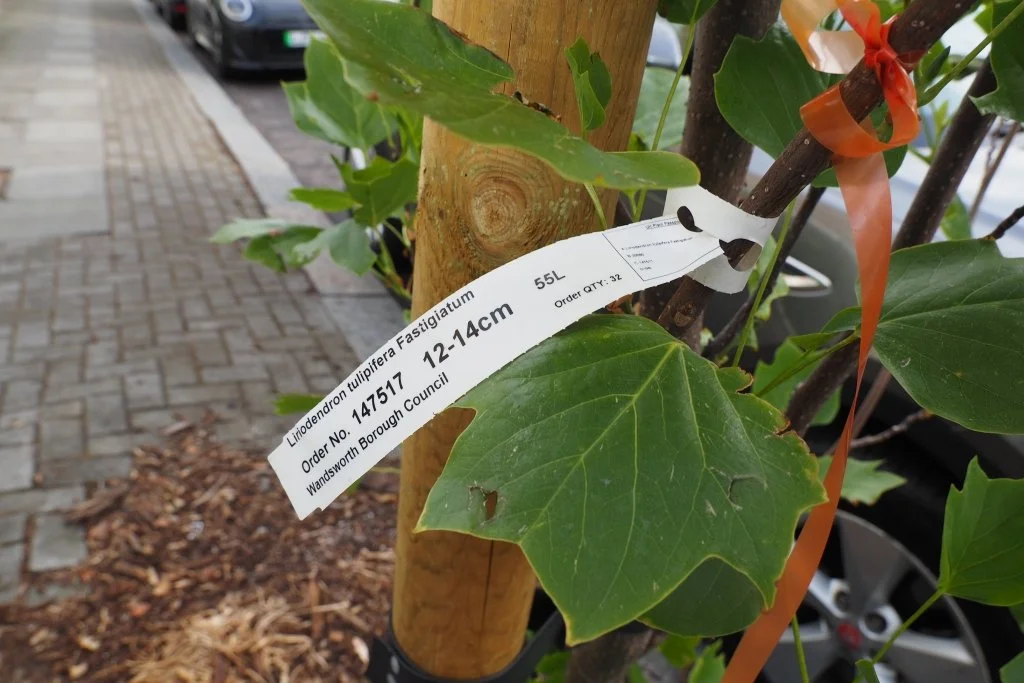
The nursery label identifies the Eland Road tree as a Liriodendron or tulip tree, a species originating in eastern North America. Photo © the author.
London Rivers Week
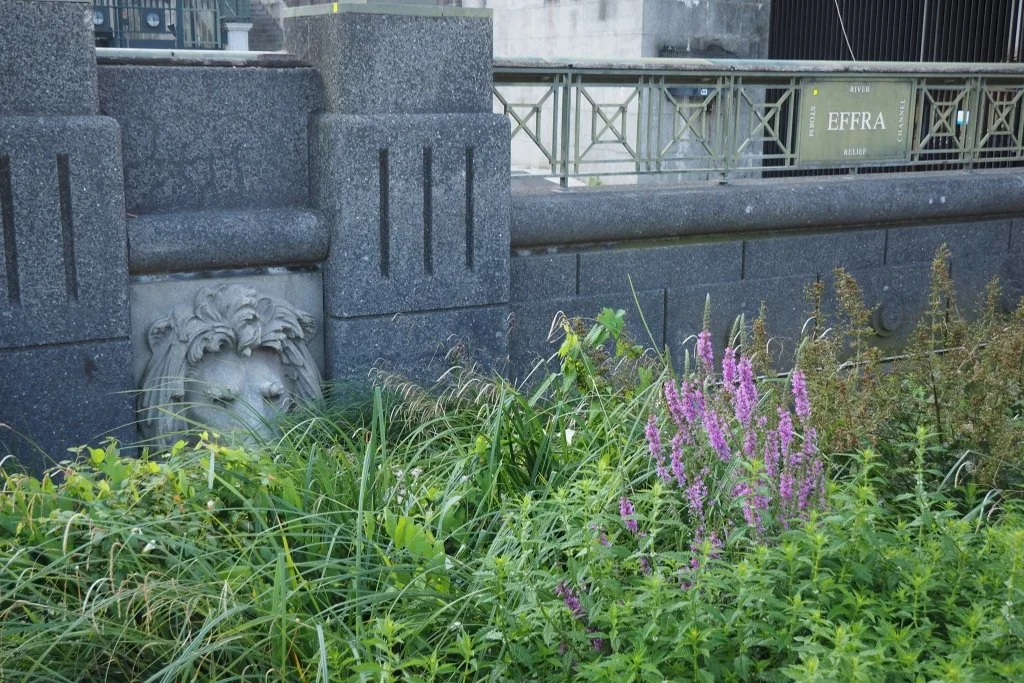
Flourishing tidal planting at Thames Tideway's Effra Quay beside Vauxhall Bridge last summer. Photo © the author.
This month I can also recommend checking out London Rivers Week 2026, an annual event organised by the Thames21 charity. It runs from the 23rd to the 31st of May this year and as always has plenty of interesting walks, talks and other events across London. Amongst them Thames Tideway is offering guided walks along the Thames from its new and impressive Bazalgette Embankment at Blackfriars though to the mouth of the Effra, beside Vauxhall Bridge. (And from there you could follow our own self-guided Thames Path walk home to Battersea Park, should you have any energy left.) There are also opportunities to explore the industrial history of the river Wandle, to join a creative family workshop beside the river at St Mary's Battersea, and to honour the Yoruban river goddess Mama Osun by cleaning up Battersea foreshore, dressed in white and yellow. This last has become the event's regular closing event; it's a jolly affair organised by Thames21 itself, with refreshments at St Mary's afterwards.
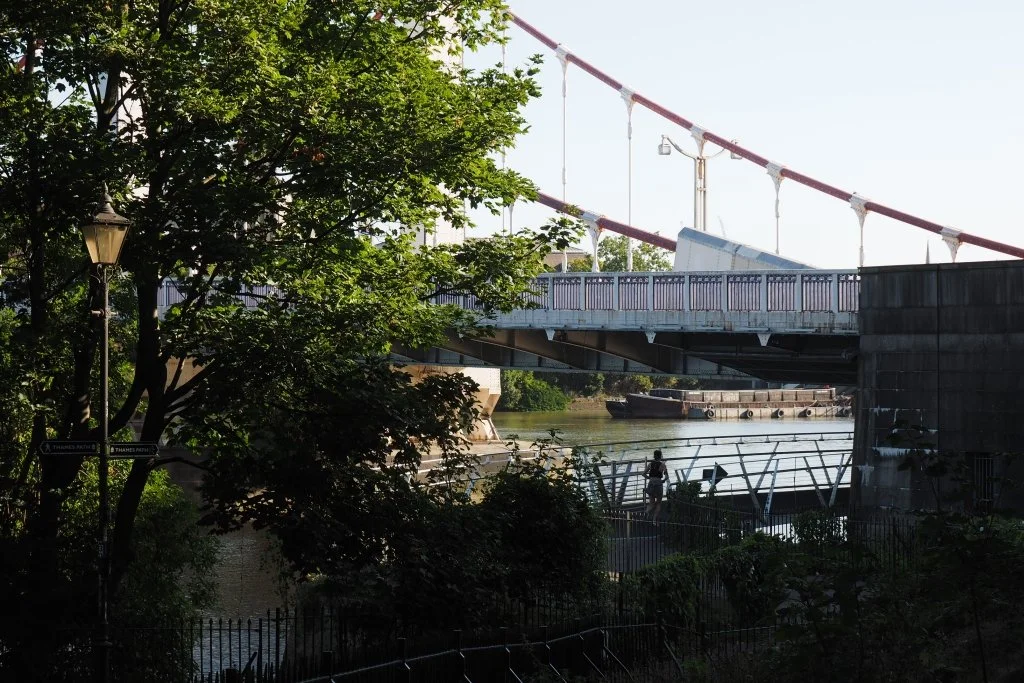
Beside the Thames Path in Battersea Park last summer, near Chelsea Bridge. Photo © the author.
What’s your favourite butterfly?
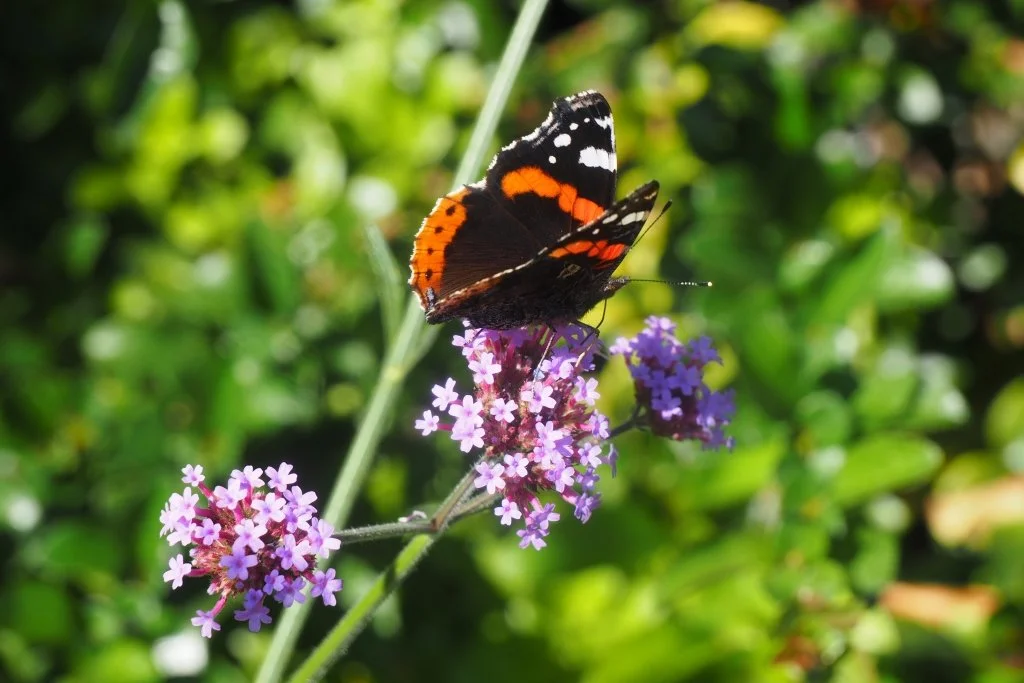
A Red Admiral visiting a Verbena bonariensis plant. Photo © the author.
Finally, who doesn't love a butterfly? Certainly I do, so I'm always delighted to see visitors like this Red Admiral in my garden. Verbena bonariensis always seems to lure them in, together with marjoram, hardy salvias and single dahlias; the UK charity Butterfly Conservation has plenty more advice on gardening for butterflies. It is also currently running a clever and really rather lovely publicity campaign, urging us all to help it choose Britain's Favourite Butterfly. Voting is open until 7 June and the idea is to celebrate the incredible variety of butterflies we share our home with. We hope it will help you discover more about these wonderful creatures, and inspire you to notice the butterflies where you live. In time, you may even want to help us in our mission to recover the UK’s butterflies and, in turn,create a beautiful butterfly effect for nature. A well-designed website encourages you to read up on Britain's sixty different species, all beautifully depicted in illustrations commissioned specially from wildlife illustrator Richard Lewington. There's an entertaining if not entirely scientific quiz on offer too, to help you decide Which Butterfly Are You? The sting in the tail, if it can be described as such, is being asked for your email address in order to vote. But even that's softened by a thank-you image of your chosen butterfly, to share and spread the word. So here's an image of the Gatekeeper butterfly the quiz paired me up with ('flashy, tough, sporty'—really?!). I see that with my vote that's currently reached position no. 19; the Red Admiral is at no. 3, with the Peacock in first place and the Orange-tip at no. 2.
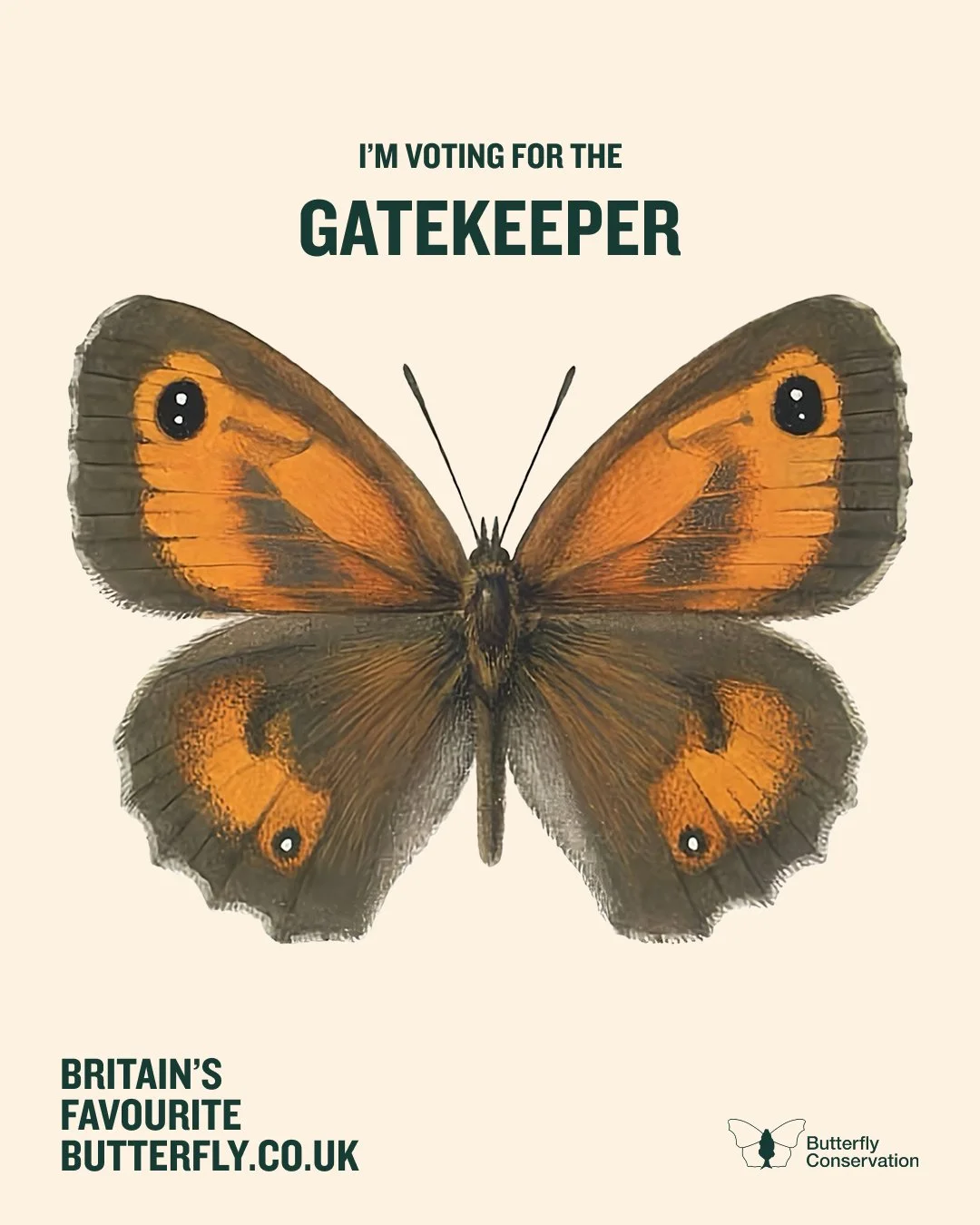
The Gatekeeper. Photo © Richard Lewington and Butterfly Conservation.