
Our 2024 Wildflower Survey
By Clare Graham, Chair, Open Spaces Committee
The results of our second annual survey with Enable Biodiversity in Falcon Park—and our first ever one within Christchurch Gardens. Plus: could you help nature out yourself, by surveying your own garden for On Your Street?
In Falcon Park
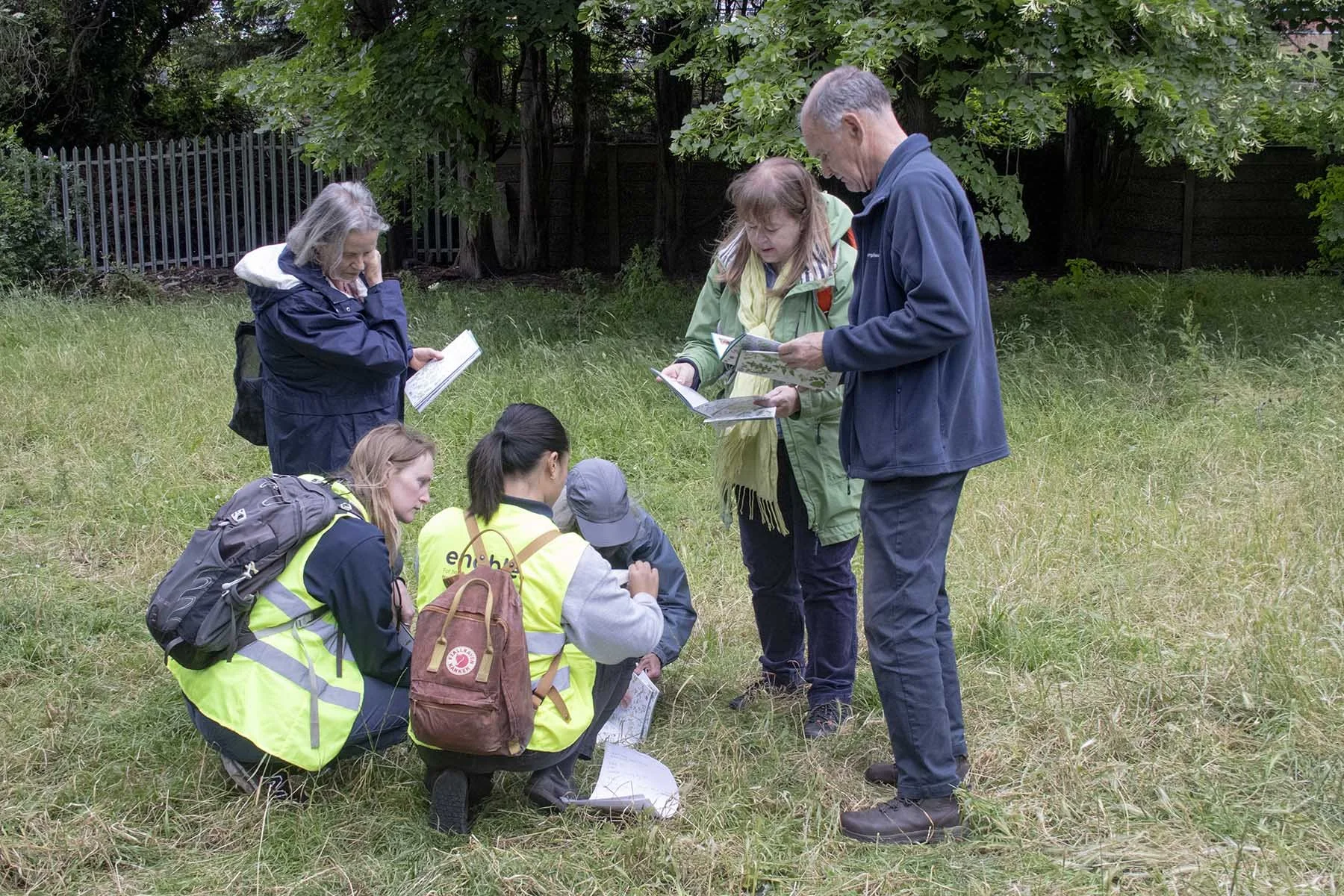
Checking out the north end of Falcon Park. All photos © Mark Hodgkinson.
It was good to meet up again with Brieannah and Ling from Enable Biodiversity for a second annual wildflower survey of the north end of Falcon Park; you can find my account of our 2023 one here. On a rather damp grey day Chris, Camilla and I represented OSC, Mark our Society Secretary came along to take the photos, and Society members Jenny and Laila also very kindly turned out to help us with identification. I'd been somewhat concerned that we wouldn't reach the 2023 count of 29 species. After much recent rain the space was looking more grassy than flowery—moreover, some of it had been repeatedly crushed over the previous few weeks by Network Rail vehicles, parked up for works to the tracks nearby. But I needn't have worried: once we started to look more closely, we were encouraged to discover forty different species of flowers and grass—eleven more than last year. Here's Ling's list; the plant family is followed by its species, its common name, and any notes:
1 Apiaceae, Apiaceae sp., Carrot family
2 Asteraceae, Achillea millefolium, Yarrow
3 Asteraceae, Bellis perennis, Common daisy
4 Asteraceae, Centaurea nigra, Common knapweed
5 Asteraceae, Cirsium vulgare, Common thistle/spear thistle/bull thistle
6 Asteraceae, Leucanthemum vulgare, Oxeye daisy
7 Asteraceae, Picris hieracioides, Hawkweed oxtongue
8 Asteraceae, Taraxacum sp. , Dandelion
9 Boraginaceae, Pentaglottis sempervirens, Green alkanet
10 Brassicaceae, Alliaria petiolata, Garlic mustard
11 Brassicaceae, Brassicaceae sp.
12 Caryophyllaceae, Silene latifolia, White campion
13 Caryophyllaceae, Silene sp., Campion Red campion or white/red campion hybrid
14 Caryophyllaceae, Stellaria media, Common chickweed
15 Euphorbiaceae, Euphorbia peplus, Milkweed
16 Fabaceae, Trifolium dubium, Lesser Trefoil
17 Fabaceae, Trifolium repens, White clover
18 Fabaceae, Vicia sativa, Common vetch
19 Geraniaceae, Geranium molle, Dove's-foot crane's-bill
20 Geraniaceae, Geranium robertianum, Herb Robert
21 Geraniaceae, Geranium sp., Crane's-bill, Suspected G. pratense. No flower.
22 Lamiaceae, Ballota nigra, Black horehound
23 Lamiaceae, Lamium album, White deadnettle
24 Malvaceae, Malva sylvestris, Common mallow
25 Plantaginaceae, Plantago lanceolata, Ribwort plantain
26 Plantaginaceae, Plantago major, Greater plantain
27 Poaceae, Bromus sterilis, Barren brome
28 Poaceae, Cynosurus cristatus, Crested Dog's tail
29 Poaceae, Dactylis glomerata, Cock's foot
30 Poaceae, Hordeum murinum, Wall barley
31 Poaceae, Lolium perenne, Perennial rye-grass
32 Poaceae, Poa annua, Annual meadowgrass
33 Polygonaceae, Rumex sp. Dock/sorrel, Suspected R. acetosa.
34 Ranunculaceae, Ranunculus acris, Meadow buttercup
35 Rosaceae, Potentilla reptans, Creeping cinquefoil
36 Rosaceae, Rubus 'fruticosus', Bramble
37 Rubiaceae, Galium aparine, Cleaver, goosegrass
38 Urticaceae, Urtica dioica, Common nettle
39 Dicotyledonous sp. 1
40 Dicotyledonous sp. 2, Suspected Virginia Creeper (5 leaflets in palmate shape)
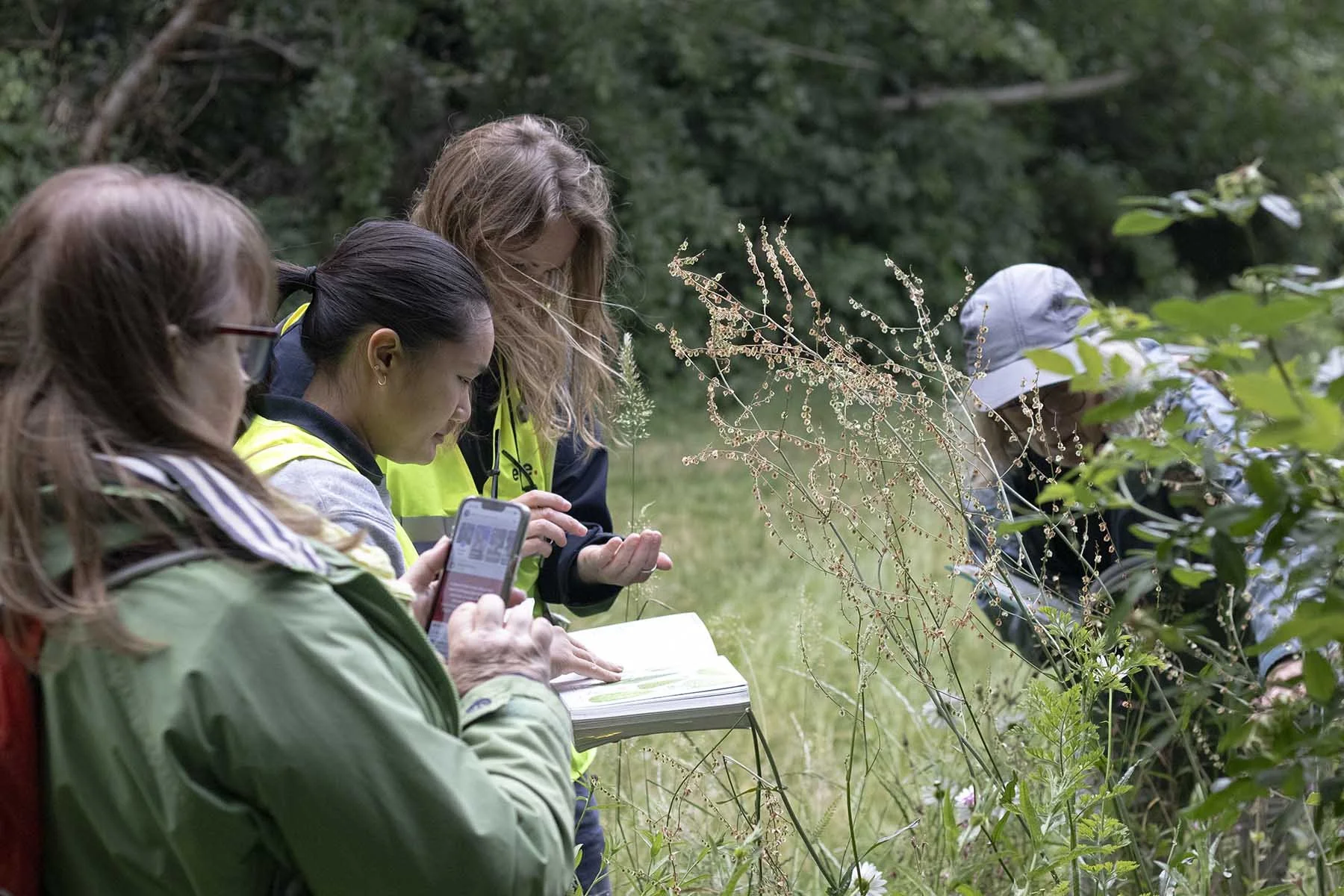
A sorrel, but which?
Surveying Christchurch Gardens
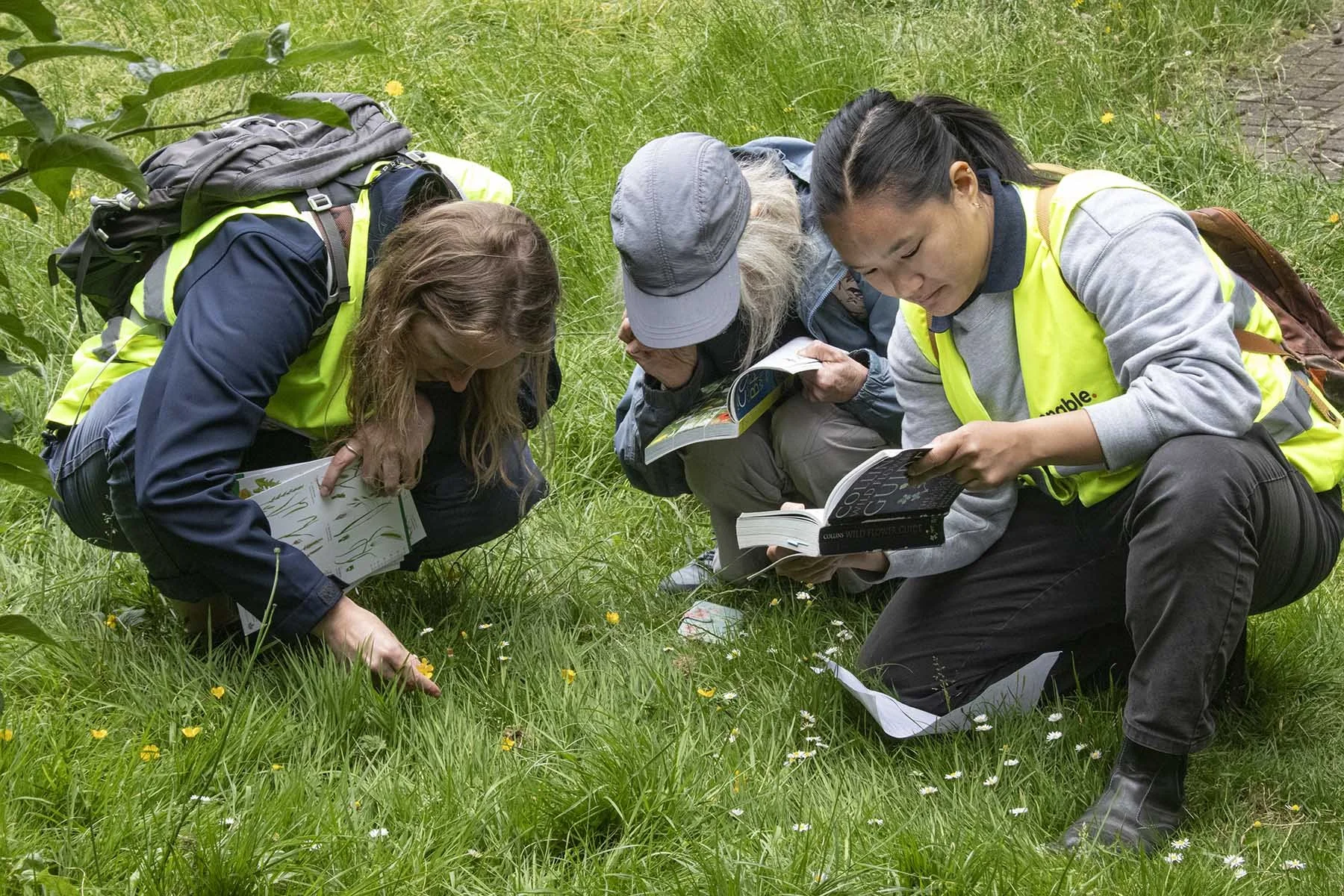
Wildflowers in the grass in Christchurch Gardens.
This year, we also walked down Cabul Road and surveyed for the first time an area of grass in Christchurch Gardens where wildflowers have been encouraged. You will find it between the World War II monument, and the fence onto Battersea Park Road. 38 species were found here, though some of those were cultivars introduced unofficially during lockdown. Thames Water earthworks, to bring in a supply for the still-to-be-installed drinking water fountain at the West end of the park, had also affected the picture:
1 Amaryllidaceae, Allium sp. 1, Giant allium, Guerrilla gardening
2 Amaryllidaceae, Allium sp. 2, Allium, Guerrilla gardening
3 Asteraceae, Achillea millefolium, Yarrow
4 Asteraceae, Centaurea scabiosa, Greater knapweed
5 Asteraceae, Cirsium vulgare, Common thistle/spear thistle/bull thistle
6 Asteraceae, Echinops sp., Globe thistle, Guerrilla gardening
7 Asteraceae, Hypochaeris radicata, Cat's ear
8 Asteraceae, Lapsana communis, Nipplewort
9 Asteraceae, Leucanthemum vulgare, Oxeye daisy
10 Asteraceae, Sonchus oleraceus, Smooth sow-thistle
11 Asteraceae, Taraxacum sp., Dandelion
12 Asteraceae, Guerrilla gardening, suspected Calendula (or similar)
13 Boraginaceae, Pentaglottis sempervirens, Green alkanet
14 Brassicaceae, Brassicaceae sp.
15 Caryophyllaceae, Suspected common chickweed
16 Dicotyledonous sp.
17 Fabaceae, Lotus corniculatus, Common bird's foot trefoil
18 Fabaceae, Trifolium dubium, Lesser Trefoil
19 Fabaceae, Trifolium sp., Clover, no flower
20 Geraniaceae, Geranium molle, Dove's-foot crane's-bill
21 Iridaceae, Iris, Guerrilla gardening
22 Lamiaceae, Ballota nigra, Black horehound
23 Monocotyledonous sp., Guerrilla gardening, suspected grape hyacinth, spent flowerheads remaining on stems.
24 Plantaginaceae, Plantago lanceolata, Ribwort plantain
25 Plantaginaceae, Plantago major, Greater plantain
26 Plantaginaceae, Veronica sp. , Speedwell
27 Poaceae, Anisantha sterilis, Barren Brome
28 Poaceae, Dactylis glomerata, Cock's foot
29 Poaceae, Holcus lanatus, Yorkshire fog
30 Poaceae, Hordeum murinum, Wall barley
31 Poaceae, Lolium perenne, Perennial rye-grass
32 Poaceae, Poa sp.
33 Polygonaceae, Rumex acetosa, Common sorrel
34 Polygonaceae, Rumex acetosella, Sheep's Sorrel
35 Ranunculaceae, Ranunculus acris, Meadow buttercup
36 Ranunculaceae, Ranunculus repens, Creeping buttercup
37 Rosaceae, Potentilla reptans, Creeping cinquefoil
38 Urticaceae, Urtica dioica, Common nettle
Recording Nature at Home
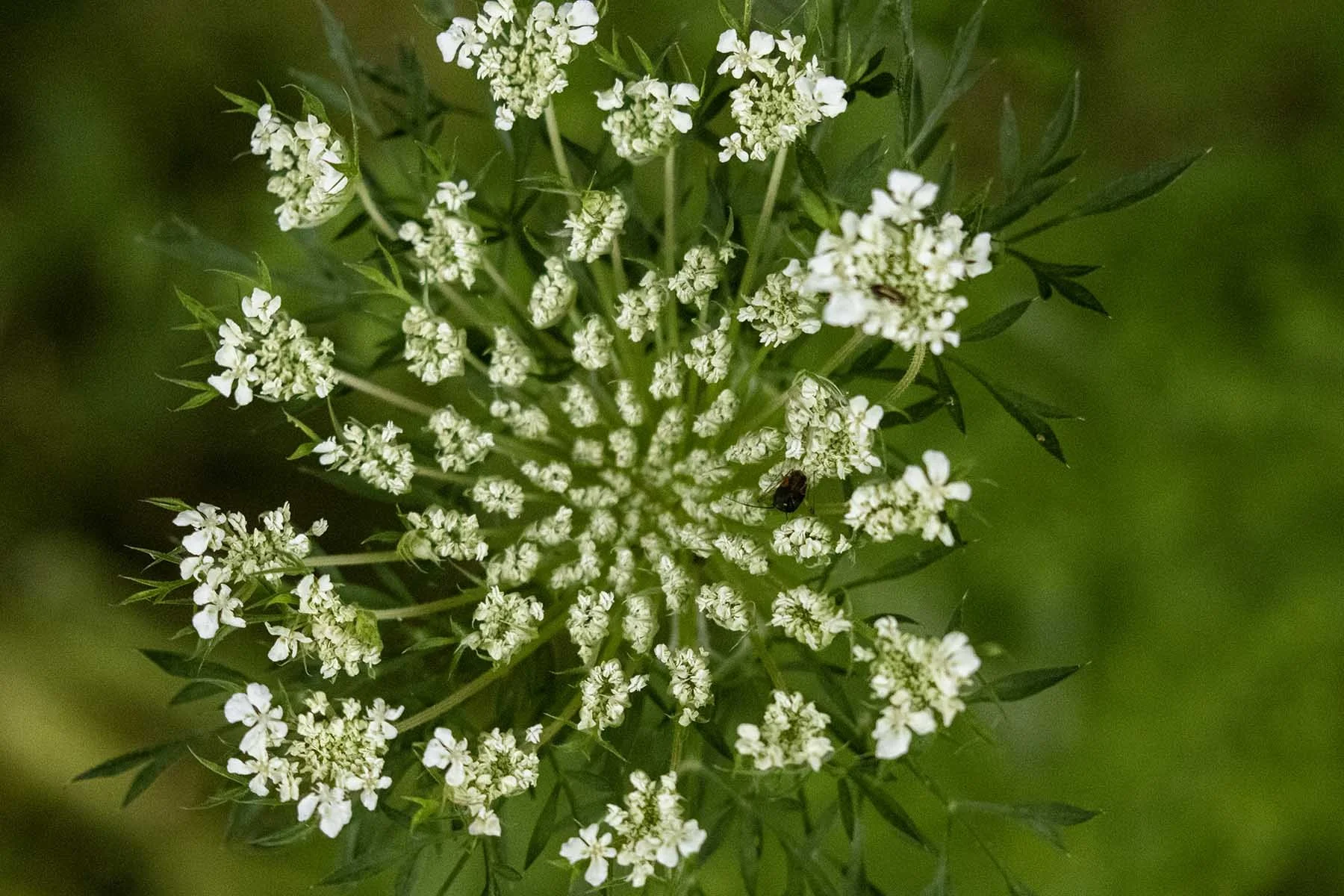
Apiaceae sp.
I should also mention that I've recently completed another survey for Enable Biodiversity—this time, of the nature in my own back garden. Private domestic gardens cover 716 hectares, almost 20% of the borough's total area. So they play a key role in helping support local wildlife and biodiversity, both individually and within green corridors and areas of connectivity. If you too have a garden, Enable and its partners at GiGL (Greenspace Information for Greater London) would really value your help with this On Your Street Survey. It's quick and easy to complete, only needs to be filled in once, and will help them build up the bigger picture.