PLANNING COMMITTEE
Liz Walton, Chair
The Battersea Society objects to this application which is an unneighborly and poorly configured over-development of the site with concerning plans for access, a likely underestimate of traffic and no mention of affordable housing provision, within a site formerly used by a Council facility. The redevelopment offered an opportunity to provide functional new facilities within a building better related to the site. This opportunity has been lost with a large building set too close to the pavements in Parkgate and Battersea Bridge Roads.
Many people in Battersea will have seen the recent announcement about the agreement between Wandsworth Council and Battersea Power Station to build 200 new houses for social rent as part of Phase 5 of the Power Station development. That’s obviously very welcome.
But at a more strategic level, the Council published proposals back in October 2023 to increase the amount of affordable housing across the borough. Essentially, the proposal was to increase from 35% to 45% the minimum proportion of affordable housing for any large development of more than 10 homes; and of that affordable housing, 70% would have to be for social rent. If they proposed lower proportions, developers would have to submit to a series of detailed viability assessments. The proposals also included further restrictions on the building of student accommodation, of large-scale single-room ‘co-living’ developments, and on build-to-rent schemes.
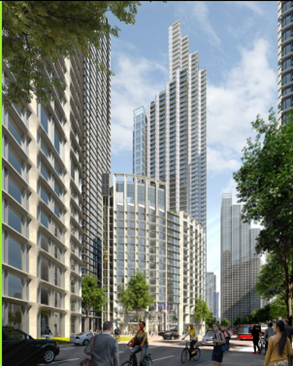
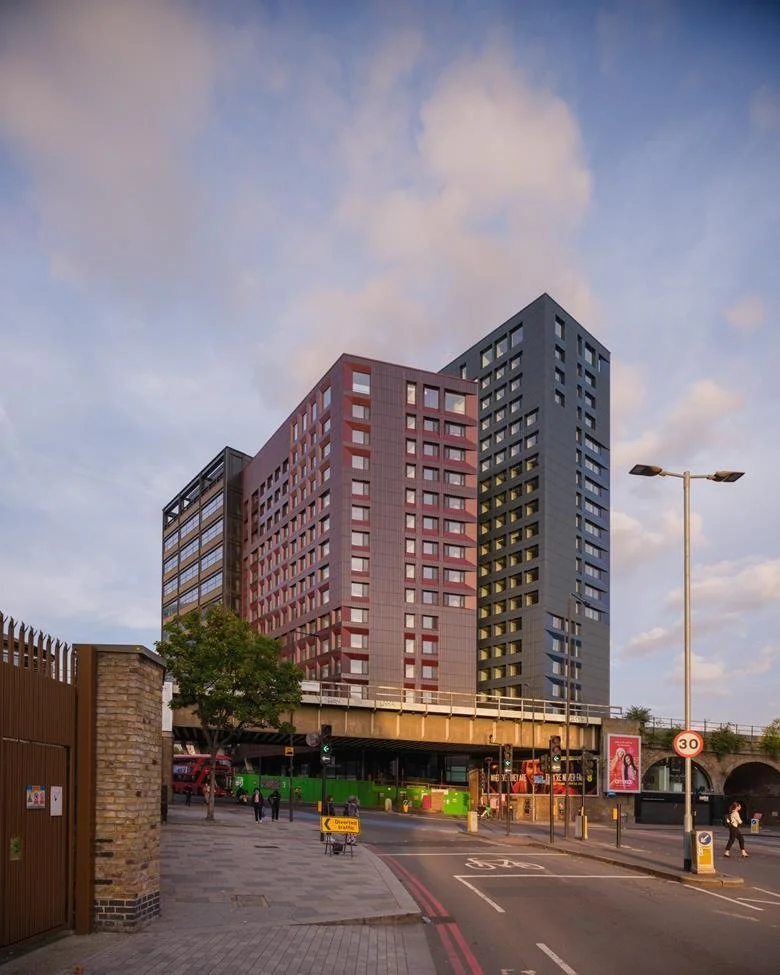
If you travel along the Wandsworth Road towards Vauxhall from Battersea, you cannot but be aware of the vacant site just before you get to the one-way system and the bus station. The site is just over the boundary between Wandsworth and Lambeth, and it has been empty for more than a decade, while the Thames City development across the road has been built up. Now there are proposals for a huge development with the two tallest towers yet for Vauxhall.
Works at the bridge are now well over half way, and we are looking forward to completion. At this very late stage, a new planning application (2025/3448) has been submitted showing the designs for the panels that will be paced on the walls. It is a pity that these were not sublmitted when they were prepared back in July, along with the details of the work as whole, and before it actually started.
You can find the designs here. They are vibrant and colourful, and will make a real difference to the experience of walking - even driving or going on a bus - through the tunnel.
We wrote on these pages in February about Wandsworth Council’s partial review of its Local Plan , and again in March about the GLA’s opposition to most of the changes. The review is now reaching its final stages. An inspector has now been appointed to assess the changes, and he will hold an ‘Examination in Public’ in the Town Hall from 4-6 November.
The Local Plan currently in force was drafted under the previous Council regime in 2020-2021. The current Labour Council initiated the review in 2023, a year after it was elected. Its core aim has been to increae the amount of affordable housing required when large developments take place, from 35% to 50%, along with changes to the need for ‘viability assessments’. Other changes seek further restrictions on the development of purpose built student accommodation and on large-scale ‘co-living’ developments; and changes to policies relating to ‘build-to-rent’ developments.
The Planning Committee has submitted responses to drafts of two Supplementary Planning Documents (SPDs) issued by the Council. The first relates to Planning Obligations, the second to Trees and Development. Our colleagues in the Open Spaces Committee have also submitted comments, and in addition comments on a third draft SPD, on Biodiversity.
The Planning Obligations draft SPD covers ‘s106 agreements’, legal agreements between planning authorities to mitigate the impact of a development on the local community and infrastructure by securing obligations such as financial contributions or the provision of infrastructure like affordable housing, transport, and community facilities. In the current case the draft covers all the policies in the Local Plan, except housing, which will be dealt with separately, once the current review of the Local Plan is completed.
The Trees and Development SPD is intended to provide guidance for developers to assist them in managing and protecting trees during development. It aims to maximise the delivery and protection of trees during the planning process, in order to improve the environment, biodiversity, health and built environment throughout the borough.
Wandsworth Council is currently running three consultations on its planning policies. They take the form of draft “Supplementary Planning Documents” (SPDs) which flesh out in more detail the policies and guidance set out in the Local Plan. The three drafts relate to
· Planning Obligations
· Biodiversity, and
· Trees and Development
Along with our colleagues in the Open Spaces Committee, we are considering the three drafts and will submit our comments by the deadline of 30 September.
Wandsworth’s score in the latest Healthy Streets Scorecard has fallen from 5.65 to 5.45. It therefore fell from 11th to 13th among all London boroughs; and among inner London boroughs, only Lewisham and Kensington and Chelsea have a lower score . Unless significant improvements are made, it is likely to fall further next year.
The Battersea Society strongly opposes the Government’s proposals, which would forbid planning committees from considering any planning application that the Government defines as ‘minor’ or ‘technical in nature’. Most such developments are already determined by officers under local schemes of delegation. But the Government’s proposals will allow for no exceptions. Even where small developments raise important issues relating to listed buildings or parks, or harm to conservation areas (which are not even mentioned in the proposals), decisions will be made in private by officers, rather than in public by elected councillors.
In its response to the consultation on the new London Plan, the Society questions the arbitrary assumptions which have led the Government to set a target of building 880k new homes across London in the next ten years.
The Battersea Society objects to this application which fails to meet the requirements of the site allocation within the Local Plan guidelines or the York Road/Lombard Road SPD.
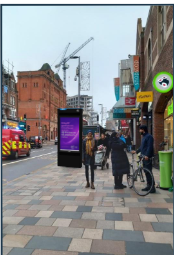
The Battersea Society objects to this application for the erection of what is effectively a large-scale structure for advertisements. This siting is particularly harmful
The Mayor issued last month a consultation paper setting out key issues for the future of London and how they might be addressed in a new London Plan
As many people will know, Wandsworth’s Planning Applications Committee refused the Glassmill application at its meeting on 24 April. We always knew thtat would not be the end of the story, since the developers had stated that if their application was refused, they would submit an appeal. There was also the possibility that the Mayor would ‘call in’ the application, a procedure under which the Mayor and his officials take over from the borough responsibility for determining applications that meet certain criteria. But the Mayor decided late in May that he would not call in the application.
In October 2023, Wandsworth Council published some proposed changes to the Local Plan which it had inherited from the previous Conservative Council. The key aim of the changes was to increase the proportion of affordable housing in new developments to 50%.
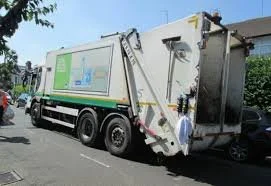
Wandsworth Council’s Transport Committee approved at its February meeting a draft Reuse, Recycling & Waste Management Supplementary Planning Document (SPD).
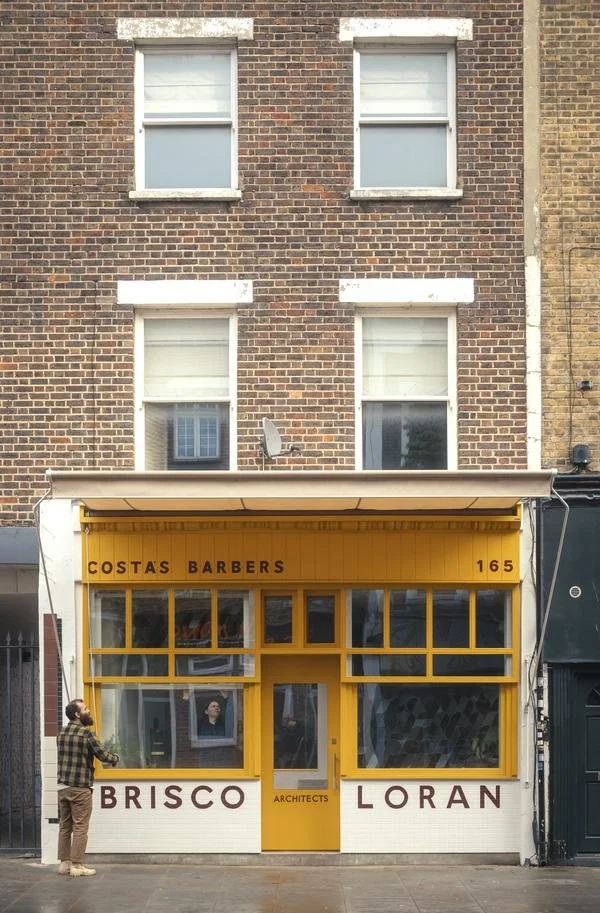
Costa’s Barbers on Battersea High Street was the subject of an article in the most recent issue of Battersea Matters. It is now included among thre 78 projects that have been shortlisted for the RIBA (Royal Institute of British Architects) London Awards 2025.
There’s been some controversy about the amounts of student housing being provided in Wandsworth; over the past five years, about a thousand student rooms have been completed, under construction or planned.
The Battersea broadly welcomes the proposed changes to the Local Plan set out in the consultation draft, particularly those that aim to increase the amount of affordable housing. But we have reservations about some aspects of the proposals, especially those relating to housing mix.
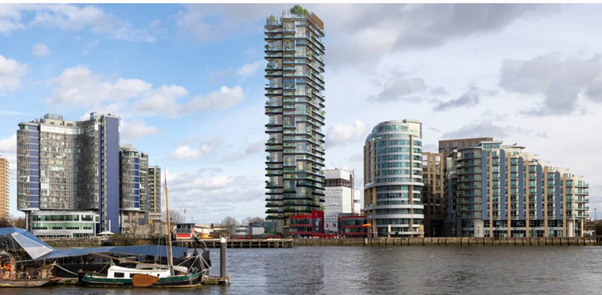
The Battersea Society objects strongly to the revised application for a ground floor plus 28-storey tower on a small but very prominent site facing the River Thames next to Battersea Bridge.
The Battersea Society supports this application for the opening up of the subway from the south of Battersea Park Road.
This is something we have long called for as it will make access to the underground station safer and easier for residents and students to the south.
The Battersea Society generally welcomes the review of the NPPF although much of it does not reflect the nature of planning pressures and limited strategic options available in Battersea.
The Battersea Society objects strongly to this application for a 34-storey tower on a small but very prominent site facing the River Thames next to Battersea Bridge.
The Battersea Society objects to the significant design changes proposed. We also consider the play and amenity space proposed is inadequate and are concerned that the community uses are too focussed on cultural amenities and on events.
The Battersea Society objects to this application which is an unneighbourly over- development of a site in a narrow and heavily trafficked road.
The Battersea Society objects to this application which is an unneighbourly over- development of a site in a narrow and heavily trafficked road. We have read with interest the detailed comments from West & Partners and support their views. In particular we share their concern regarding: the impact of a second tall building on views of the existing marker building to the west; the lack of off-street servicing and delivery space; effect on transport and parking in the area; the extent to which the building covers the site and its proximity to the next door building and poor standards of accommodation, particularly in regard to daylight levels.
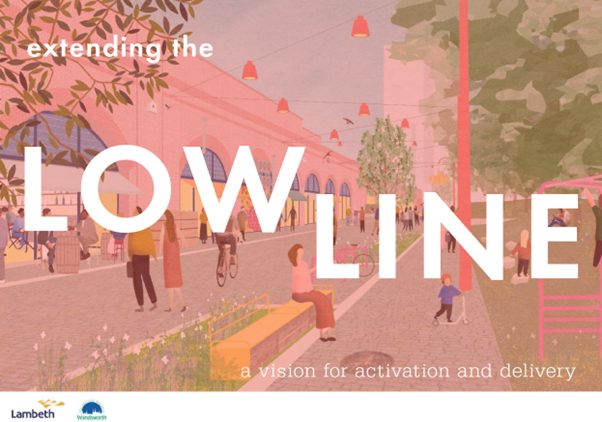
A report has been published setting out proposals to regenerate the 299 railway arches that extend all the way from Waterloo to Battersea Power station.
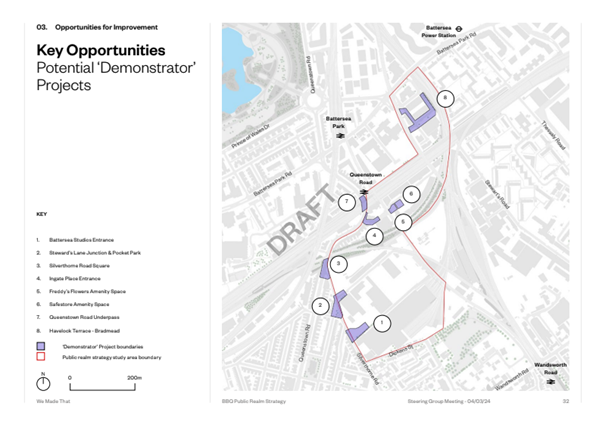
In 2019 Wandsworth Council - then controlled by the Conservative Party - commissioned a study of an industrial and commercial area to the south-west of Nine Elms and the Power Station.
In the Local Plan submitted to the Secretary of State in 2022 and finally approved in 2023, Wandsworth Council committed itself to developing a masterplan for an Enhanced Urban Heart to Clapham Junction.
Overall we welcome this application. Further toilet facilities in this area are desirable, and the design of the proposed extension should blend in tactfully enough with the existing building.
The Planning Committee aims to promote development that meets the needs and aspirations of the people who live and work in Battersea, and to guard against the kinds of development that would damage their interests.
Our work focuses on two areas:
1: Reviewing and commenting on planning applications; for major developments this begins with the consultation and proposal stage
2: Providing input to the development of planning policy
In addition we contribute a Planning Matters column in Battersea Matters, provide updates in Battersea Insider and notify members of any urgent planning matters.
You may also like to look at our Planning Process page for general information about how the planning process operates and current planning policy in Wandsworth.
Please note: the Battersea Society cannot provide specific planning advice and you should always seek professional assistance with any planning issues.
View all Battersea Society Events
PLANNING APPLICATIONS
Committee members review Wandsworth Council’s weekly lists of planning applications. We focus on those that affect listed buildings and the twelve conservation areas in the former parish and borough of Battersea, and on the larger developments, principally in Nine Elms and the former industrial land along the River Thames.
In conservation areas we seek to guard against unsightly and inappropriate proposals that would harm the character of the conservation area. If in our judgment they do, then we submit comments or formal objections to the Council.
Our responses to the more significant recent applications are shown below. But we make many more responses on minor developments. If you are interested in specific applications, contact planning@batterseasociety.org.uk.
For larger developments, developers often mount public consultations to which we alert members. In addition to responding to these, we sometimes talk through schemes with developers before they finalise and submit planning applications.
The documents associated with these may run to hundreds of pages and we try to read as much as we can with care before submitting detailed written responses.
Our responses to applications and development proposals can be found in our blog.
INPUT TO POLICY DEVELOPMENT
The other major element of the work of the Planning Committee is keeping up to date with the continuous changes in planning policies at three levels: national policies set by the Government; London-wide policies set out in the London Plan; and policies set by Wandsworth Council in its Local Plan.
The Government makes regular changes to the National Planning Policy Framework (NPPF) which sets policies and procedures to which all local authorities must adhere. A major reform of the framework is promised following a controversial White Paper issued in 2020, with new legislation likely later in 2021. If taken forward this will lead to fundamental changes to the way planning policy and applications are handled.
A much-delayed new London Plan was published in March 2021 and a new one is now being developed. Wandsworth’s Local Plan sets policies for what kinds of buildings, for what kinds of uses, can be built in different parts of the borough. The current one was published in June 2023. It looks forward fifteen years, covering issues such as housing, the local economy, transport, the natural environment, and community services. It also sets out strategies for the development of key areas such as Clapham Junction and Nine Elms.
We review and respond to proposed changes in policies and strategies at all three levels, drawing on our own experience and discussions with other bodies, both local and national. We work closely with neighbouring civic societies and with other groups such as the Clapham Junction Business Improvement District (BID) and the Friends of Battersea Park; and we liaise with bodies such as the London Forum of Amenity and Civic Societies. We also have regular contact with officials in the Council’s Planning Department.
Our responses to the these plans can be found in our blog.