
Open Spaces Walk no. 2
By Clare Graham, Chair, Open Spaces Committee
Click + or - on the route map above to zoom in or out, or on the square symbol at the top and on the right to show it full-screen.
Walk no. 2: Nine Elms to Lavender Hill
Route description: A walk of contrasts: check out opulent new developers' landscaping, explore post-Second World War parks and housing estates, and follow a buried river through two Victorian conservation areas before finishing in a community garden beside Battersea's former Town Hall.
Start point: Vauxhall Bus Station, SW8 1SJ.
Finish point: Battersea Arts Centre, Lavender Hill, SW11 5TN.
Route length: 5.3 km/ 3.3 miles.
Facilities: Toilets and refreshments available at BAC and on Lavender Hill at the end of the walk.
Accessibility: Mostly flat, apart from a short final uphill section. Much of the route follows footpaths and quiet streets, though there are also some busy roads to cross and two short sections along the pavement of the Wandsworth Road.
Public transport links: Vauxhall's bus station is served by the 77, 87, 156 and 344 from Battersea and is next door to its rail and underground stations. BAC has bus stops for the 77, 87, 156 and 345 adjacent, and is 5 minutes' walk from Clapham Junction station.
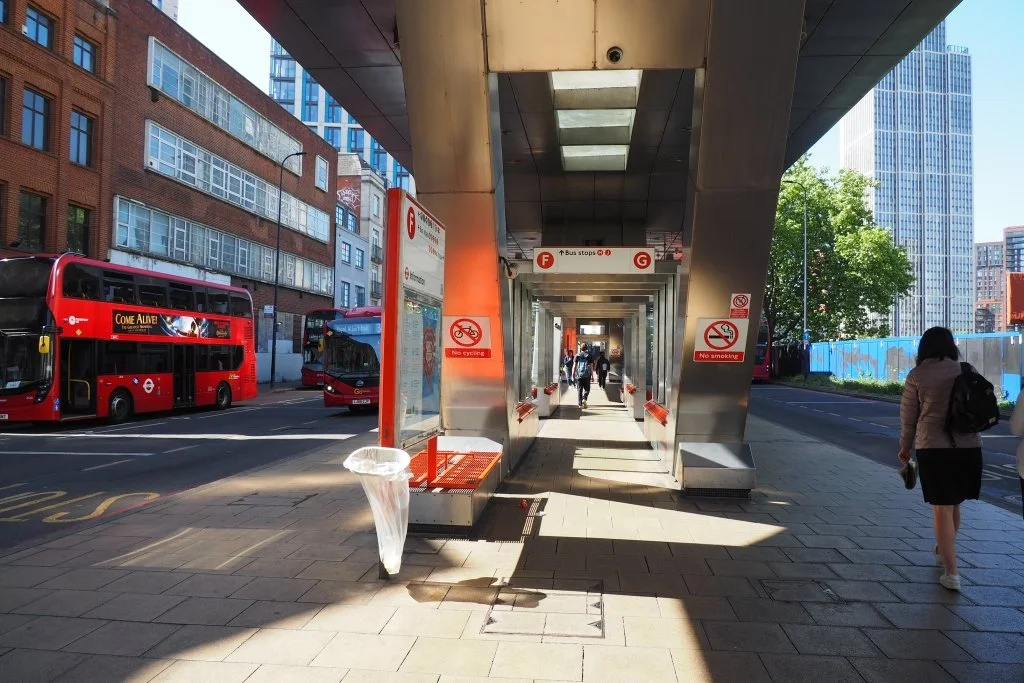
Start Point: Vauxhall Bus Station
Walk to the West end of the bus station, to find stop J. Beyond it cross over Parry Street at the lights, and turn right. Follow the pavement past a first area of landscaping and round into the Wandsworth Road; Brunswick House opposite (built in 1758, listed Grade II*) is a surprising counterpoint to the tall blocks of St George Wharf behind.
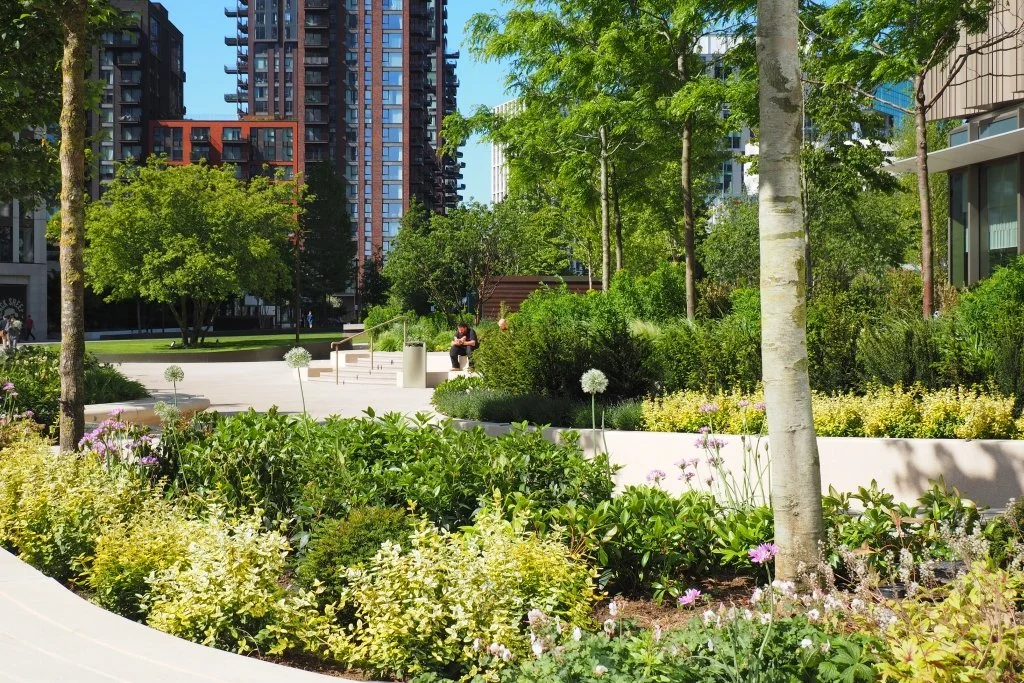
Nine Elms Linear Park
Cross Wandsworth Road now at the lights, and then head off to the right through Nine Elms' new Linear Park. Still in the process of creation, this will eventually provide a green walkway all the way through from Vauxhall to Battersea Power Station. Different developers are responsible for different sections, signing up to a Nine Elms Park Charter which is there to ensure consistency of design and materials—and proper public access.
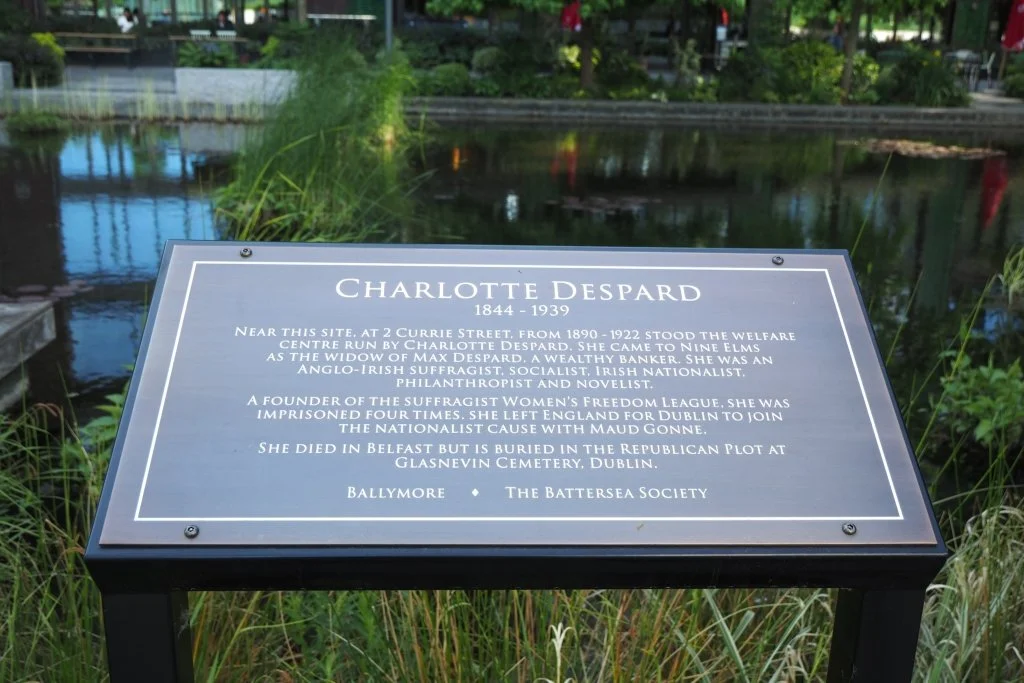
Embassy Gardens
At Embassy Gardens, the American Embassy (2018, Kieran Timberlake) has prairie-style gardens by Laurie Olin, open to all and well worth a visit. Embassy Gardens itself is a lushly landscaped public space, much changed from the days when Charlotte Despard ran a soup kitchen near here, as this Battersea Society plaque records. When you've finished looking around it, walk beneath the swagger Sky Pool and down Ravine Way. At the end turn right onto Ace Way, then left through Arch 42.
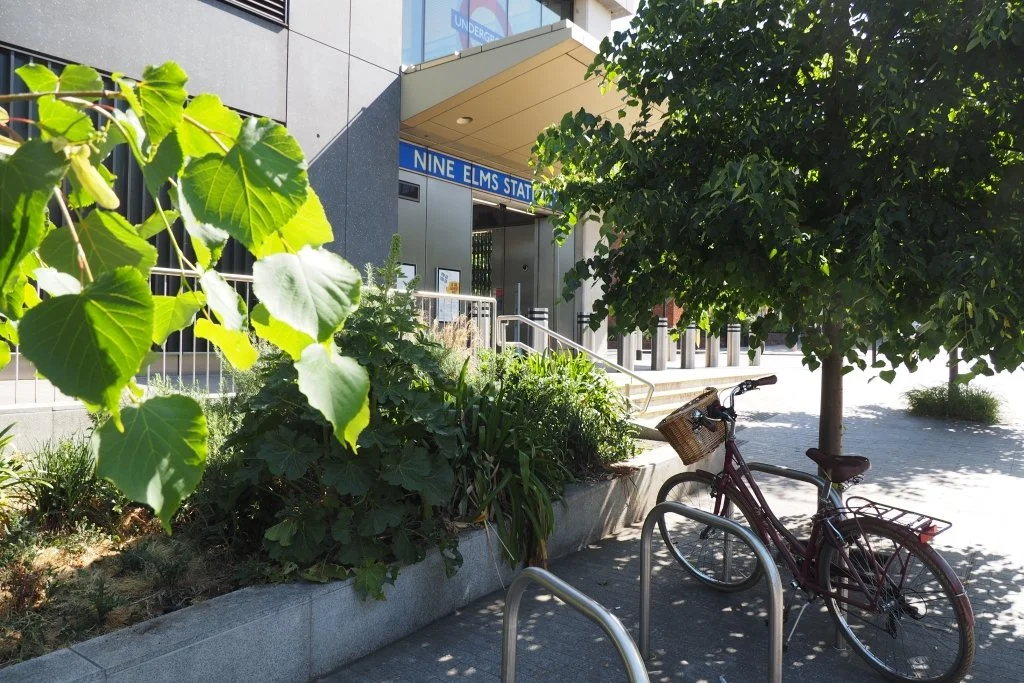
South to Nine Elms station
Emerge from under the railway lines out into southern Nine Elms, amidst the redevelopment now taking place on part of the site of New Covent Garden. The market itself remains operational to your right. Walk through the colourful temporary hoardings of Merchants' Way. At Pascal Street you cross Battersea’s boundary line to enter Lambeth briefly. When you reach Nine Elms underground station (2021, by Grimshaw Architects), turn right along the busy Wandsworth Road.
Crimsworth Road
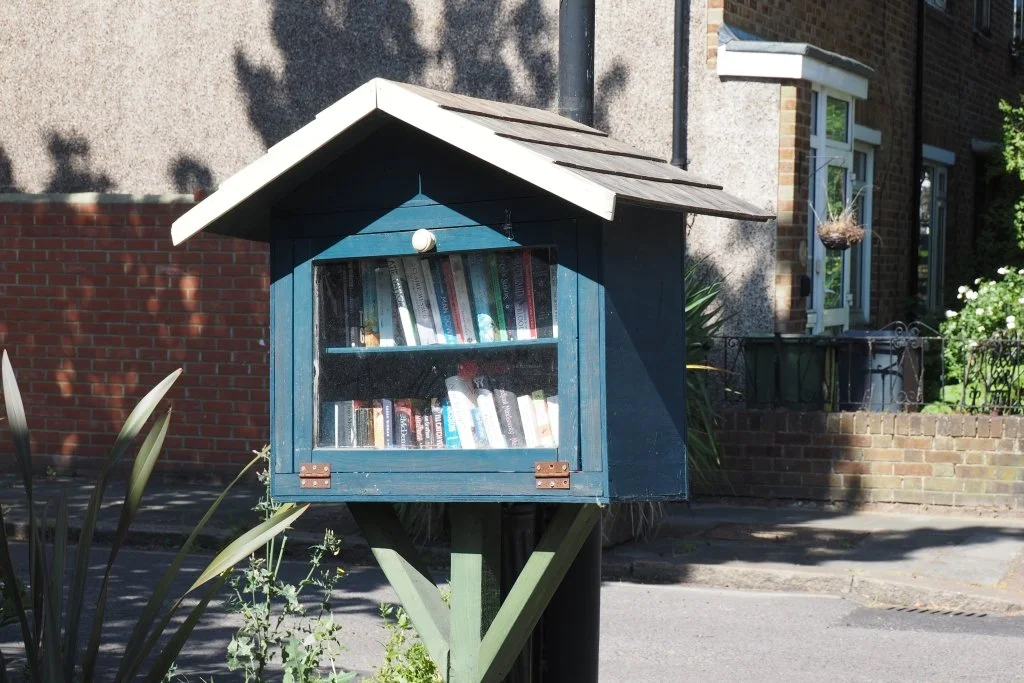
Next turn down Fount Street, the second road on your right. From there turn left onto Thorparch Road, then right again onto Crimsworth Road. Here is a quiet little enclave of small terraced houses: some Victorian, some rebuilt following Second World War bomb damage. Follow Crimsworth Road as it heads downhill and curves round to the left, enjoying the residents' street gardening as you go. This book swop cupboard can be found at the corner with Goldsborough Road.
Brooklands Passage
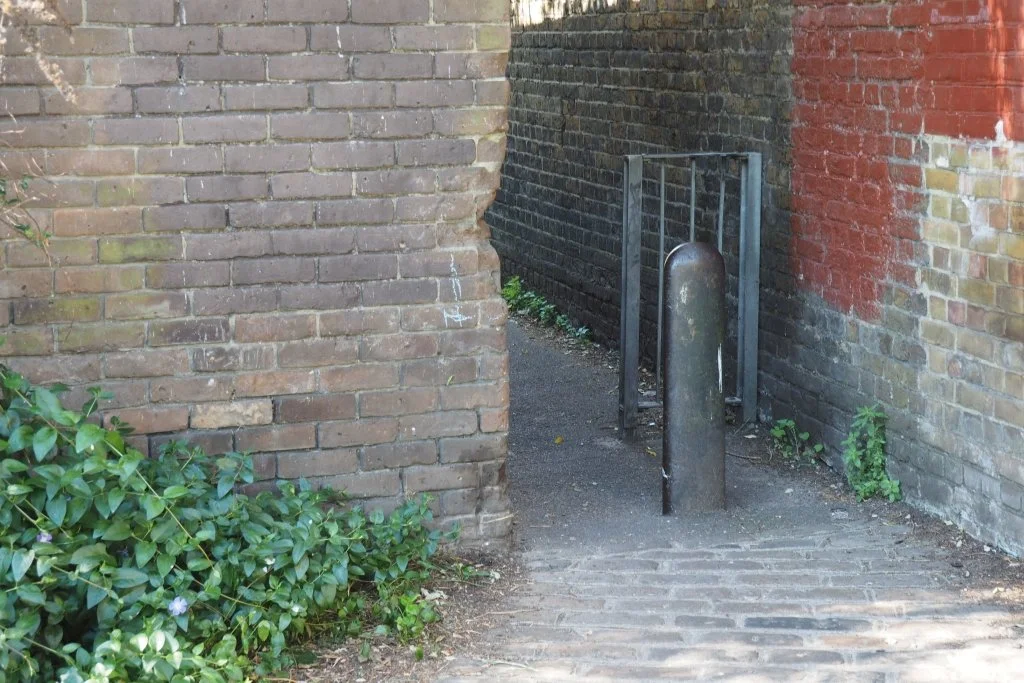
At its far end Crimsworth Road merges back into Thorparch Road, which then becomes Brooklands Passage. This footpath starts out wide and green, but narrows somewhat forbiddingly as you re-enter Battersea at this cast-iron Victorian boundary marker. Carry on between high brick walls to emerge into the Patmore Estate (London County Council, 1951-60). Turn right and then left, following Belmore Street. Head straight ahead across Deeley Street and on as far as Thessaly Road.
The Oasis Green Space
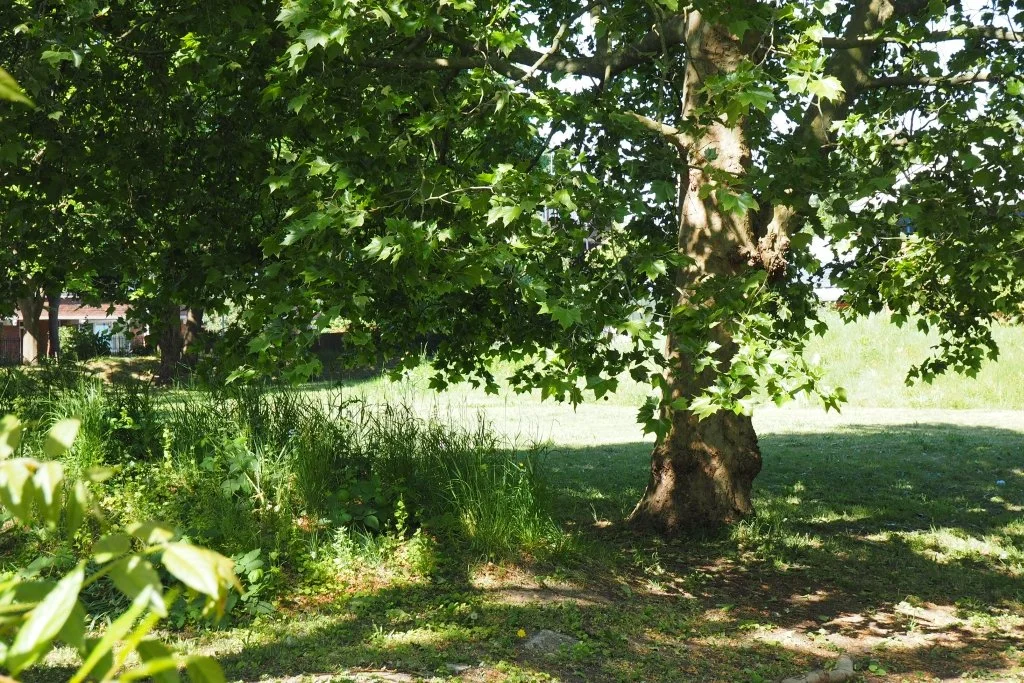
Turn left onto Thessaly Road and walk past the Yvonne Carr Centre, to visit The Oasis Green Space. This former community playground had been shut up for many years before it was reopened in 2024 by Wandsworth Council as a new pocket park. Currently it's just grass and trees, though further improvements have been promised. Even without these it's been well received by local residents, with various community gardening initiatives already in place. As you come out again, cross over to the other side of Thessaly Road and turn right.
Carey Gardens
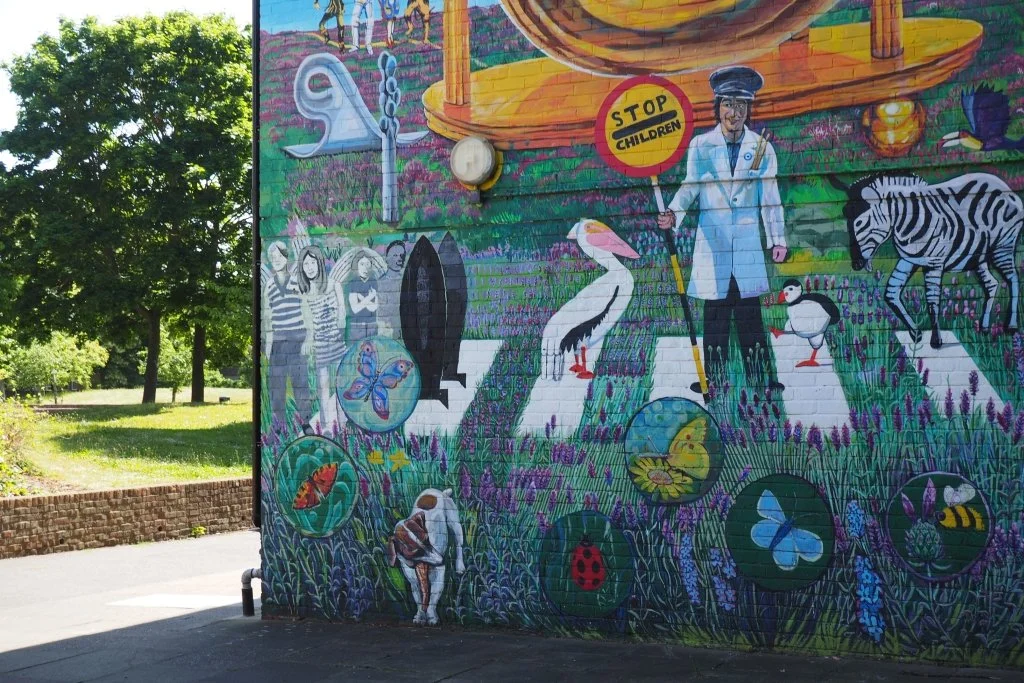
On your left now is the Carey Gardens Estate (1969, Nicholas Wood for the Greater London Council). Cross over Blore Close, and then find a ground-level open passage through the next building on your left. Walk through this and across Carey Gardens the road, then on through the building opposite via another open passage. Beyond this lies the big green space at the heart of this estate; it's as large as a public park. Walk diagonally across it to find this mural in the NW corner by Brian Barnes, A Brief History of Time. Then head along the western side of the open space to come back out onto Carey Gardens at the corner. Turn right, then left up Stewart's Road, once more briefly leaving Battersea for Lambeth. On the Wandsworth Road turn right, passing two big 19th-century villas (listed Grade II; now the Chelsea Guest House) and walking under the railway viaduct.
Heathbrook Park and the River Heathwall
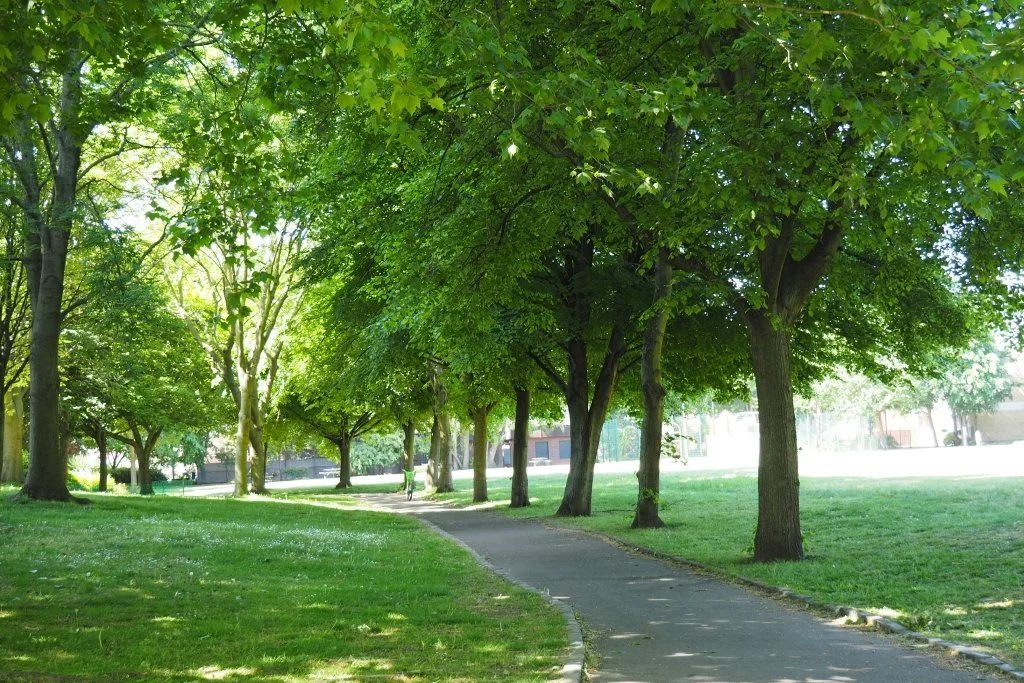
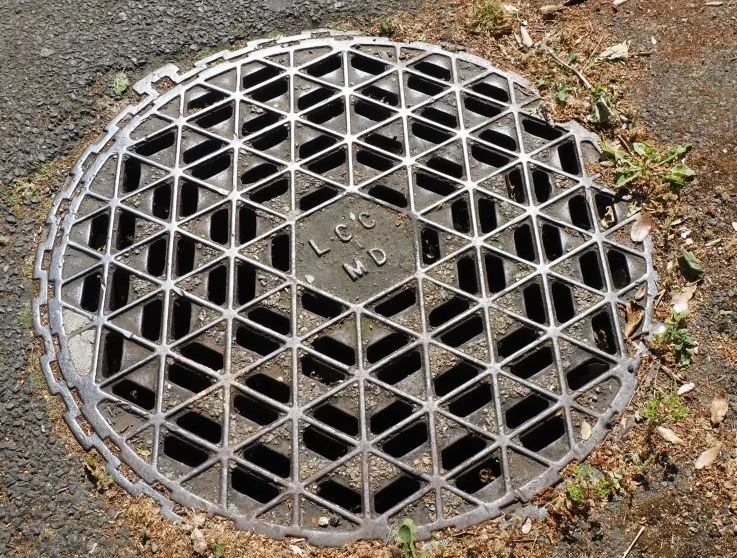
Turn right again just after the viaduct, down Portslade Road. You now re-enter Battersea at Heathbrook Park. This surprisingly large and well-hidden public park is one of a group created following WW2 within local slum clearance projects. The process could be a slow one; Wandsworth Council did not landscape Heathbrook until 1974, having by then abandoned earlier plans for an aviary, refreshment kiosk and public toilets. Still it's green and pleasant, and should you feel in need of a coffee by now, do try Café Latin Style over beyond the northwestern corner of the park. Otherwise, turn left along Heathbrook Park's main path.When you reach a circular bed of shrubs, walk a few steps left to find a big circular grille within the tarmac. Beneath this you can hear and see a buried river, flowing several metres below. This is the Heathwall, which here forms Battersea's southern boundary. We'll be following it now almost to the end of this walk.
Robertson Street and Montefiore Gardens
Come out of Heathbrook Park onto St Rule Street; ahead on your right is a small landscaped area with two more Heathwall River grilles. Beyond them turn left along Robertson Street. The Heathwall is flowing below and towards you; it's easy to reimagine this long straight road as the boundary ditch and sewer which the river had become well before its burial in the 1860s. The left side of Robertson Street is in Lambeth and easier walking, thanks to the kite-shaped street layout of Battersea's Park Town Estate Conservation Area, to your right after busy Silverthorne Road. Head into that down Montefiore Street to visit Montefiore Gardens, a small park and playground created from a WW2 bombsite. Walk through the Gardens and back down Tennyson Street to rejoin Robertson Street.
The Shaftesbury Park Estate
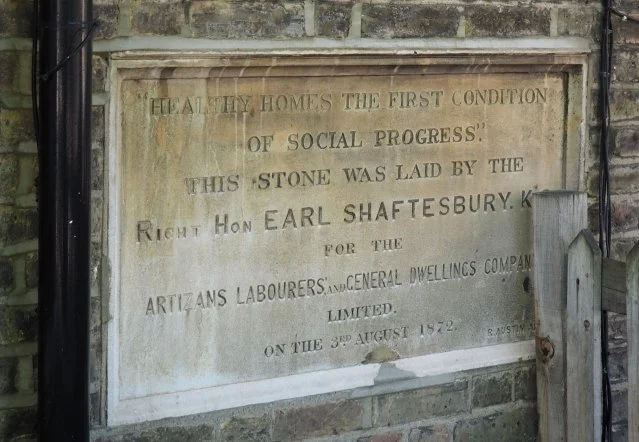
At the end of Robertson Street, turn left onto Queenstown Road and cross over at the Pelican crossing. Look left on your way to spot a couple more Victorian cast-iron boundary markers, one for Battersea and one for Clapham. Cross over, and ahead of you are two more. Take the short foot-passage beyond them through to Ashley Crescent. Carry on along that, then turn right onto Shirley Grove and right again into Tyneham Road. Here you enter the tree-lined streets of the Shaftesbury Park Estate Conservation Area, a model development of some 1200 workers' cottages (1873-7, Artizans, Labourers and General Dwellings Company). Turn left next along Elsley Road, with the Heathwall flowing under the back gardens of the houses to your left. At Grayshott Road, detour briefly right to view this memorial stone outside nos. 65-7, commemorating the philanthropist 7th Earl of Shaftesbury's involvement with the project.
Heathwall Street and Town Hall Street
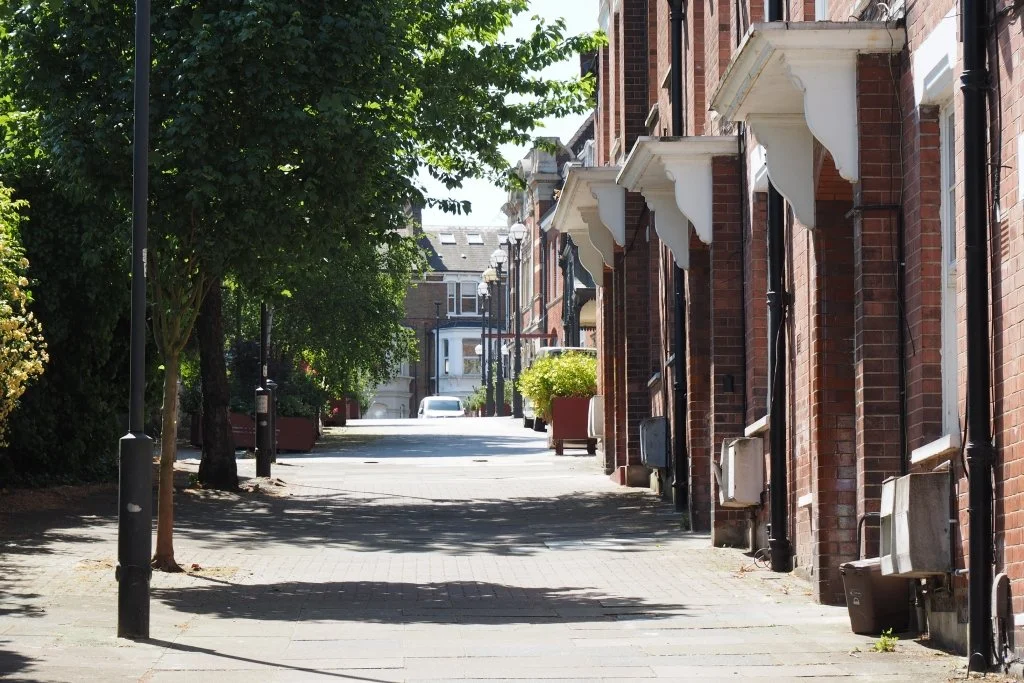
Turn left next up Eland Road, then right into Heathwall Street, named for the river once more flowing below you. Look back to your left to find the gap left for it between the last house of the Shaftesbury Park Estate, and the first taller house beyond. Turn left from Heathwall Street up Town Hall Street, an alley of attractive terraced flats built as municipal housing by the Borough of Battersea in 1903. Ahead is Battersea Arts Centre, built as Battersea's Town Hall (1891-3, by E W Mountford), and used as such until the old borough merged with Wandsworth in 1965.
End Point: Battersea Arts Centre
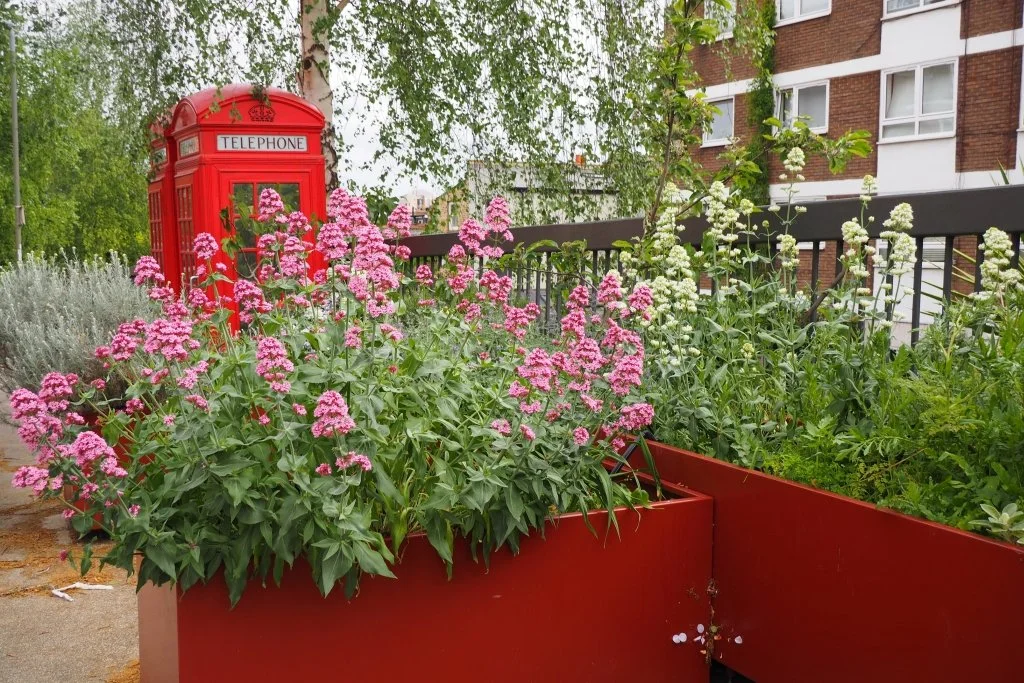
Walk uphill through a pretty if somewhat unkempt community garden in containers, celebrating the restoration and partial rebuilding of BAC (by Haworth Tompkins, following the fire of 2015). You could finish at Tom’s Café inside; if so, do check out the mosaic flooring of the grand entrance hall, with its Battersea bees. If you would prefer to sit out of doors, Pique on the far side of Lavender Hill has outside tables and is dog-friendly.