
Battersea Commemorative Plaque Walk Part 1
Carol Rahn
Click + or - on the route map above to zoom in or out, or on the square symbol at the top and on the right to show it full-screen.
Route description: The first of a family of walks incorporating the commemorative plaques in Battersea.
Starting point: Embassy Gardens, Nine Elms
Finish: Battersea High Street
Route length: Approximately 5km.
Facilities: There are three coffee shops near the start point: District Coffee, Sendero Coffee and the café at World HeartBeat, all on Ponton Road. There are public toilets in Battersea Park, near the fountains.
Accessibility: This walk is on pavement, sadly with the usual obstacles that are endemic in London, and one tarmacked footpath. It is mostly flat and away from major roads. There is one steep incline next to a busy road that avoids a set of stairs.
Public transport links: Embassy Gardens is a short walk from the US Embassy, served by buses 156. 344 and 436. The start can also be reached via Arch 42 from Nine Elms Tube station (Northern line; 87 and 77 buses). The end of the walk is near Battersea Park Road where there are stops for the 319, 49, 345, 44 and 344 buses. From stop LE, the 49, 319 and 345 travel up Falcon Road to Clapham Junction station, not far from the start of the Mid-Battersea Plaque Walk for those with the stamina to carry on.
For more information on the people commemorated in this walk, see Jeanne Rathbone’s blog, https://sheelanagigcomedienne.wordpress.com/tag/battersea-blue-plaques/ or her book, Inspiring Women of Battersea. Heritage blogs on the Battersea Society website also cover several of the notable figures in the walk: https://www.batterseasociety.org.uk/heritage
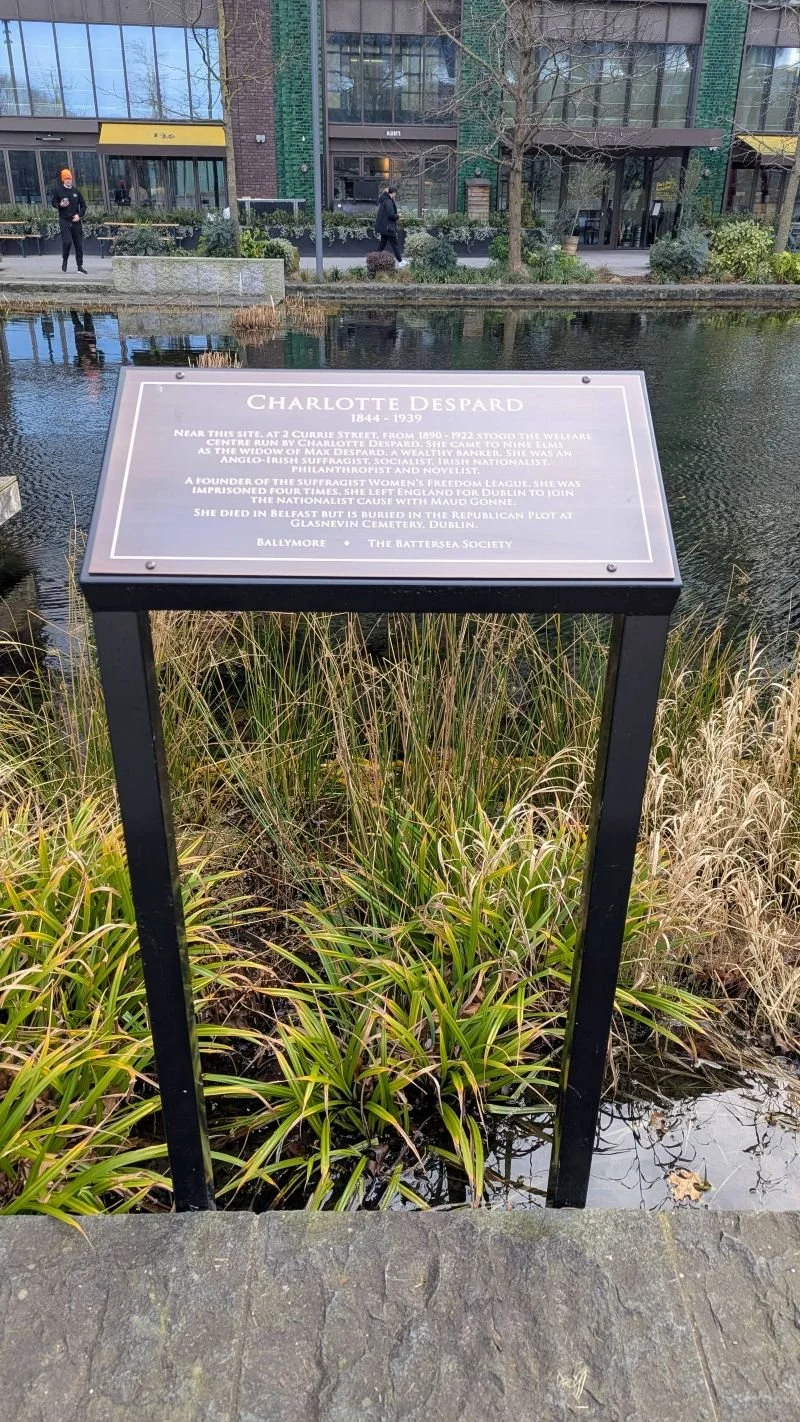
Start point: The plaque commemorating Charlotte Despard (née French 15 June 1844-10 November 1939), Embassy Gardens.
The lectern-style plaque is alongside the Viaduct Gardens water garden, more or less opposite Eg restaurant and Darby’s restaurant.
Charlotte Despard was a socialist, suffragette, Irish nationalist and a firebrand into her 90s. The plaque is on the site where Despard came to live among the people she helped and where she set up facilities including a canteen, clinic and classroom. It was unveiled by Mary McAleese, former Irish President.
From Embassy Gardens to Corunna Road:
From the Embassy, turn left on the main road, Nine Elms Lane, and go to Thessaly Road, passing New Covent Garden Market. (Alternatively, it is possible to follow the Thames Path for part of the way, or take a 156, 344 or 436 bus)
To learn about the Garden Wall unveiled as part of the 50th anniversary of New Covent Garden Market, go to https://newcoventgardenmarket.com/blog/the-garden-wall-unveiled-as-part-of-new-covent-garden-market-celebration-of-50-years-in-nine-elms/
On Thessaly Road, pass Peabody’s New Mansion Square development and walk through Yinka IIori’s glorious Happy Streets underpass.
The first right after the underpass is Corunna Road where you will almost immediately see the plaque commemorating Ramport Studios on the building to your left.
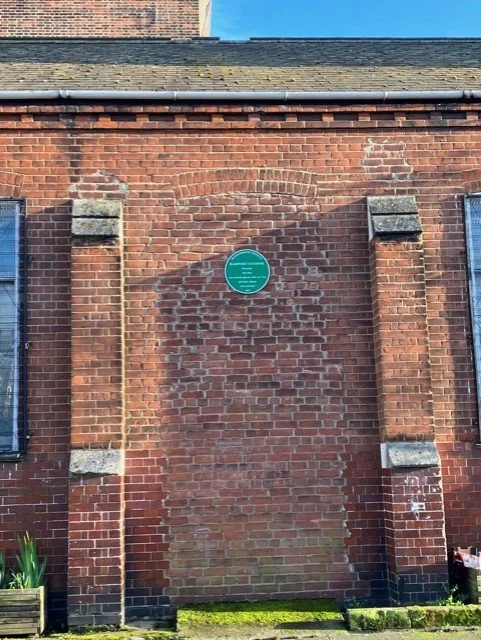
Ramport Studios, 115 Thessaly Road.
A former church hall, The Who refurbished it and recorded Quadrophenia here in 1973. The high cost of adapting the hall led them to hiring it out to others and many notable recordings were made here. The studio was bought by Virgin Records in 1983, closed by EMI in 1995, and is now a doctor’s surgery.
From Ramport Studios to 2 Thessaly Road:
Return to Thessaly Road and carry on to the Yvonne Carr Community Centre at 2 Thessaly Road.
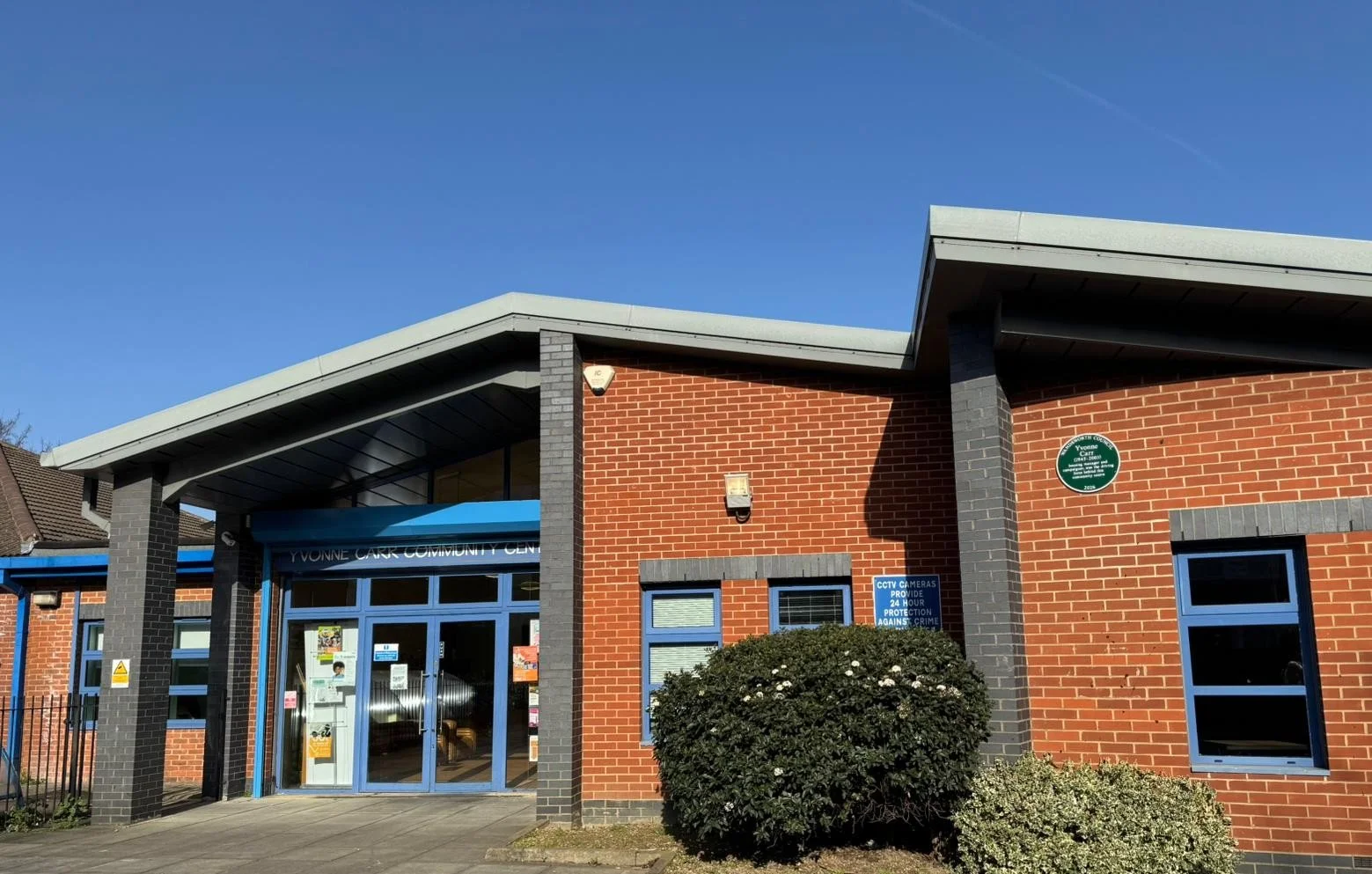
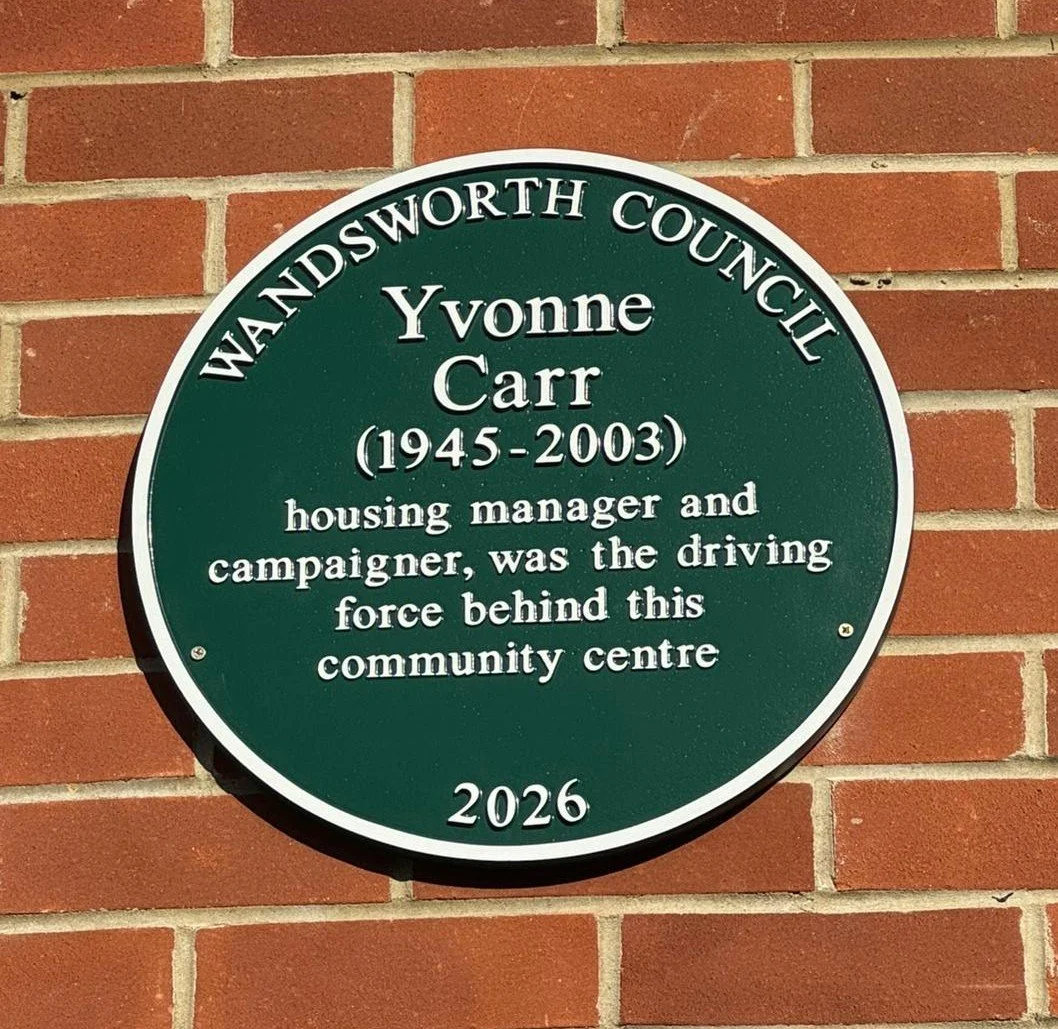
Yvonne Carr (1945-October 2003), 2 Thessaly Road.
In February 2026, the plaque in honour of Yvonne Carr was unveiled. Carr campaigned passionately for improved community facilities and successfully raised money to fund a new community centre for residents. Following her sudden death just weeks before the facility was opened, it was named the Yvonne Carr Community Centre and officially opened by Gordon Brown, then Chancellor of the Exchequer.
From Yvonne Carr Community Centre to Queen’s Circus Arches:
Return to Corunna Road, walk through the Patmore Estate to Stewart’s Road and follow it to Battersea Park Road, reached by a flight of stairs. (To avoid the steps, turn right, and then left up the pavement on Battersea Park Road.) Turn left onto Battersea Park Road, bear right onto Prince of Wales Drive to Queen’s Circus. The arches are reached from the northeast section of the Circus.Make it stand out
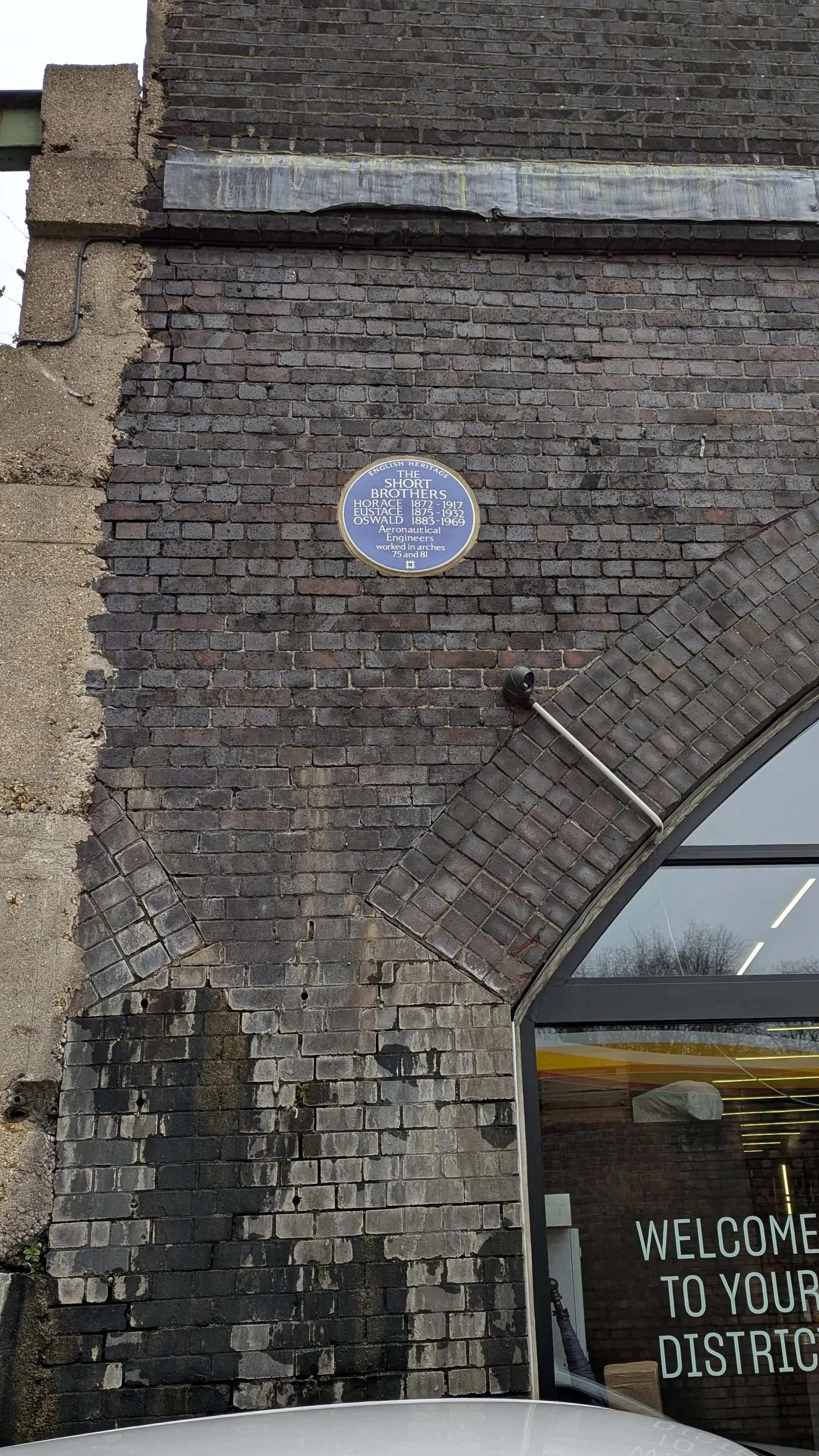
The Short Brothers: Horace (2 July 1872-6 April 1917, Eustace (17 July 1879-3 April 1932 and Oswald (16 January 1883-4 December 1969). Queen’s Circus, Arch 75
Eustace and Oswald Short were hot air balloon enthusiasts working out of this site who turned their attention to heavier-than-air machines. Joined by Horace, the brothers gained from the Wright Brothers the British rights to build six Wright Flyers, making them the first aircraft manufacturers in the world. The plaque was unveiled by Jenny Body, OBE, president of the Royal Aeronautical Society. In arches 79 and 82, the British Wright brothers, Howard and Warwick, were also building planes. It was a golden era for British aeronautics.

From Queen’s Circus Arches to Prince of Wales Drive, Overstrand Mansions:
Return to Prince of Wales Drive and carry on to Overstrand Mansions. To the right of the entry to Nos. 46-50 is the English Heritage plaque to Sean O’Casey.
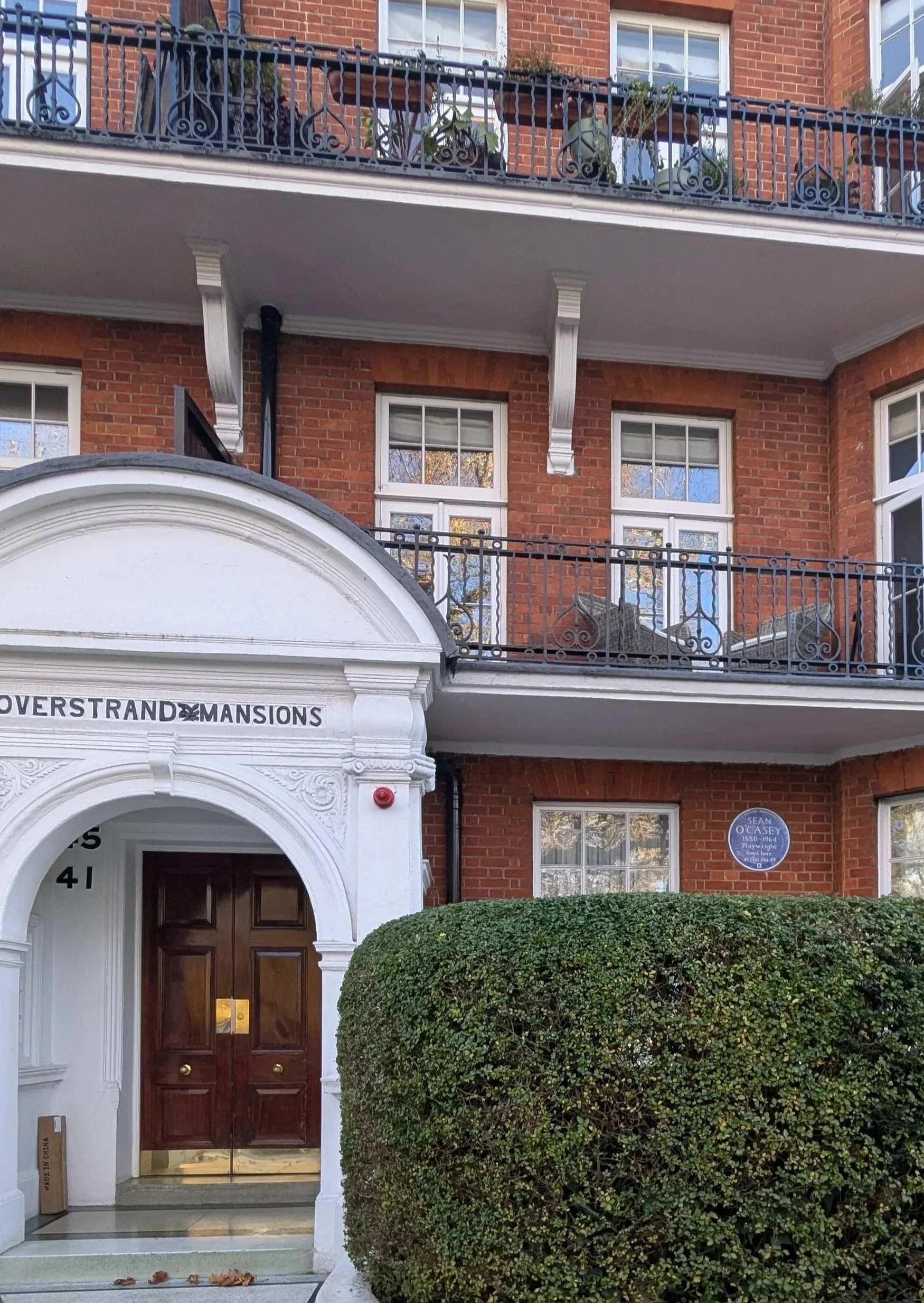
Sean O’Casey (30 March 1889-18 September 1964). 49 Overstrand Mansions, Prince of Wales Drive.
The Irish dramatist wrote many plays, including Juno and the Paycock and The Plough and the Stars. He wrote about the working classes in Dublin at a time of civil conflict in Ireland and uprising against British rule. His parents were Protestants, and he was raised Protestant. As a young man he became increasingly committed to Irish nationalism, learned the Irish language and changed his first name to Sean.

From Overstand Mansions to Brynmaer Road:
Continue on Prince of Wales Drive to Beechmore Road. Turn left onto Beechmore Road, then right onto Brynmaer Road to No. 55.
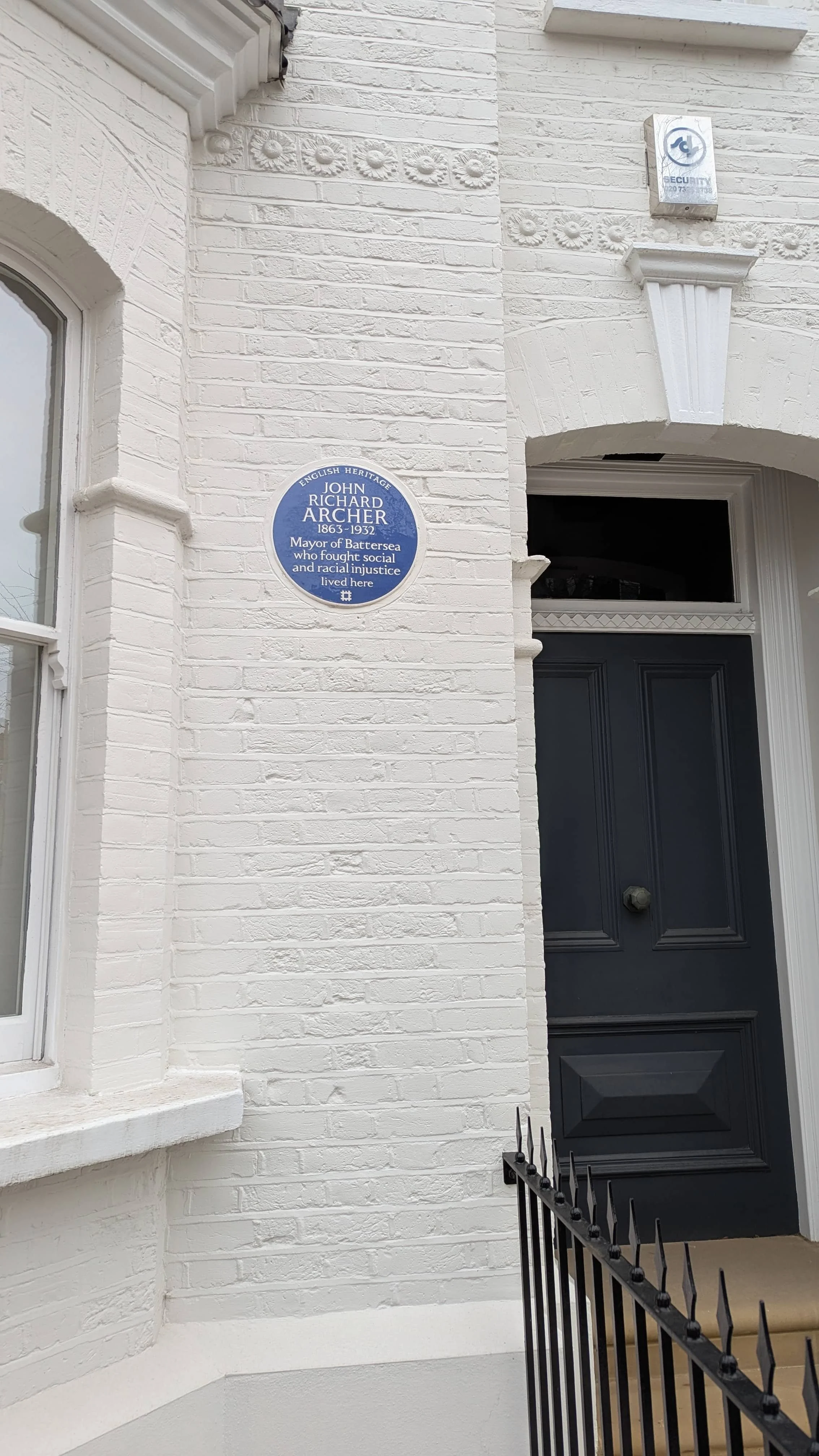
John Archer (8 June 1863-14 July 1932). 55 Brynmaer Road.
Born in Liverpool, John Archer was a politician and political activist who was elected Mayor of Battersea in 1913, making him the first black to hold senior office in London. He was a Pan-Africanist and founding president of the African Progress Union. He opposed cuts to unemployment relief and sending Battersea’s unemployed young to workhouses.

From Brynmaer Road to Albert Bridge Road:
Continue on Brynmaer Road to Albert Bridge Road. Cross Albert Bridge Road, turn right and you will almost immediately reach 13 Albert Bridge Road.
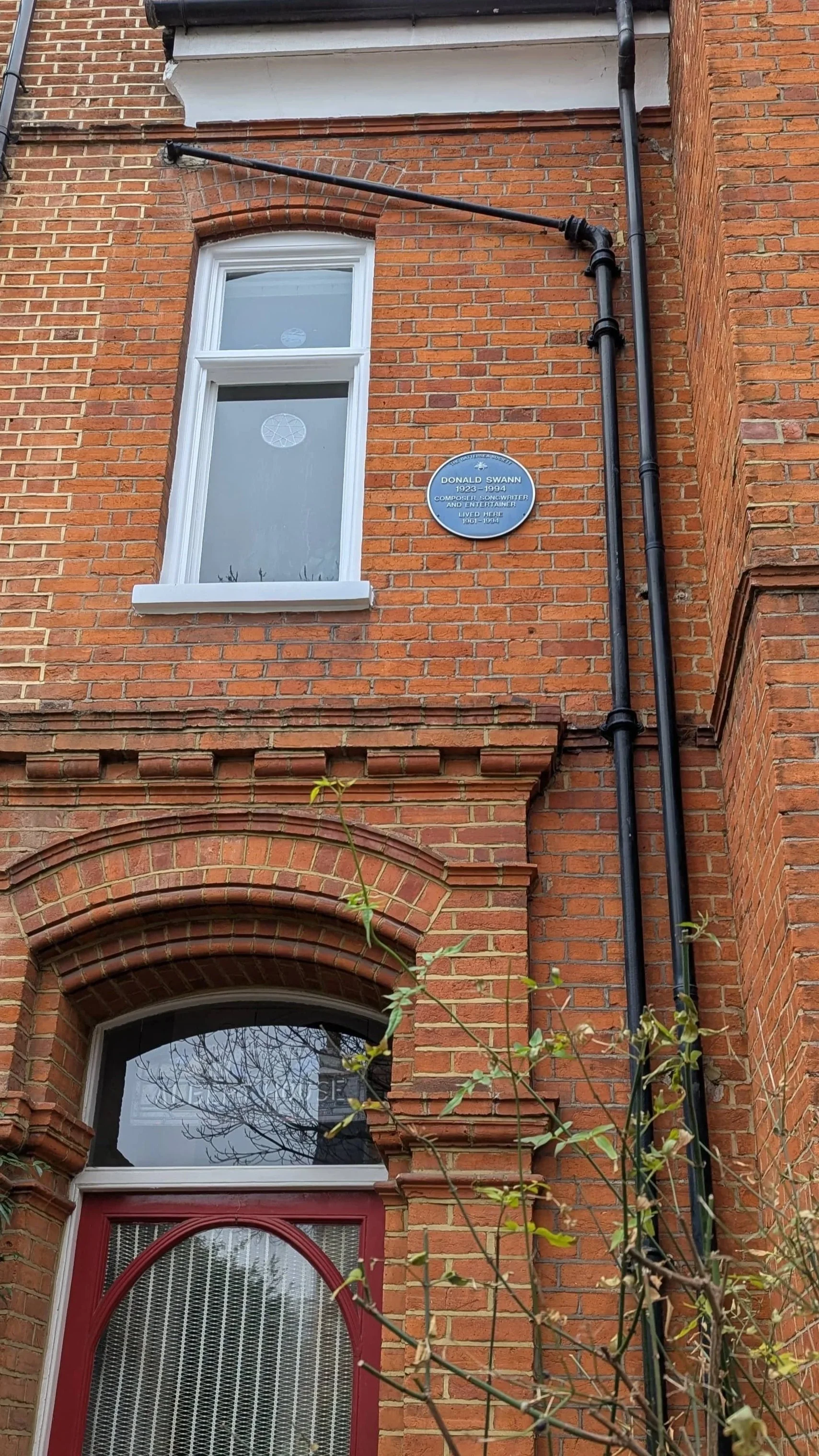
Donald Swann (30 September 1923–23 March 1944). 13 Albert Bridge Road.
Born in Wales, the son of Russian refugees, Swann was a composer, musician, singer and entertainer. He was famous as half of Flanders and Swann who wrote and performed comic songs and revues. Swann wrote the music, Flanders the words. Michael Flanders ribbed him for living in Battersea.

Continue along Albert Bridge Road to number 67
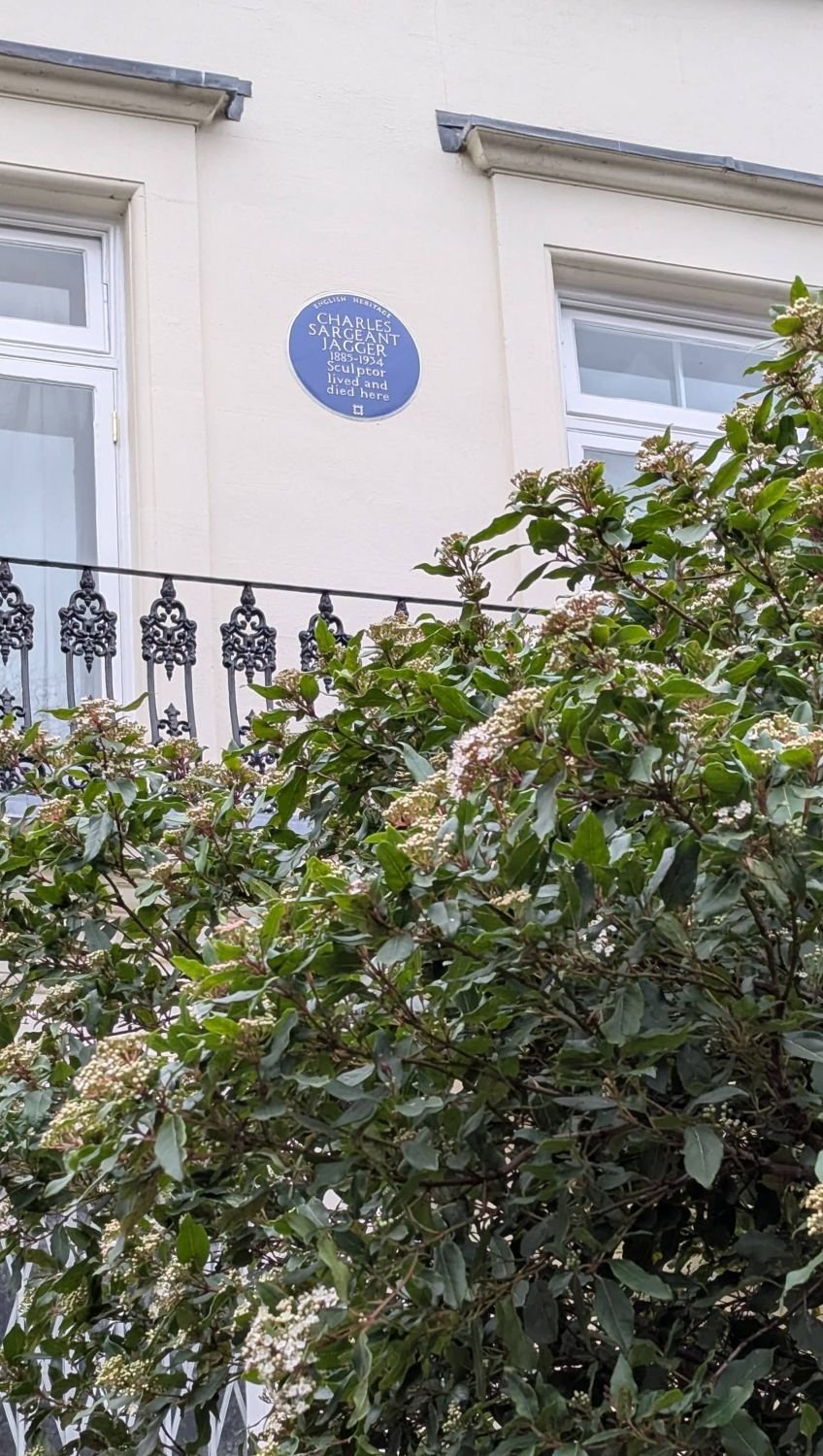
Charles Sargeant Jagger (17 December 1885–16 November 1934). 67 Albert Bridge Road.
The sculptor Charles Sargeant Jagger, the son of a colliery manager in Sheffield, grew up in an artistic family. Following active service in WW1 where he was wounded three times and awarded the Military Cross for bravery, he sculpted many works on the theme of war. He is perhaps best known for the Great Western War Memorial at Paddington Station and his Royal Artillery memorial at Hyde Park Corner in which he defied both convention and government edict by depicting a dead soldier as well as three standing soldiers.

Albert Bridge Road to Albany Mansions:
Continue along Albert Bridge Road until you reach Albany Mansions and number 63.
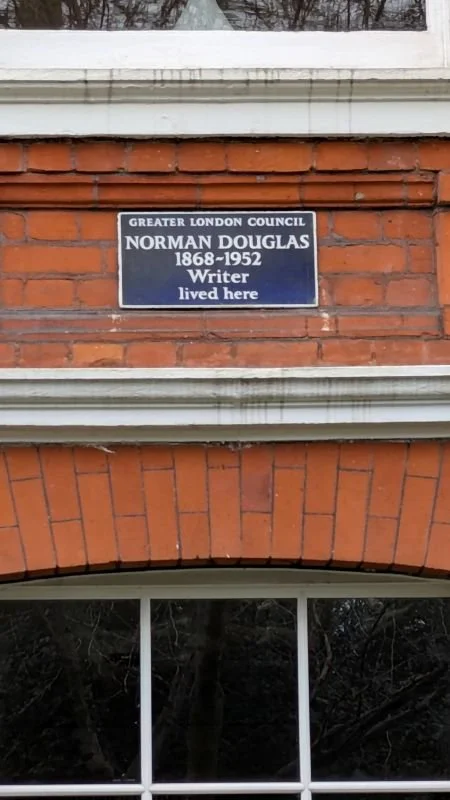
Norman Douglas (8 December 1868–7 February 1952. 63 Albany Mansions, Albert Bridge Road.
Norman Douglas, descended from Scottish and German aristocracy, was born in Austria. Multi-lingual and a serious student of zoology who counted DH Lawrend, Graham Greene and Elizabeth David among his friends. His best known work is the 1917 novel South Wind, set in a lightly disguised Capri. By today’s reckoning, he was a prolific serial predator of both girls and boys. He fled England for Capri to evade arrest for the rape of a 10-year-old girl.
Albany Mansions to Battersea Park:
At last, it’s time to enter Battersea Park. Enter via the Albert Gate. Turn right onto the path that is signposted for the Cricket Pavilion and make your way there.
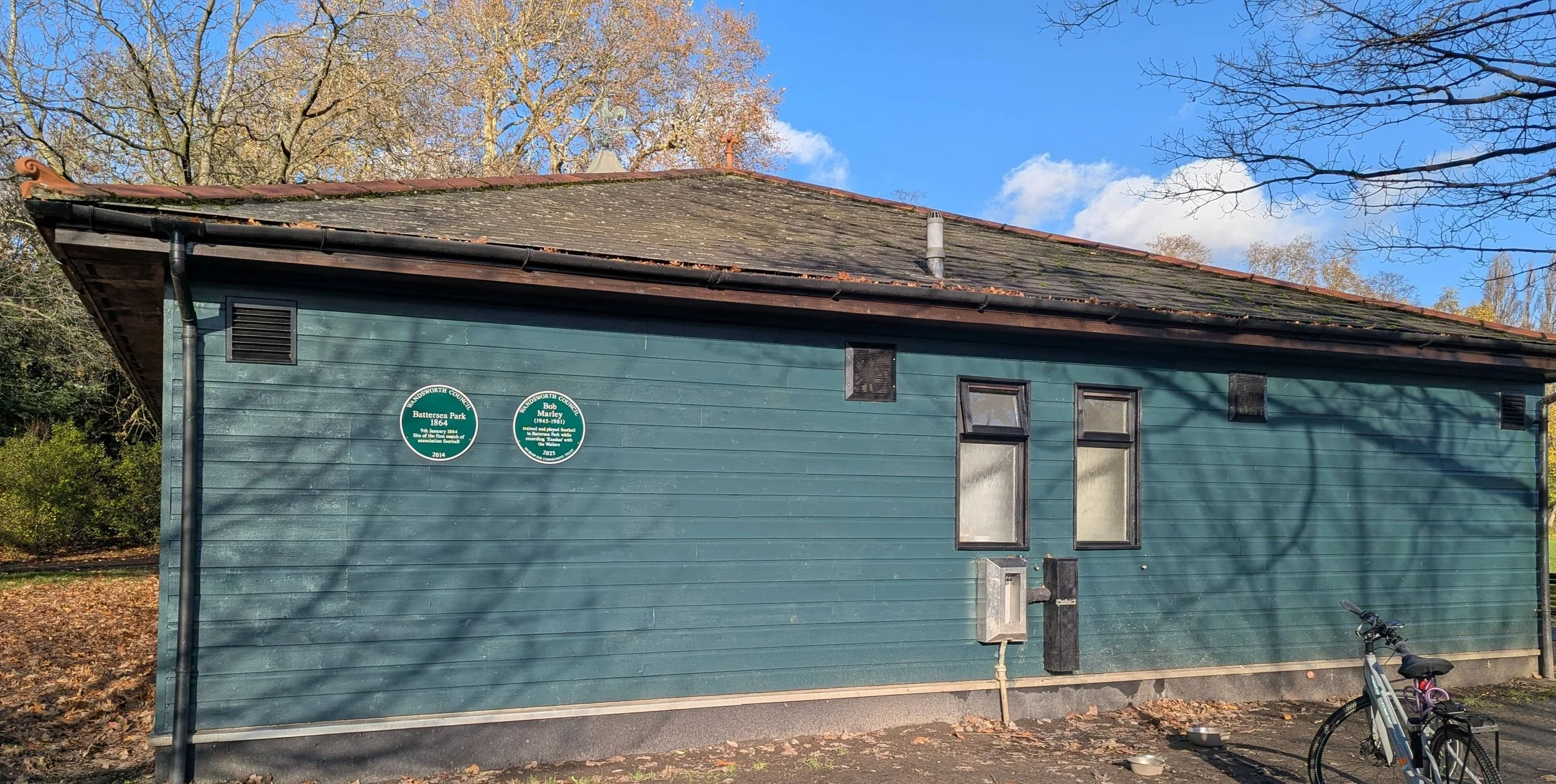
Association Football Rules, Battersea Park Cricket Pavilion.
Battersea Park was the site in 1864 of the first football match played by Association rules.
Bob Marley (6 February 1945 – 11 May 1981). Battersea Park Cricket Pavilion.
This Wandsworth Council Green Plaque, in partnership with Nubian Jak Community Trust, celebrates Bob Marley's link to Battersea Park and was unveiled by Marsha de Cordova MP, accompanied by Dr Jak Beula and Jeanne Rathbone of the Battersea Society.
Cricket Pavilion to Festival Gardens:
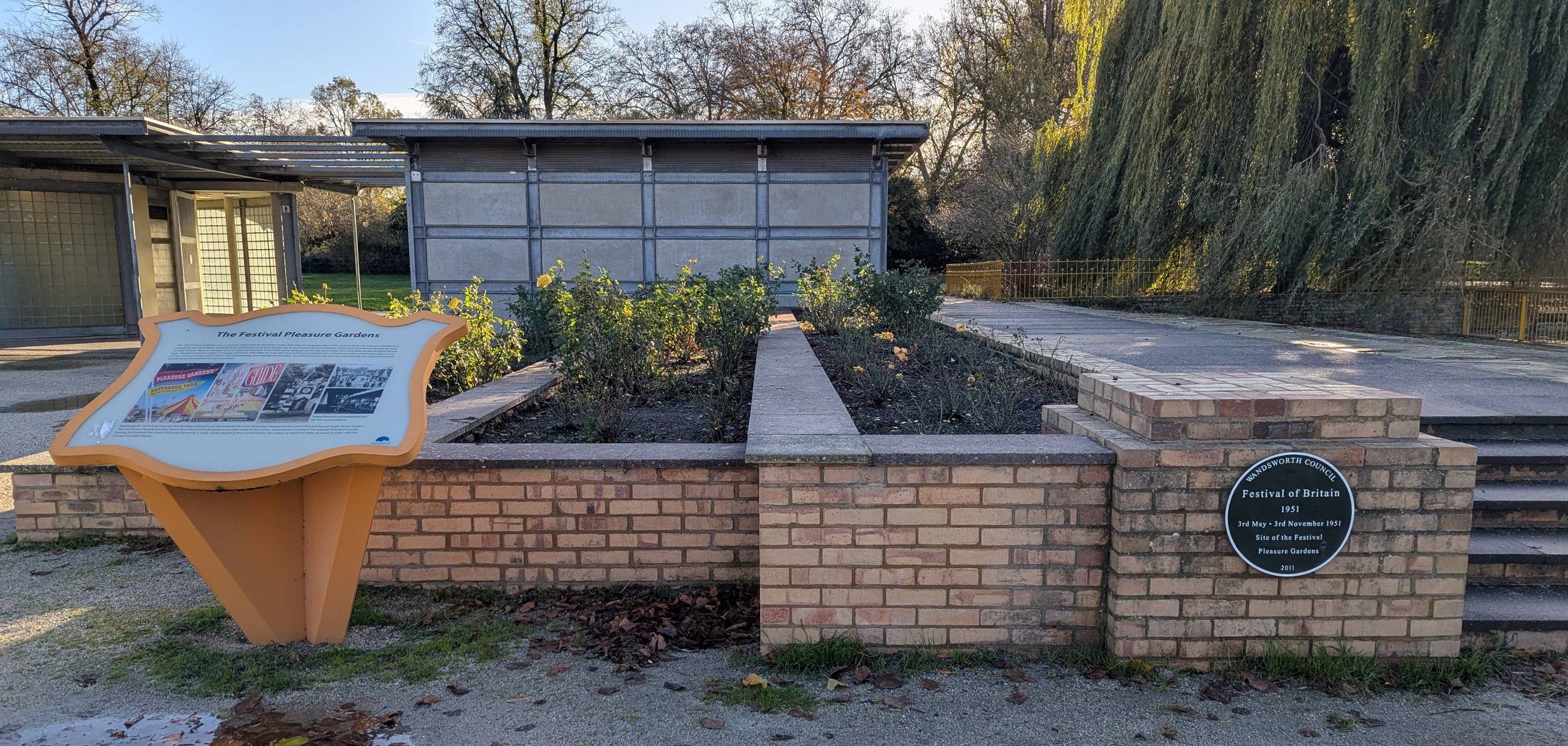
Carry on to the fountains where you will find another Wandsworth Council plaque as well as an interpretive lectern.
Battersea Park, Festival of Britain
James Gardner was responsible for the overall design themes of the Pleasure Gardens, the only area in the 1951 Festival of Britain that was intended simply for enjoyment rather than education or information.
From Battersea Park to 42 Vicarage Crescent:
Retrace your steps to the Albert Gate. Google Maps insists you must walk along Battersea Church Street, but you can follow the river or take the direct route on Parkgate Road, leading to Westbridge Road
Walk straight on through Battersea Square to 42 Vicarage Crescent, ignoring Google Maps’ insistence on going the long way around.

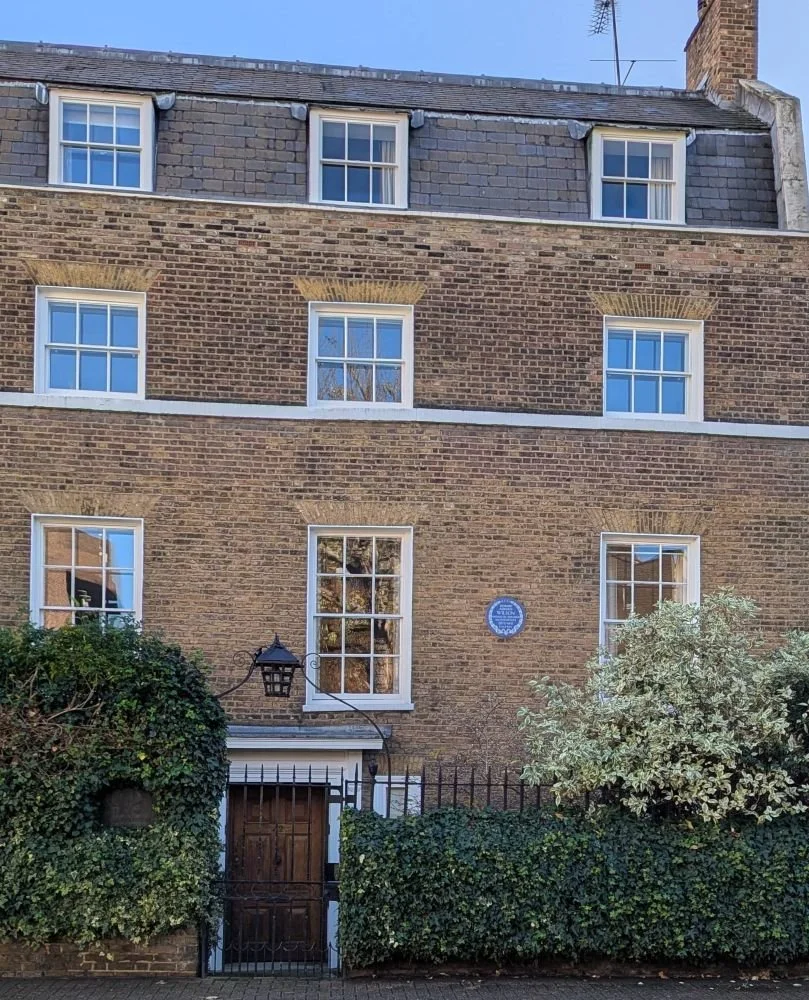
Edward Adrian Wilson (23 July 1872–29 March 1912). 42 Vicarage Crescent.
Wilson was an English physician, polar explorer, natural historian, painter and ornithologist. He read natural sciences at Gonville & Caius College, Cambridge, studied medicine at St George’s Hospital Medical School and carried out mission work in the slums sponsored by Caius House in Battersea.
Wilson put all his skills to work on polar expeditions and there is a large collection of his artwork in the Scott Polar Research Institute. He died on Robert Scott’s 1912 expedition.
42 Vicarage Crescent to 30 Vicarage Crescent:
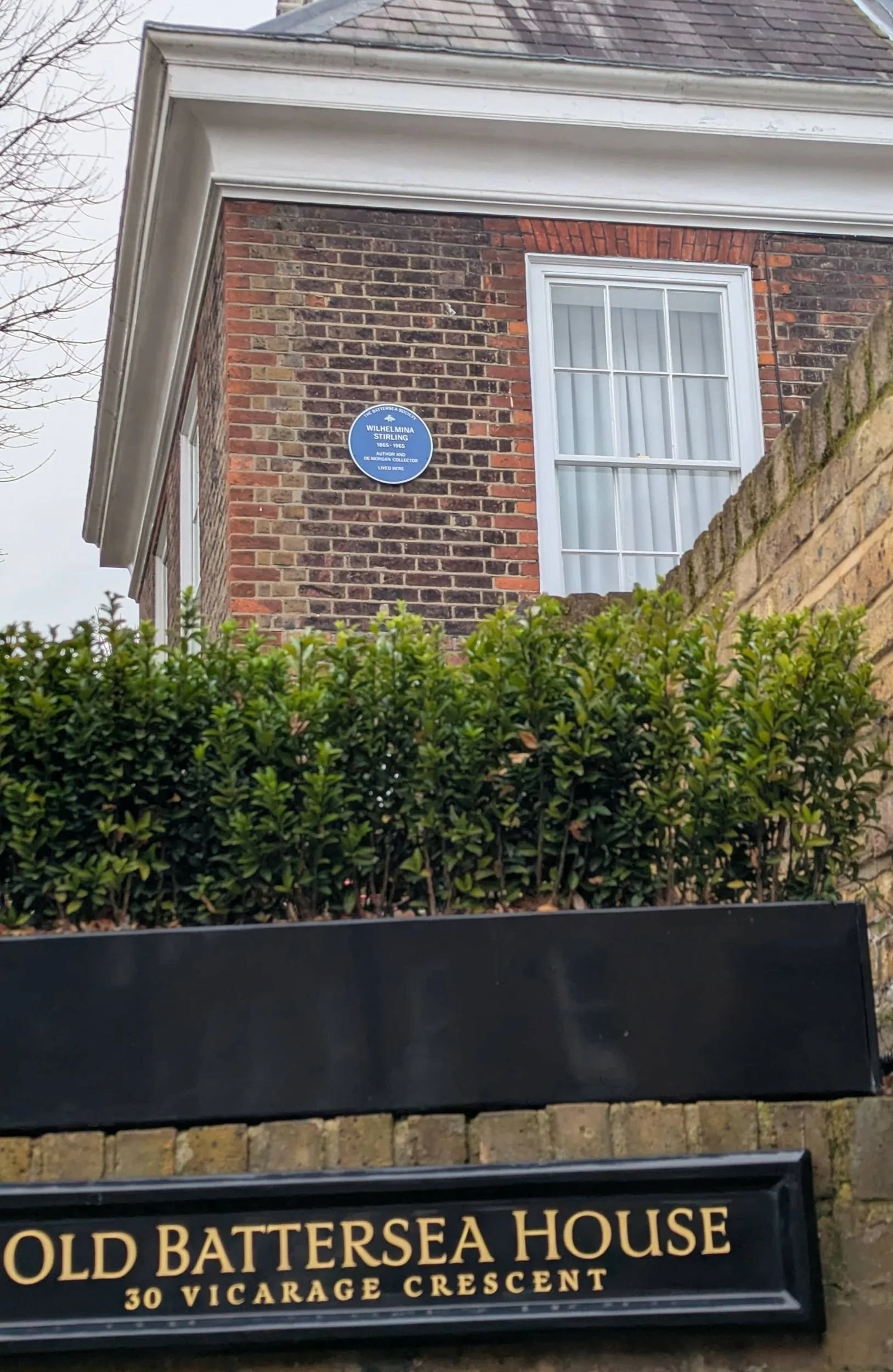
Just a few steps further on brings you to Old Battersea House. You will see a private drive, signposted Eaton House, which borders Old Battersea House. Turn down this drive and the plaque up on the side of Old Battersea House to your right will come into view.
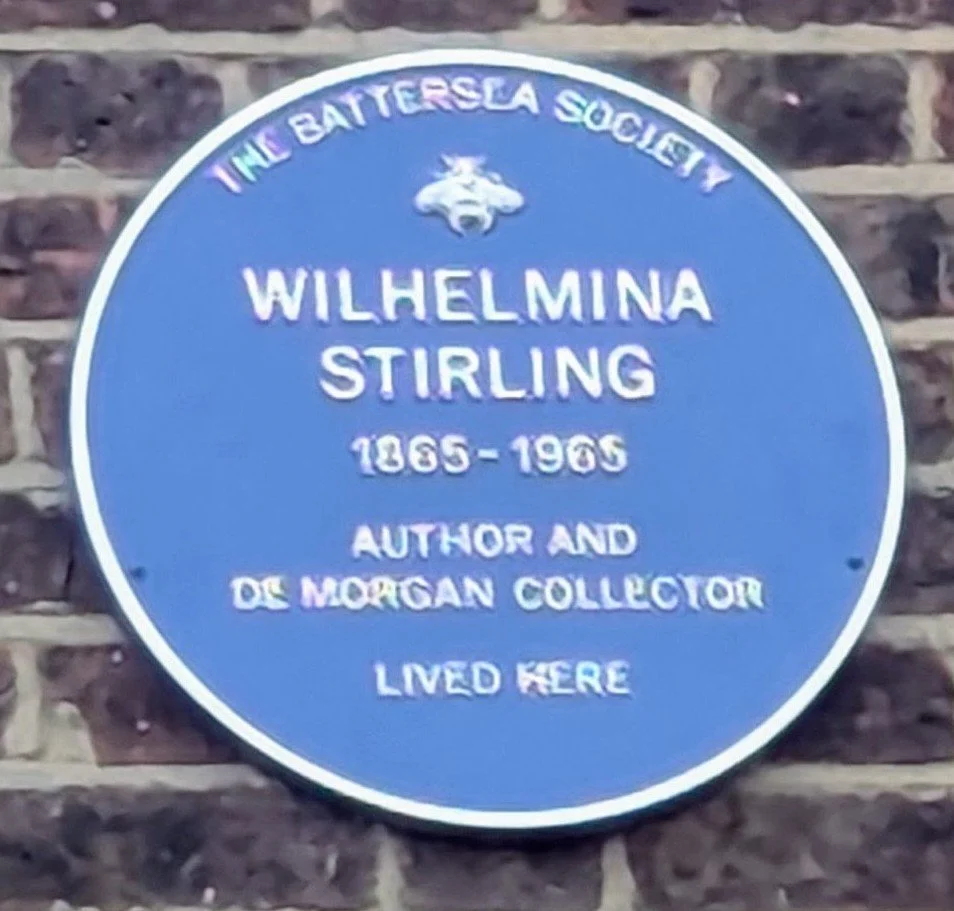
Wilhelmina Stirling (26 August 1865-11 August 1965) Old Battersea House.
Wilhelmina Sterling was an author and the founder of the De Morgan Centre, which was based at her 17C home that she saved from demolition and is now Grade II listed.
She was an anti-establishment thinker and an advocate for women’s rights. Her substantial art collection featured the work of her sister Evelyn De Morgan and Evelyn’s husband William De Morgan.
When Stirling died, just days shy of her 100th birthday, she bequeathed her collection for public enjoyment. Immortalised by a Ken Russell short film, Mrs Wilhelmina Stirling, according to the BBC she was one of Battersea's most eccentric and well-loved residents. Unfortunately, the De Morgan Collection has been dispersed to Cannon Hall De Morgan Museum in Barnsley, the Watts Gallery and the National Trust.
From Vicarage Crescent to Battersea High Street:
To reach our last stop, walk through the lovely Fred Wells Garden to Orville Road and Battersea High Street. Katherine Low Settlement is on the corner of Orville Road; the plaque honouring Katherine Mackay Low is on the Battersea High Street side.
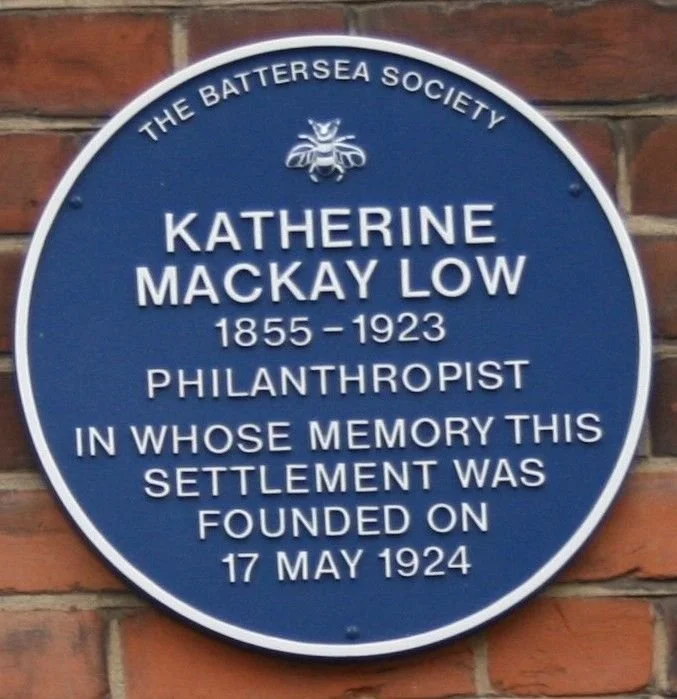
Katherine Mackay Low (9 July 1855-2 January 1923), 108 Battersea High Street.
Katherine Mackay Low was born in Savannah, Georgia to British parents. Brought to England when her mother died, she lived as an unmarried, independent philanthropist. After her death, her many friends created Katherine Low Settlement as a memorial to her. It was opened on 17 May 1924 by the Duchess of York (later Queen Elizabeth, the Queen Mother) and today supports children, young people and the newly-arrived and their families.
Continuing along Battersea High Street to Battersea Park Road you will see several of the Battersea Society heritage decals, such as the one for sculptor Ian Walters. You will also pass several restaurants, cafes and a pub, with further options for refreshment on Battersea Park Road, Falcon Road and around Clapham Junction generally.
Please send comments and point out any errors to website@battersea.org.uk