
Growing together with Battersea: 100 years of the Katherine Low Settlement
By Sue Demont
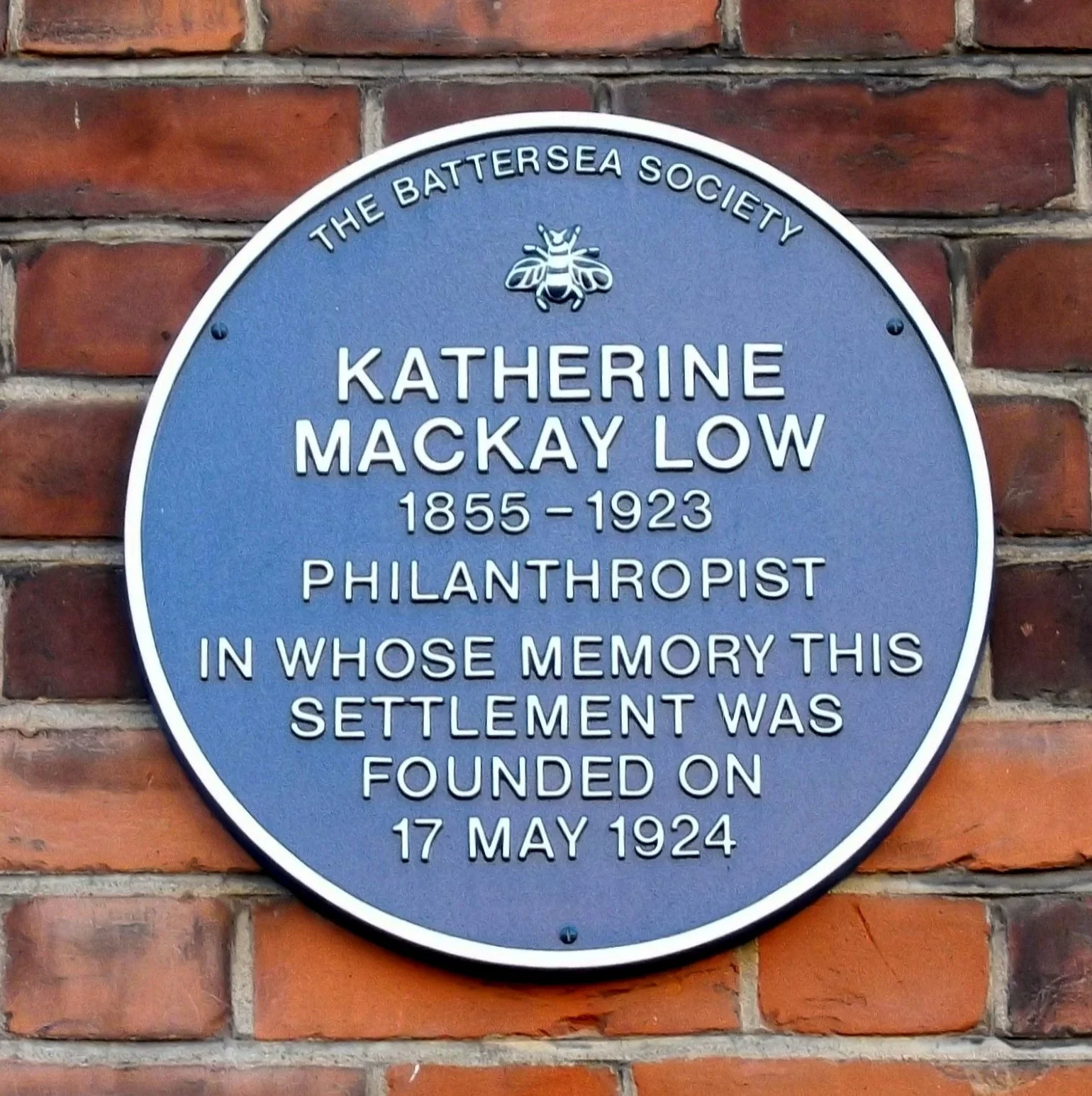
Battersea Society blue plaque on the Katherine Low Settlement
How did it all start?
The building we know today as the Katherine Low Settlement (KLS) originated almost 300 years ago in the form of The Cedars, a classical Georgian house in what is now Battersea High Street. The site has undergone numerous redevelopments but ever since the 1880s it has been used for some form of philanthropic activity or social work.
The original instigator of these was the legendary Canon Erskine Clarke, Vicar of St Mary’s Battersea from 1872 until 1901. He acquired The Cedars as a club for factory girls, and although the building later became a clergy house, Clarke mitigated the loss by commissioning a new building on the site of an adjacent Victorian outhouse in 1905. This was known as the Cedars Institute, and it presents the same striking outlook today as in Clarke’s time – solid red brick with a corner facing of distinctive green glazed brick. Inside were separate club rooms for boys and girls and a reputedly beautiful chapel on the attic floor, of which nothing remains.
Why here?
By the 1880s the impoverished inhabitants of the area around the Cedars Institute were in desperate need of support. Charles Booth in his 1899 Survey found that neighbouring Orville Street was one of the worst districts in London, occupied by ‘thieves, prostitutes, cadgers (and) loafers’. There were very few so-called ‘decent’ residents, and these were usually working men with large families who simply could not find any better places to live. It was unsurprising therefore that benefactors such as Clarke and the Church more widely should choose the district for their outreach work. Clarke was assisted in his efforts by a group of wealthy women from across the river in Belgravia, who used their extensive well-heeled contacts to raise funds for the Institute.
The Church of England continued its involvement after Clarke’s tenure as vicar ended. For example, the pioneering deaconess Isabella Gilmore was known to have used the premises to run a boys’ and a girls’ ragged school which provided free education for destitute children. One of the first Principals of the Institute was Nesta Lloyd, a great supporter of Clarke, who ran the Institute until ill health forced her to retire after the First World War. The enterprise was in danger of collapsing when in 1921 Lloyd managed to pass the baton to a boys’ settlement run on similar lines, initiated by Christ’s College, Cambridge. She followed this up two years later by introducing the all-female Katherine Low Settlement to the club as its tenant at the Cedars Institute.
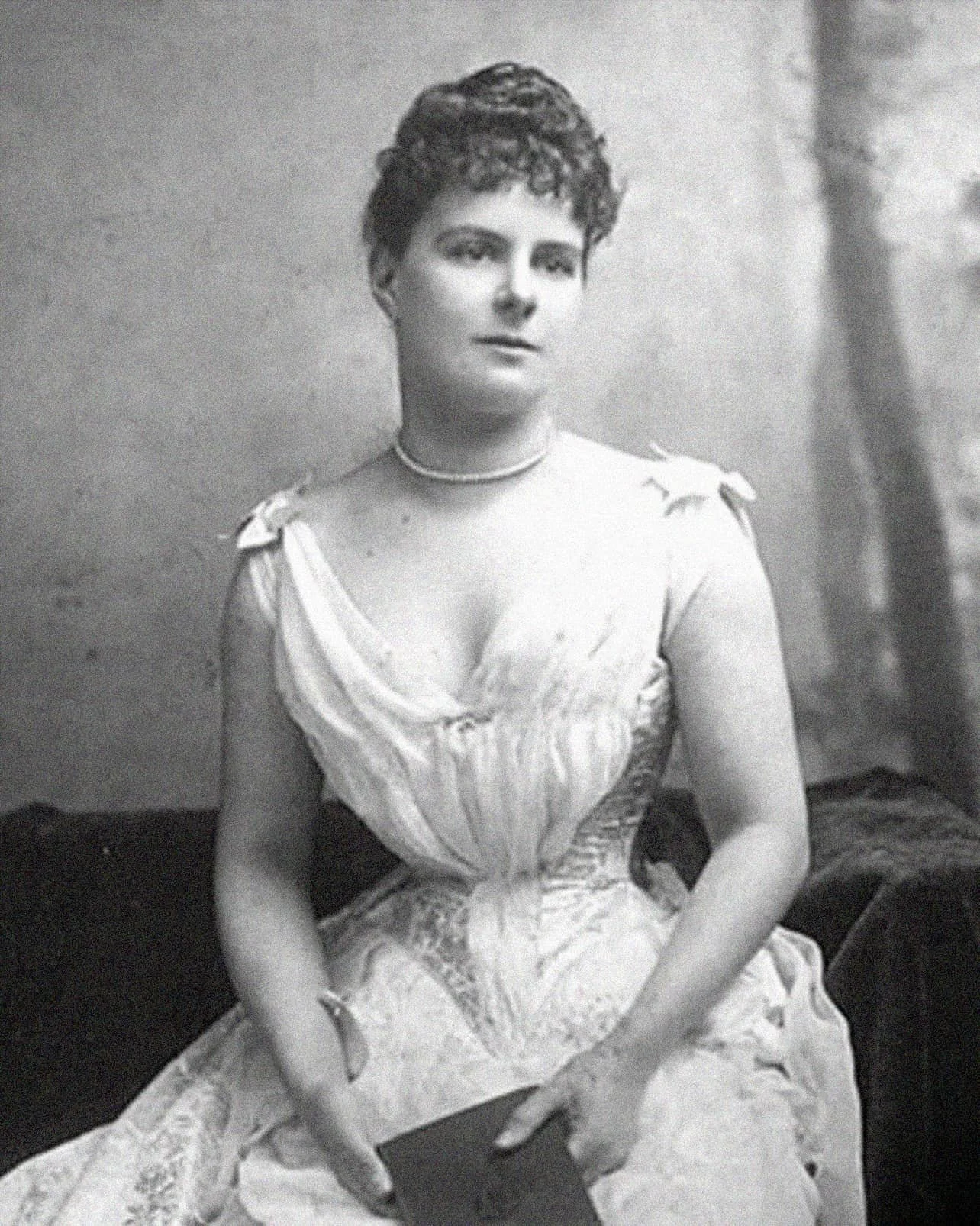
Katherine Low
Who was Katherine Low?
The life story of Katherine Mackay Low (1855-1923) - and especially her connections with Battersea - is remarkably little known. She came from a wealthy family, her father being a cotton trader, and the Lows settled in England after the American Civil War. Low inherited a sizable portion of her father’s £618,000 estate on his death in 1886 and thereafter lived at various prestigious addresses including Grosvenor Square, where she died in her late 60s. She never married. She is known to have been engaged in philanthropic works, including some involvement with the Peckham Settlement to whom she bequeathed £13,000, but the extent of her Battersea connections remains shrouded in mystery, in part because she lived much of her life outside London.
What is certain is that she had a wide circle of wealthy friends and when she died, they sought to create a memorial to her which would further her causes; they alighted upon the Cedars Institute and within a year had raised the money to purchase the property. The Katherine Low Settlement was formally opened amidst much fanfare by the future Queen Mother on 17th May 1924.
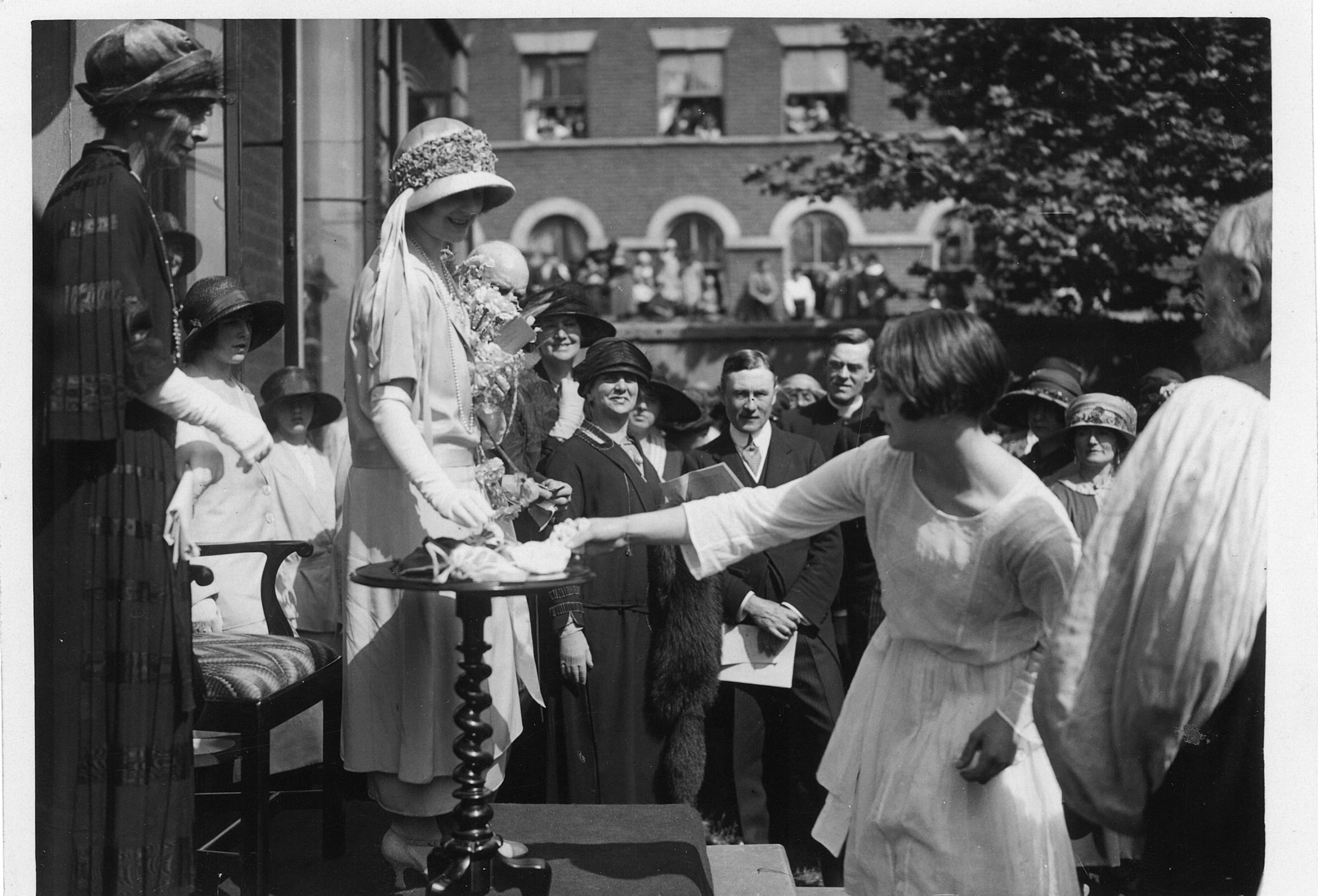
Opening of Katherine Low Settlement; photo courtesy of Katherine Low Settlement
What happened during the War?
On opening, KLS had been designated an Anglican Settlement for Girls, and between the wars it ran a variety of clubs for both girls and mothers. When the Second World War broke out, the Settlement became an evacuation centre and a local headmaster was given an office there from which he could issue travel warrants so that families could keep in touch with one another. He also arranged for former evacuees to return to their country placements once the Blitz started.
Later in the war as bomb damage to housing escalated, the building was used as a rest centre for displaced families. Teaching also took place there with the Vorticist artist David Bomberg giving lessons during 1944. Unfortunately, in June of that year a V1 flying bomb landed on nearby Gwynne Road and severely damaged KLS, rendering it uninhabitable for a time.
How did KLS adapt to the post-war world?
KLS and the Christ Church Boys’ Club amalgamated soon after the war, and elaborate plans were drawn up to create a North Battersea Community Centre as part of the redevelopment of some of Battersea’s most notorious slums. This scheme however came to nothing and increasing friction developed between the two organisations. The whole concept of settlements was beginning to feel less relevant following the election of a Labour Government committed to establishing a Welfare State to care for its citizens ‘from the cradle to the grave’. Things came to a head in 1953 when urgent building work was required, and it was clear that KLS was contributing far more than half the running costs of the joint settlement with Christ Church. The consequence was that KLS took on sole ownership of the building as a separate organisation with its own trustees, an arrangement that persists to this day.
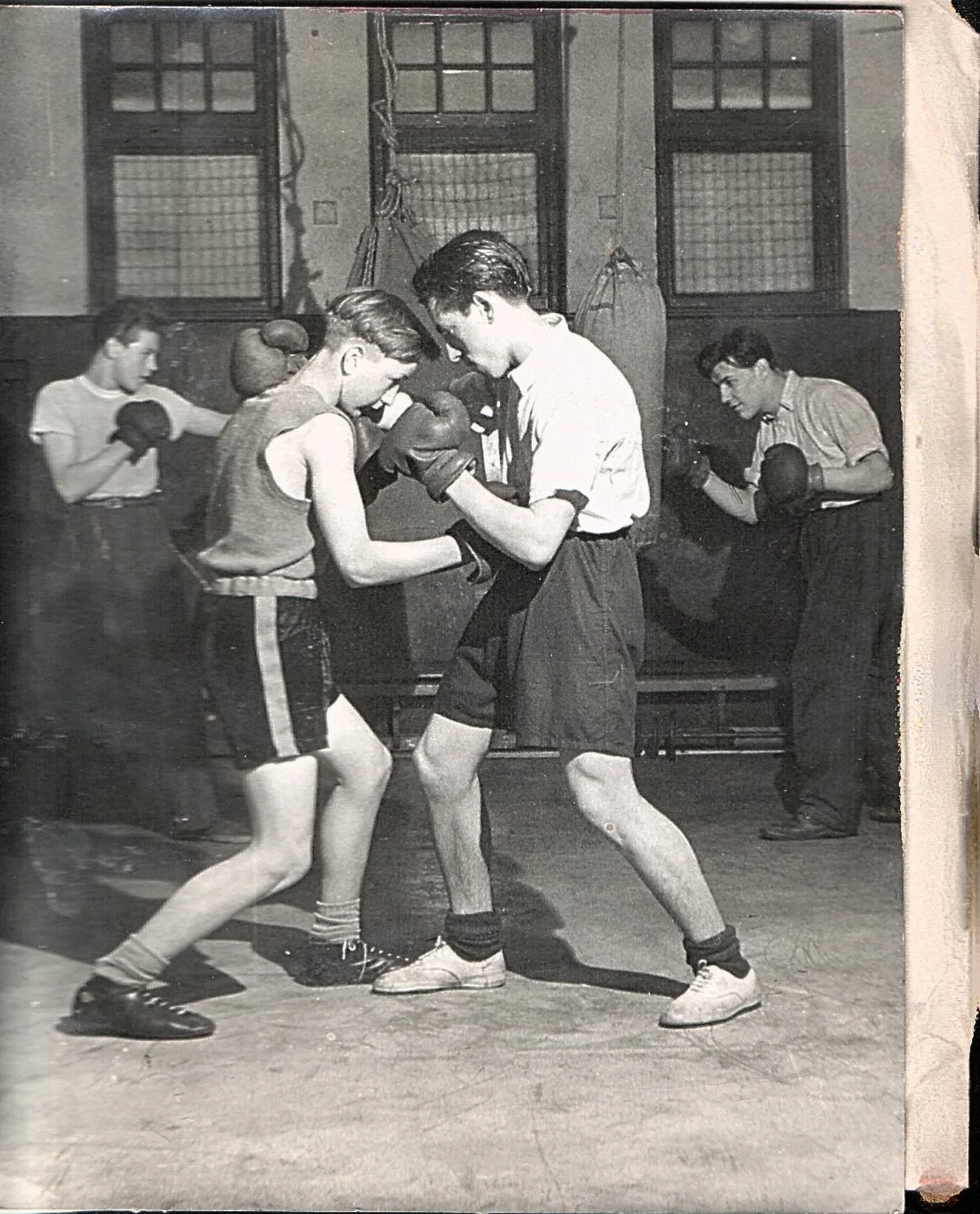
Boxing class at Katherine Low Settlement, 1950. Used by permission.
Recent years have seen improvements made to the site; a children’s playground was fitted out on the site of the former club room destroyed by bombing, and in 2002 a creche was created under another Labour Government’s Sure Start scheme. But the core building, at least from the outside, has changed very little and the original 18th century house is Grade II listed. The good work of the Settlement continues to this day as a multi-purpose charity and community centre with an ever-widening range of groups benefitting from its provision.
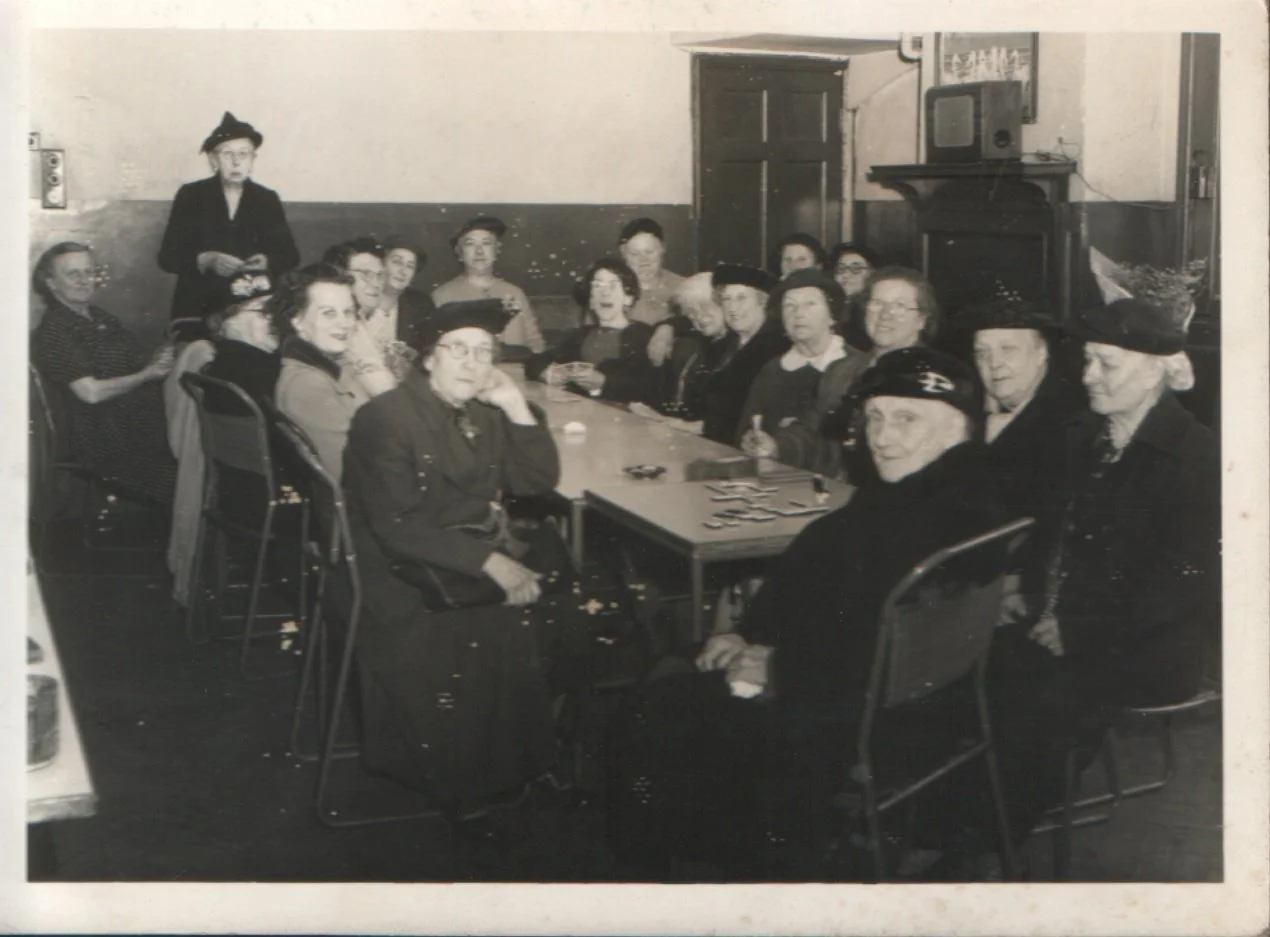
Grandmothers' Club, 1955. Used by permission.
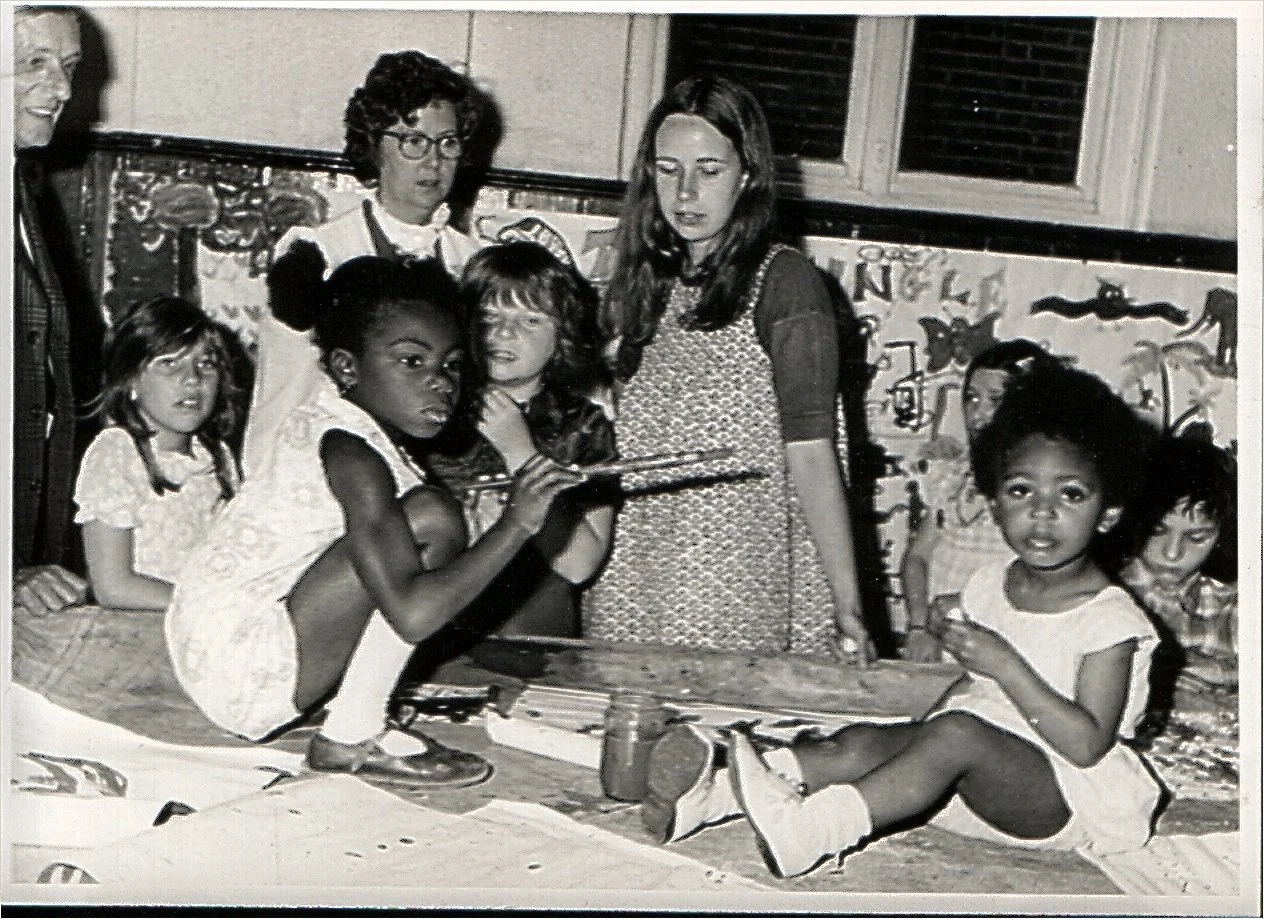
Summer holidays activities, 1972. Used by permission.