
Our Thames Path
By Clare Graham, Chair, Open Spaces Committee
A new draft Masterplan for the tidal Thames from the Port of London Authority prompts some reflections on Battersea's Thames Path.
The PLA's new masterplan
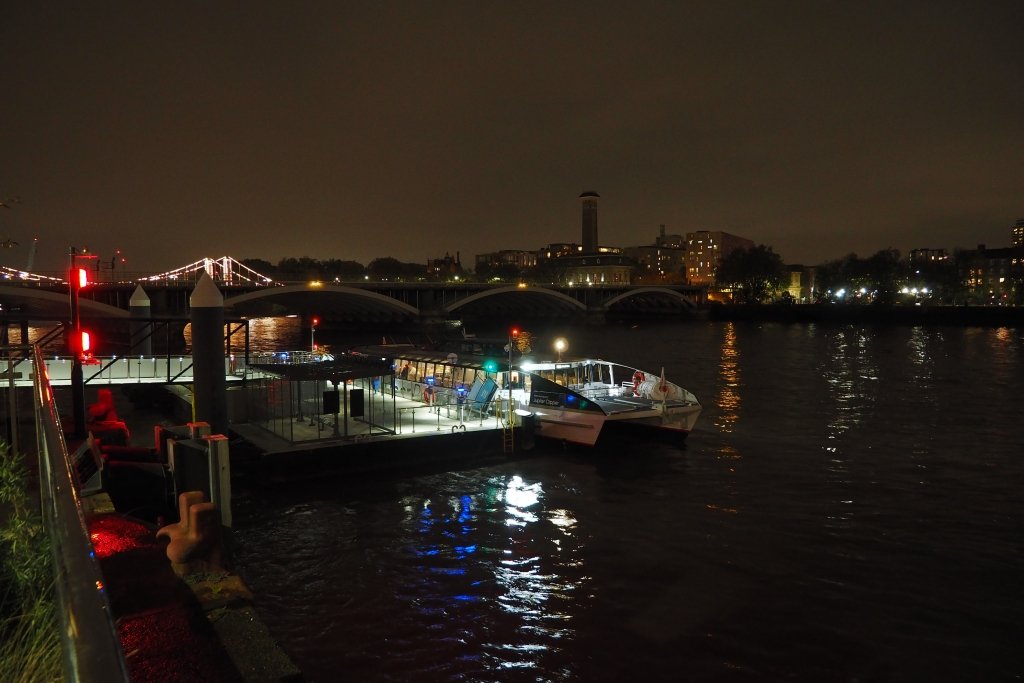
The pier at Battersea Power station, complete with an Uberboat. All photographs in this article by the author.
We commented recently on this draft masterplan produced by the Port of London Authority. The PLA is responsible for navigation on the tidal Thames, that is the 95 miles running down from Teddington Lock to the North Sea, which of course includes Battersea. The PLA was created back in 1908, when London itself was one of the world's busiest cargo ports; these days it still keeps both commercial and leisure river traffic safe. This plan also shows it hoping both to protect and enhance the Thames as a natural environment, and to promote its use for trade and travel. It's the work of the PLA's own small planning department, which has been asking London's riverside boroughs, businesses, amenity societies such as ourselves and other interested bodies and individuals for their comments. The idea is to build up a comprehensive and fully interactive map of the riverside identifying sites for economic development, for nature and biodiversity, and for tourism and physical activity. It's certainly interesting to see so many different categories of information assembled in this way, though so far it's hardly a masterplan - being descriptive rather than strategic, advisory rather than statutory. The PLA's formal planning responsibilities are limited; so far as those are concerned, the Society agreed that all existing wharfs and piers in our area need be retained, and also supported the proposals for expanded number of moorings and ancillary uses at Nine Elms Pier, comprehensive and combined development of Cringle Dock and Kirtling Wharf and the reactivation of Middle Wharf (by the Heathwall Pumping Station, currently still being used for the Tideway Tunnel) for commercial use.
The PLA and the Thames Path
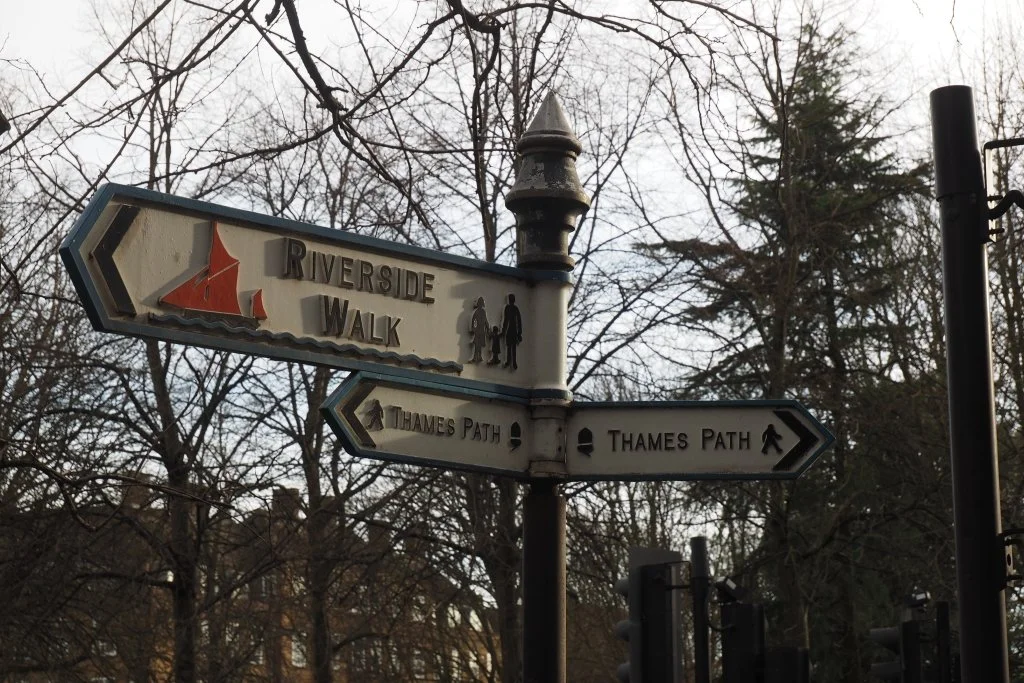
Thames Path signage opposite Fred Wells Gardens.
Beyond that, we suggested that the PLA might usefully consider taking on greater responsibility for promoting, protecting and improving the Thames Path National Trail throughout the tidal Thames area. Inaugurated as recently as 1996, the Path is still in some places incomplete, and owned and maintained as a patchwork. For all its popularity, it could do with a new champion, while for the PLA this could be a valuable opportunity to demonstrate its commitment both to the environment and to sustainable travel. Locally, we noted that there are still two missing sections of Thames Path, at Cringle Wharf and Heathwall Pumping Station; obviously inserting these should be top priority, within future redevelopment. We also suggested that the PLA could seek to help improve the existing Path in tandem with Wandsworth Council, for instance by new measures to improve cyclist/pedestrian safety (since Wandsworth's own recent ones aren't actually working that well) or more informational signage.
The Blue and the Green
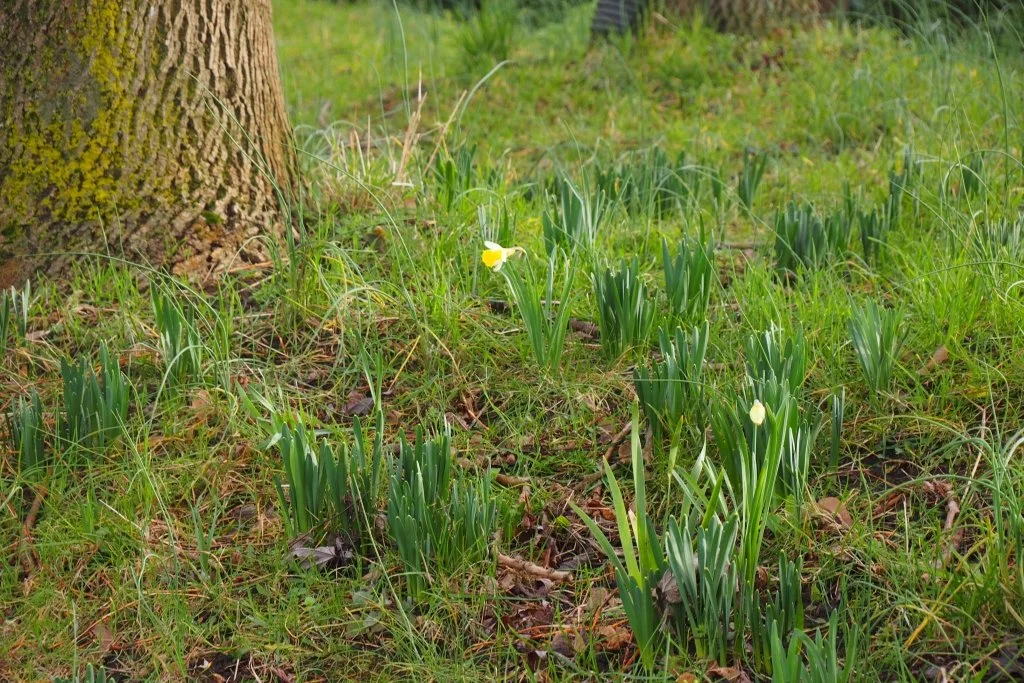
Daffodils on the bank of Vicarage Gardens, beside the Thames Path
We also suggested to the PLA that the status of the Thames Path as both a green and a blue corridor could be greatly enhanced by encouraging more planting. On its river side, there is apparently a requirement to maintain a clear view from the Path over the Thames, but that still leaves plenty of scope for new soft landscaping, designed both to improve its biodiversity and to add to its beauty. And what about the river's tidal foreshore? Nineteenth-century embankment has left most of this barren at present, scoured by the narrowed and faster-flowing river. The PLA wouldn't, of course, accept any changes that would reduce its navigability. So, no chance of returning our local river to its natural state, unlike its tributary the Ravensbourne in Ladywell Fields. All the same, the existing eco-zone at Battersea Reach suggests another possible way forward. This was added by the developers of the adjacent residential block back in 2005; a 2017 report concluded that, while less well-designed than it might be, this has had no negative impact on navigation and does play a useful role for local biodiversity.
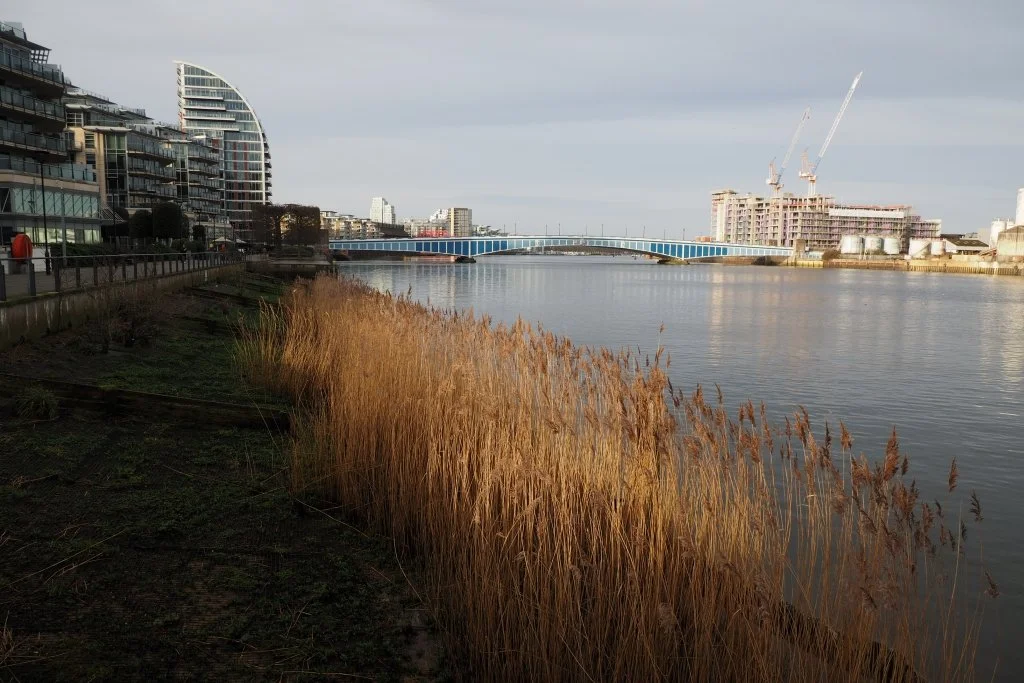
The eco-zone at Battersea Reach.
Building community - and connections
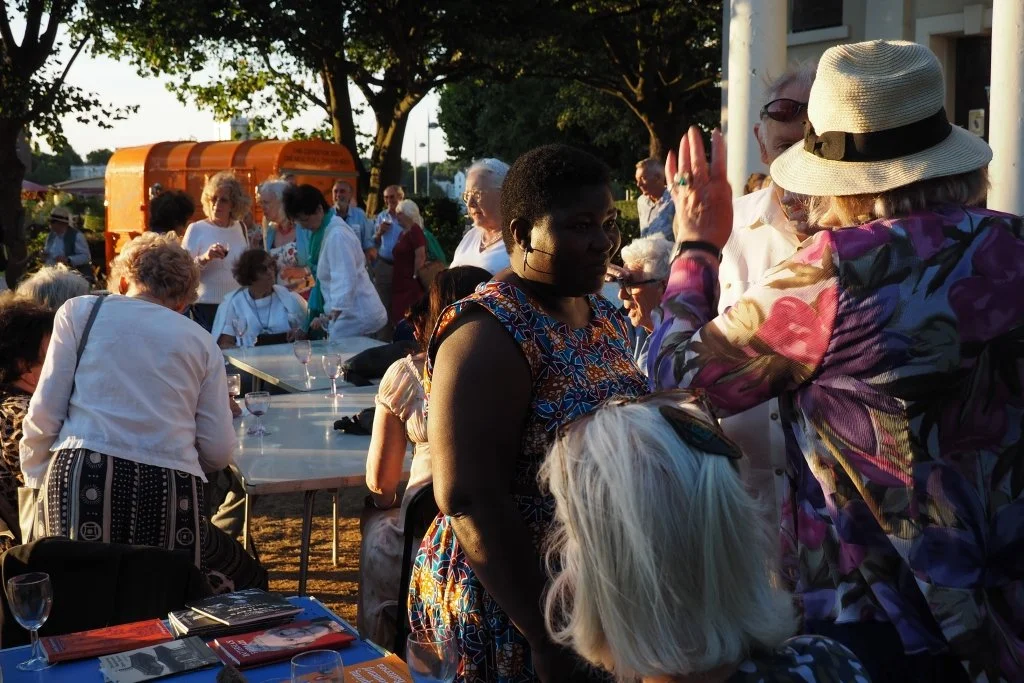
Our 2022 Summer Party, in St Mary’s Churchyard
Finally, the Thames at Battersea is - or should be - a great place for coming together and building community, whether that's on the ice rink at the Power Station or at one of our own Society's summer parties in St Mary's Churchyard. (And it's good news that the latter also now has its own permanent coffee stall again: Little Lou's.) But unfortunately at present in Battersea the river and riverside all too often feels irrelevant to many of those living very close to it, thanks to its poor post-industrial redevelopment. This may have created the Thames Path, but otherwise looked at sites incrementally, failing to knit them into the surrounding fabric. So we concluded by asking the PLA if it could also widen the area of its masterplan, and start working with the Council to identify a series of potential improvements to access through to the Path and to specific sites on the river for both pedestrians and cyclists.