
Pamela Colman Smith and the Rider Waite Tarot
Guest blog post by Emma Anthony, Archivist, Wandsworth Libraries and Heritage Service
When I was sixteen, an intriguing witchy-cum-new-age shop opened in my hometown of Bathgate, West Lothian, Scotland. This was in 2002 - a couple of years after the release of the teen witchcraft movie, ‘the Craft’, so you can imagine on opening this shop had a huge clientele of disaffected teenage girls, and I was certainly among their number.
It was here I bought my first tarot deck, the Rider Waite Tarot, which was published in 1909 and has sold millions of copies since. It was named after its publisher, William Rider & Son; and A E Waite, who guided the deck’s artist and wrote the accompanying book. Conspicuously absent from its title is the name of its artist, Pamela Colman Smith, who illustrated the 78 cards in pen and ink wash - a massive undertaking for which she received a modest one-off fee.
My tarot deck has survived seven house moves - it has always come with me, though for much of the time I have had it, it remained a mystery. As I age and gain more life experience, Pamela’s tarot designs which speak so powerfully about the human experience reveal themselves to me more readily.
What, you might ask, does any of this have to do with Battersea? Well, on one grey February morning at the start of this year, researchers and tarot scholars Lee Hendricks and Donglong Jiang paid me a visit at the archives and told me Pamela lived here in Battersea at 84 York Mansions whilst designing the Rider Waite Tarot.
Despite seeing an exhibition about tarot last year at the Warburg Institute which featured a letter written by Pamela on headed paper from York Mansions, this had completely passed me by. Not only had Pamela lived in Battersea, she had lived there whilst creating the Rider Waite Tarot deck.
Luckily, my colleague Sofia also visited the exhibition and had the foresight to take a photograph of the letter, which is a letter to Pamela’s patron, Alfred Stieglitz. In it, Pamela rather amusingly greets him: I wonder where you are?! I want some money for Christmas!
She describes her commission thus:
I’ve just finished a big job for very little cash! A set of designs for a pack of tarot cards - 80 designs. I shall send some over - of the original drawings as some people may like them. I shall send you a pack (printed in colour by lithography) (probably very badly) as soon as they are ready.
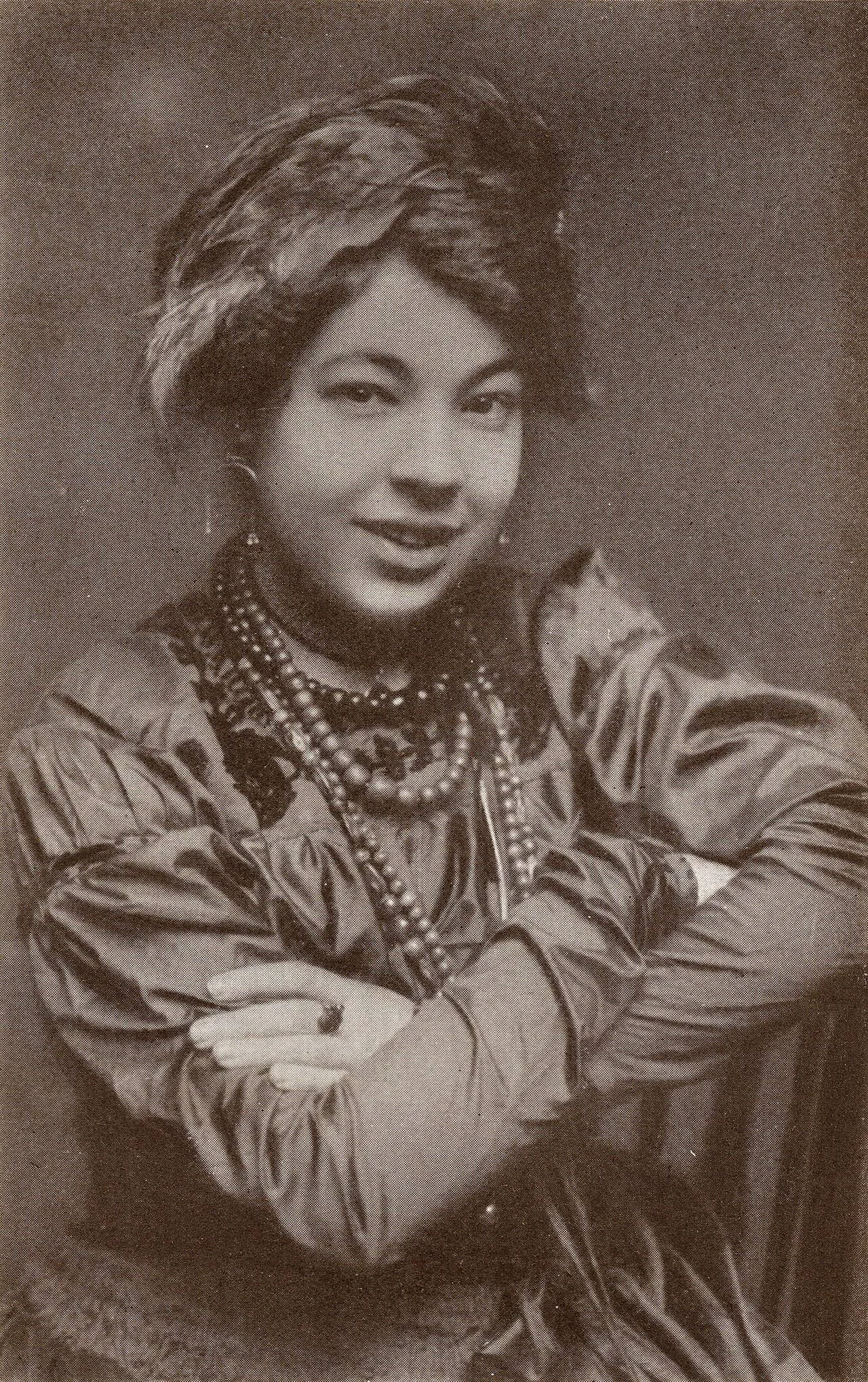
Photo: Pamela Colman Smith, Wikicommons, public domain
Pamela was born in 1878 in London to Charles Edward Smith and Corrine Colman Smith at 28 Belgrave Road in Pimlico. The house is still there today. Her parents were both from well-known New York families and moved over to London shortly before Pamela’s birth. Pamela’s maternal grandfather, Samuel Colman, was a bookseller, publisher, and etcher, and her grandmother, Pamela Chandler Colman, a children’s writer.
Her maternal uncle, Samuel Colman, was a well-regarded landscape artist known for his paintings of the Hudson River.
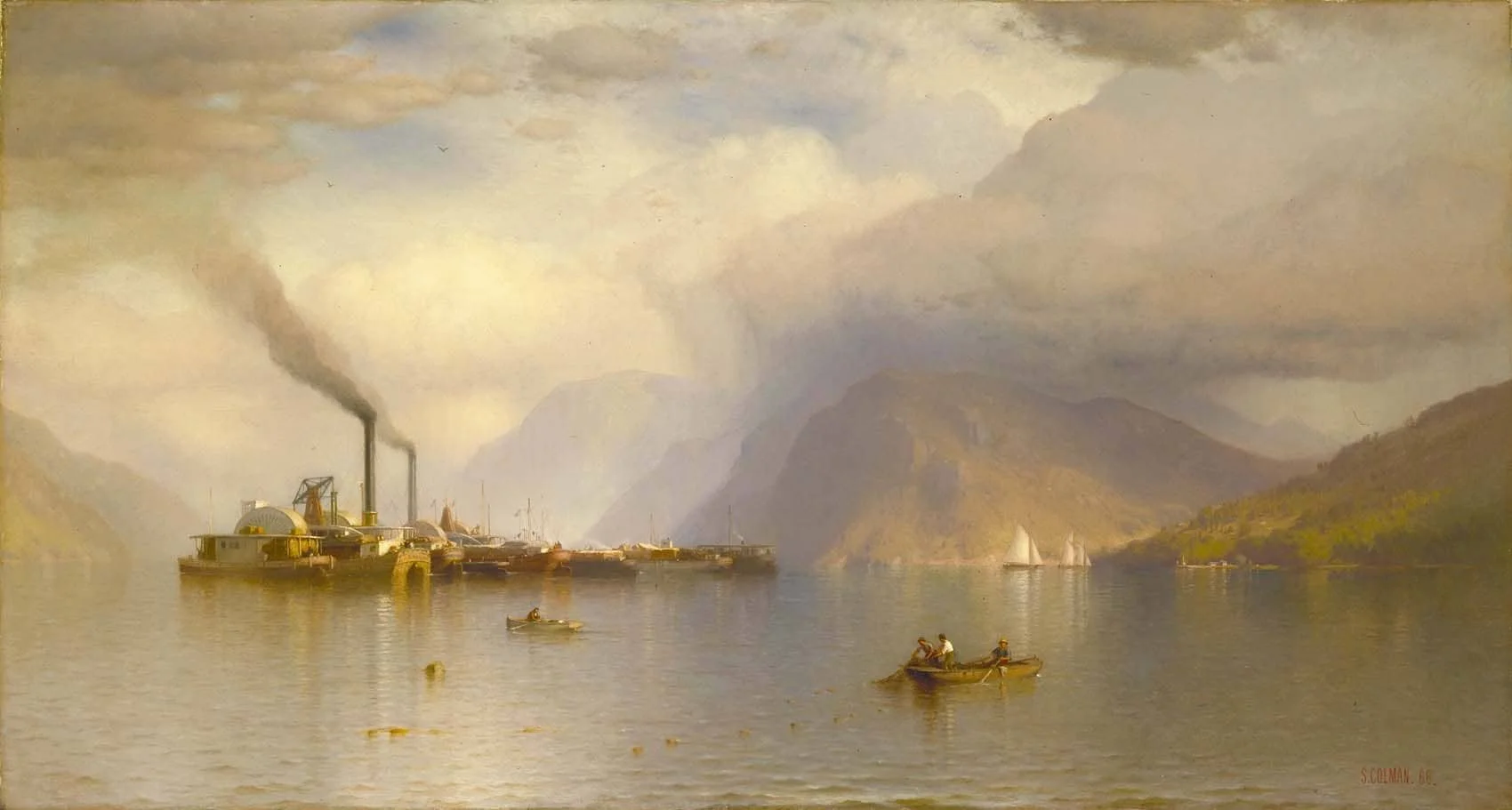
Painting by Samuel Colman - Smithsonian American Art Museum, Public Domain, WikiCommons
Pamela moved to Jamaica as a child with her parents and spent a happy childhood there by all accounts. She was fascinated by the Anansi stories, Jamaican folk tales about a clever spider called Anansi, which she would later illustrate, publish, and perform; and she was fascinated by the language. She witnessed practices such as Obeah, a folk religion still then practiced in Jamaica. Her parents (and maternal grandparents) were followers of Swedenborgianism, a rather mystical Christian movement started by Emanuel Swedenborg (1688-1772).
Pamela’s creativity was encouraged. She was given a miniature theatre for which she wrote plays and created elaborate scenery, and in her teens she studied in the Pratt Institute in Boston under the tutelage of Arthur Wesley Dow. Dow was a huge influence on Pamela and fed her love of the arts and crafts movement and the Romantics.
In 1896, Pamela suffered the loss of her Mother and found herself going back and forth between Boston and Jamaica in order to help her Father. She left the Pratt Institute without taking a degree. Nevertheless, she started to make money as well as a name for herself for her illustrations
In 1898, she produced a commemorative booklet for the Lyceum Theatre featuring Sir Henry Irvine and the Shakespearian actress Ellen Terry, whom cemetery historian Sheldon K Goodman describes as the Judi Dench of her day. This small commission changed Pamela’s life. Ellen was almost 30 years older than Pamela, but immediately took a shine to her, christening her with the moniker ‘Pixie’, and introducing Pamela to her daughter Edith Craig and son Edward Gordon Craig who soon became her firm friends. Less than a year after the sudden and unexpected death of her Father, Pamela made the long trip to London across the Atlantic, accompanied by Ellen Terry.
A fascinating record created by Pamela documenting this voyage and the early period of her friendship with Terry was found in Terry’s former home, Smallhythe, around ten years ago. This takes the form of two folios of Pamela’s cartoons dedicated to Terry, and feature drawings of Terry and fellow members of her company including Henry Irvine and Bram Stoker, as well as passengers and friends on the journey to London. The artwork from the folio can be viewed here.
On arriving in London, Pamela moved to Kensington and held creative salons where guests imbibed the drink of the day, which was apparently claret and lemonade. She became a member of W B Yeats and Florence Farr’s London Masquers and gave her Anansi performances. Yeats in particular became a close friend - they likely bonded through Pamela’s love of Irish culture and literature. Pamela also became friends with W B Yeats’ brother, Jack Yeats, with whom she co-edited A Broadsheet, and she edited and produced her own magazine, The Green Sheaf from 1903-1904, illustrating it herself. The Green Sheaf contained poetry, folklore, and mysticism, and writers both living and dead, the latter such as William Blake whom unsurprisingly Pamela was a fan of. Luckily, it can be viewed in its entirety here.

York Mansions, from the Patrick Loobey Collection at Wandsworth Heritage Service
Around this time, she joined the Hermetic Order of the Golden Dawn, an occult society. It was likely here where she met her co-creator of the Rider Waite Tarot deck, A E Waite – occultist by night and manager of the drinks firm Horlicks by day. Waite was fascinated by Tarot – a game which had been around for hundreds of years, but which only started to be used for divination purposes in the 19th century. Both he and Pamela encountered photographs of the Sola Busca deck, the earliest full surviving deck, at the British Museum.
The pair worked on the Rider Waite deck together, with Pamela undertaking the artwork with some guidance from Waite and creating the art. Neither Pamela nor Waite received any royalties for the deck. The unfairness of this deal would have quickly become apparent when the deck sold rapidly, and the rest of Pamela’s story is a sad one.
After World War I, she moved to Cornwall where she ran a guest house for Catholic priests. By 1939, she was in serious financial trouble and was forced to sell her home. Her financial troubles continued up until her death in 1951. In her will, she left everything to her companion, Nora Lake, whom she described as ‘my friend’, but whom evidence suggests was her lover. Unfortunately, Pamela had so much debt that ‘everything’ turned out to be nothing at all.
Pamela’s place of burial is unknown - the closest to a grave we have for her is perhaps her fireplace, which was saved when her old house was renovated and now has pride of place in the bookshop Treadwells in London and functions as a shrine to her memory. Her life, work, and her Tarot cards could have paled into obscurity were it not for the fact that in 1971, USA Games Systems Inc. acquired the rights to distribute the cards. On the face of it, this sounds like a soulless corporation making profit out of Pamela’s work - and for many years I thought so too. But this is a huge injustice towards USA Games Systems Inc’s founder, Stuart Kaplan (1932-2021). Kaplan became an authority on tarot and published several tarot decks – many of which were heavily influenced by the Rider Waite deck. He amassed a huge collection of Pamela Colman Smith artefacts and records, including her visitors book, and worked with three academics to produce a definitive biography of Pamela, keeping her memory alive and giving her credit for the work she undertook on the deck.
Pamela was not recognised for her work on the Tarot in her lifetime. But the resulting deck of cards has given comfort and courage to millions of people all over the world, and it was created right here in Battersea.